 Back
BackMeiosis, Sexual Life Cycles, and Genetic Variation
Study Guide - Smart Notes
 Tailored notes based on your materials, expanded with key definitions, examples, and context.
Meiosis and Sexual Life Cycles
Terminology and Basic Concepts
This section introduces key terms and concepts fundamental to understanding heredity and genetic variation in biology. Heredity is the transmission of traits from one generation to the next, while variation refers to differences in appearance among offspring. Genetics is the scientific study of heredity and variation.
Heredity: The passing of traits from parents to offspring.
Variation: Differences in traits among individuals.
Genetics: The study of heredity and variation.
Genes: Units of heredity, made up of DNA segments.
Gametes: Reproductive cells (sperm and eggs) that carry genes to the next generation.
Somatic cells: All body cells except gametes.
Homologous chromosomes: Chromosome pairs, one from each parent, carrying the same genes at corresponding loci.
Sexual vs. Asexual Reproduction
Organisms reproduce either sexually or asexually, each method affecting genetic diversity differently.
Asexual reproduction: A single parent produces genetically identical offspring (clones) without gamete fusion.
Sexual reproduction: Two parents produce offspring with unique gene combinations, increasing genetic diversity.
Diploid and Haploid Cells
Cells can be diploid (2n) or haploid (n), depending on the number of chromosome sets they contain.
Diploid (2n): Two sets of chromosomes, one from each parent. In humans, 2n = 46.
Haploid (n): One set of chromosomes. Gametes are haploid; in humans, n = 23.
The Human Sexual Life Cycle
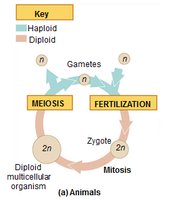
The human life cycle alternates between meiosis and fertilization, maintaining chromosome number across generations. Meiosis produces haploid gametes, and fertilization restores the diploid state.
Meiosis: Reduces chromosome number by half, producing haploid gametes.
Fertilization: Fusion of gametes restores diploid chromosome number.
Zygote: Fertilized egg, diploid, develops into an adult via mitosis.
Chromosomes and Genetic Inheritance
Chromosome Structure and Types
Genes are located on chromosomes, which are DNA molecules packaged in the nucleus. Each gene occupies a specific locus on a chromosome.
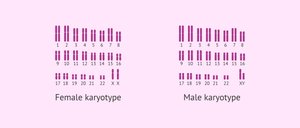
Sex chromosomes: X and Y chromosomes determine sex. Females have XX; males have XY.
Autosomes: The remaining 22 pairs of chromosomes in humans.
Homologous Chromosomes and Chromosome Sets
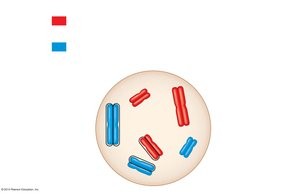
Each pair of homologous chromosomes consists of one chromosome from each parent. The diploid number in humans is 46, while gametes are haploid with 23 chromosomes.
Maternal and paternal sets: Each set contains 23 chromosomes.
Gametes: Sperm or egg cells, each carrying a single set of chromosomes.
Meiosis: Process and Significance
Overview of Meiosis
Meiosis is a specialized type of cell division that reduces chromosome number by half, producing four genetically distinct haploid cells. It consists of two consecutive divisions: meiosis I and meiosis II.
Meiosis I: Homologous chromosomes separate.
Meiosis II: Sister chromatids separate.
Result: Four haploid cells, each genetically unique.
Meiosis I: Separating Homologous Chromosomes
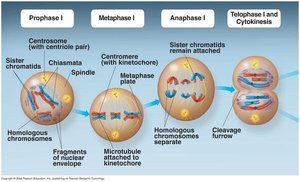
Meiosis I is the first division, where homologous chromosomes pair, undergo crossing over, and then separate into two cells.
Prophase I: Chromosomes condense, synapsis occurs, and crossing over exchanges genetic material.
Metaphase I: Tetrads align at the metaphase plate.
Anaphase I: Homologous chromosomes move to opposite poles.
Telophase I and Cytokinesis: Two haploid cells form.
Meiosis II: Separating Sister Chromatids
Meiosis II resembles mitosis, where sister chromatids are separated, resulting in four haploid cells.
Prophase II: Spindle apparatus forms.
Metaphase II: Chromatids align at the metaphase plate.
Anaphase II: Sister chromatids separate.
Telophase II and Cytokinesis: Four haploid cells are produced.
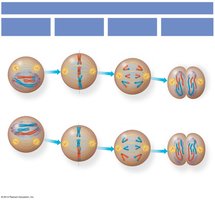
Comparison: Mitosis vs. Meiosis
Mitosis and meiosis are both forms of cell division, but they differ in their outcomes and roles in the organism.
Property | Mitosis | Meiosis |
|---|---|---|
DNA replication | Occurs during interphase | Occurs during interphase before meiosis I |
Number of divisions | One | Two |
Synapsis of homologous chromosomes | No | Yes, during prophase I |
Number of daughter cells | Two, diploid | Four, haploid |
Genetic composition | Identical to parent | Genetically different |
Role | Growth, repair | Gamete production, genetic variability |
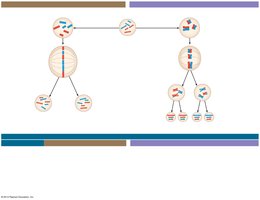
Genetic Variation and Evolution
Sources of Genetic Variation
Genetic variation is essential for evolution and is produced by several mechanisms during sexual reproduction.
Mutations: Changes in DNA, creating new alleles.
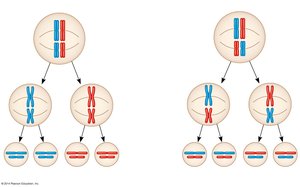
Independent assortment: Random orientation of homologous chromosomes during meiosis I.
Crossing over: Exchange of genetic material between nonsister chromatids during prophase I.
Random fertilization: Any sperm can fuse with any egg, increasing possible combinations.
Independent Assortment of Chromosomes
Homologous pairs orient randomly at metaphase I, leading to numerous possible combinations in gametes. The number of combinations is , where n is the haploid number.
Example: In humans, n = 23, so combinations are possible.
Crossing Over
Crossing over produces recombinant chromosomes, combining DNA from both parents. This process increases genetic diversity among offspring.
Occurs: Early in prophase I.
Result: Chromosomes with new combinations of alleles.
Random Fertilization
Random fertilization further increases genetic variation, as any sperm can fertilize any egg, resulting in a vast number of possible zygote combinations.
Example: With independent assortment and random fertilization, humans can produce about 70 trillion possible diploid combinations.
Summary Table: Unique Events in Meiosis
Event | Description |
|---|---|
Synapsis and crossing over | Homologous chromosomes connect and exchange genetic material in prophase I |
Homologous pairs at metaphase plate | Homologous pairs align at metaphase plate in metaphase I |
Separation of homologs | Homologous chromosomes separate in anaphase I |
Key Takeaways
Meiosis and fertilization maintain chromosome number across generations.
Meiosis introduces genetic variation through independent assortment, crossing over, and random fertilization.
Genetic variation is the foundation for evolution and adaptation in populations.
