 Back
BackMeiosis: The Cellular Basis of Sexual Reproduction and Genetic Variation
Study Guide - Smart Notes
 Tailored notes based on your materials, expanded with key definitions, examples, and context.
Meiosis: The Cellular Basis of Sexual Reproduction and Genetic Variation
Introduction to Meiosis
Meiosis is a specialized type of cell division that reduces the chromosome number by half, producing four haploid cells from one diploid cell. This process is essential for sexual reproduction and occurs only in the gonads (ovaries and testes) to produce gametes (eggs and sperm). Meiosis ensures genetic diversity and maintains a stable chromosome number across generations.
Overview of Meiosis
Purpose: To produce gametes with half the chromosome number of somatic cells, preventing chromosome doubling in each generation.
Location: Occurs only in the gonads (ovaries and testes).
Outcome: Four genetically distinct haploid cells.
Comparison to Mitosis: Mitosis produces two identical diploid cells; meiosis produces four non-identical haploid cells.
Phases of Meiosis
Meiosis consists of two sequential divisions: Meiosis I (reductional division) and Meiosis II (equational division). Each division has its own prophase, metaphase, anaphase, and telophase stages.
Meiosis I: Separation of Homologous Chromosomes
Interphase (G2 phase): Chromosomes duplicate, centrosomes replicate, and the nucleus is enclosed by a nuclear envelope.
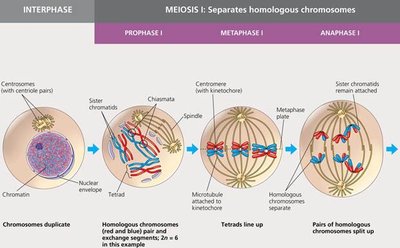
Prophase I: The longest phase, where homologous chromosomes pair up (synapsis) to form tetrads. Crossing over occurs, exchanging genetic material between non-sister chromatids at regions called chiasmata.
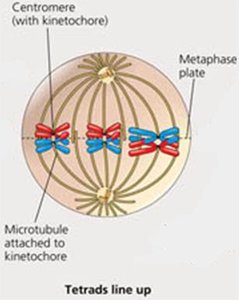
Metaphase I: Tetrads align along the metaphase plate. Each homolog is attached to spindle fibers from opposite poles.
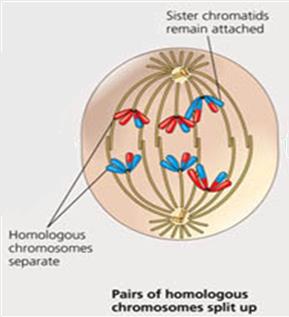
Anaphase I: Homologous chromosomes separate and move toward opposite poles, but sister chromatids remain attached.
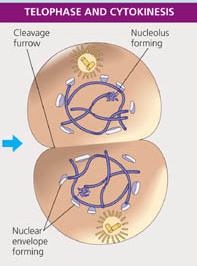
Telophase I & Cytokinesis: Each half of the cell has a haploid set of chromosomes. Cytokinesis divides the cytoplasm, forming two haploid cells.
Meiosis II: Separation of Sister Chromatids
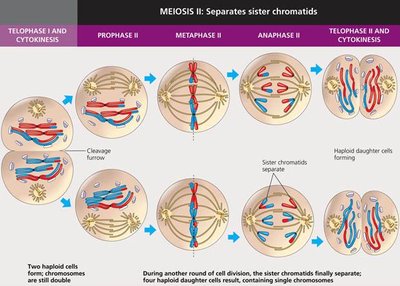
Meiosis II resembles mitosis but starts with haploid cells and does not involve chromosome duplication.
Prophase II: Spindle apparatus forms, and chromosomes (each with two chromatids) move toward the metaphase plate.
Metaphase II: Chromosomes align at the metaphase plate. Due to crossing over, sister chromatids are not genetically identical.
Anaphase II: Sister chromatids finally separate and move toward opposite poles.
Telophase II & Cytokinesis: Nuclei form, chromosomes decondense, and cytokinesis produces four genetically distinct haploid cells.
Comparison of Mitosis and Meiosis
Mitosis and meiosis are both forms of cell division but serve different purposes and have distinct outcomes.
Property | Mitosis | Meiosis |
|---|---|---|
DNA Replication | Occurs during interphase before mitosis begins | Occurs during interphase before meiosis I begins |
Number of Divisions | One | Two |
Synapsis of Homologous Chromosomes | Does not occur | Occurs during prophase I, forming tetrads and allowing crossing over |
Number of Daughter Cells & Genetic Composition | 2, diploid (2n), genetically identical | 4, haploid (n), genetically distinct |
Role in Organism | Growth, tissue repair | Production of gametes, genetic variability |
Mechanisms of Genetic Variation in Sexual Reproduction
Sexual reproduction introduces genetic variation through three main mechanisms:
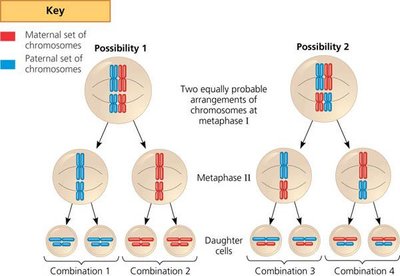
Independent Assortment of Chromosomes: During metaphase I, homologous pairs align randomly, leading to numerous possible combinations of maternal and paternal chromosomes in gametes. The number of possible combinations is , where n is the haploid number. In humans, possible combinations.
Crossing Over: Exchange of genetic material between non-sister chromatids during prophase I creates recombinant chromosomes, increasing genetic diversity.
Random Fertilization: The fusion of any male gamete with any female gamete further increases genetic variability. In humans, this results in about 64 trillion possible diploid combinations, not including variation from crossing over.

Summary Table: Key Differences Between Mitosis and Meiosis
Stage | Mitosis | Meiosis |
|---|---|---|
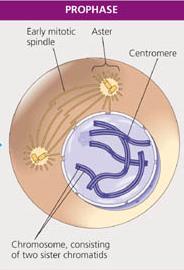
Prophase | Duplicated chromosomes (2 sister chromatids) visible | Homologous chromosomes pair to form tetrads (Prophase I) |
Metaphase | Chromosomes align at metaphase plate | Tetrads align at metaphase plate (Metaphase I) |
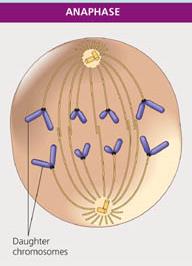
Anaphase | Sister chromatids separate | Homologous chromosomes separate (Anaphase I); sister chromatids separate (Anaphase II) |
Telophase | 2 diploid cells, genetically identical | 4 haploid cells, genetically distinct |
Conclusion
Meiosis is fundamental to sexual reproduction, ensuring genetic diversity and stability of chromosome number across generations. The processes of independent assortment, crossing over, and random fertilization collectively generate immense genetic variation, which is the raw material for evolution and adaptation in populations.
