 Back
Membrane Structure and Function: Study Notes for General Biology
Study Guide - Smart Notes
 Tailored notes based on your materials, expanded with key definitions, examples, and context.
Membrane Structure and Function
Selective Permeability of the Plasma Membrane
The plasma membrane is a critical boundary that separates the cell from its environment and regulates the movement of substances in and out of the cell. Its selective permeability allows certain molecules to cross more easily than others, maintaining cellular homeostasis.
Selective permeability: Only specific substances can pass through the membrane efficiently.
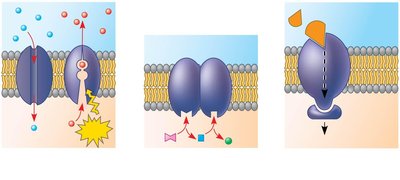
Transport proteins: Specialized proteins embedded in the membrane facilitate the movement of ions and polar molecules.
Examples: Water moves through aquaporins; ions move through channel proteins.
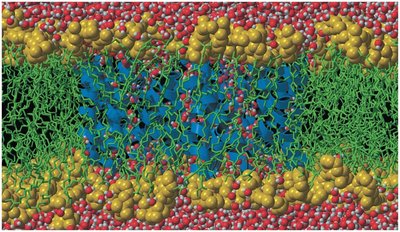
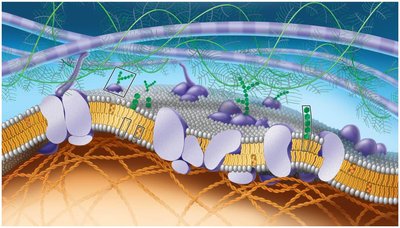
Fluid Mosaic Model of Cellular Membranes
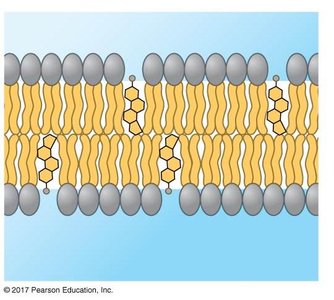
Cellular membranes are described by the fluid mosaic model, which highlights the dynamic and heterogeneous nature of the membrane. The membrane consists of a bilayer of phospholipids with proteins and other molecules interspersed throughout.
Phospholipids: The most abundant lipid in the plasma membrane, forming a bilayer with hydrophilic heads facing outward and hydrophobic tails inward.
Proteins: Integral and peripheral proteins are distributed throughout the membrane, contributing to its mosaic nature.
Fluidity: Lipids and proteins can move laterally within the layer, allowing flexibility and adaptability.
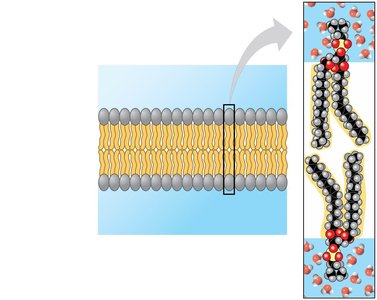
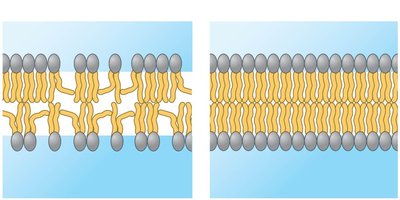
Phospholipid Structure and Membrane Fluidity
The structure of phospholipids and the presence of other molecules like cholesterol influence membrane fluidity, which is essential for proper membrane function.
Phospholipid bilayer: Composed of hydrophilic heads and hydrophobic tails.
Unsaturated vs. saturated fatty acids: Unsaturated tails prevent tight packing, increasing fluidity; saturated tails pack closely, making the membrane more viscous.
Cholesterol: Acts as a fluidity buffer, reducing fluidity at moderate temperatures and preventing solidification at low temperatures.
Membrane Proteins: Types and Functions
Membrane proteins are essential for a variety of cellular functions, including transport, enzymatic activity, and signal transduction. They are classified based on their association with the membrane.
Peripheral proteins: Bound to the membrane surface.
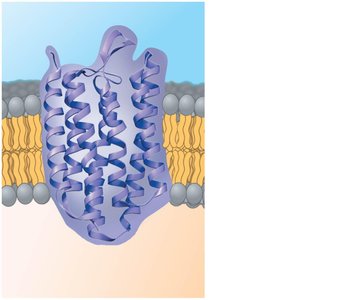
Integral proteins: Penetrate the hydrophobic core; those spanning the membrane are called transmembrane proteins.
Structure: Hydrophobic regions often consist of α helices made of nonpolar amino acids.
Functions: Transport, enzymatic activity, signal transduction, cell-cell recognition, intercellular joining, and attachment to the cytoskeleton and extracellular matrix.
Membrane Carbohydrates and Glycoproteins
Carbohydrates are found on the extracellular surface of the membrane, often attached to proteins (glycoproteins) or lipids (glycolipids). These molecules play key roles in cell recognition and signaling.
Glycoproteins: Proteins with carbohydrate chains attached, important for cell-cell recognition.
Glycolipids: Lipids with carbohydrate chains attached.
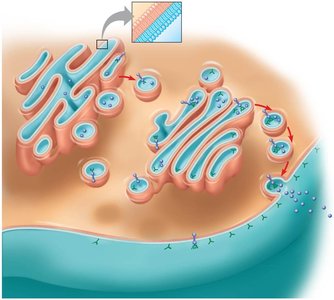
Secretory pathway: Glycoproteins and glycolipids are synthesized in the ER and Golgi apparatus and transported to the plasma membrane.
Permeability of the Lipid Bilayer
The lipid bilayer is selectively permeable, allowing hydrophobic molecules to pass through easily while restricting hydrophilic molecules and ions.
Hydrophobic molecules: Nonpolar molecules like oxygen and carbon dioxide diffuse rapidly through the membrane.
Hydrophilic molecules: Ions and polar molecules require transport proteins to cross the membrane.
Transport proteins: Channels and carriers facilitate the movement of these molecules.
Transport Across Cell Membranes
Transport across membranes can be passive or active, depending on the energy requirements and direction of movement relative to concentration gradients.
Passive transport: Does not require energy; includes simple diffusion and facilitated diffusion via channel or carrier proteins.
Active transport: Requires energy (usually ATP) to move substances against their concentration gradient; includes primary and secondary active transport.
Dr. U's rule of two: Passive transport involves simple diffusion and facilitated diffusion; active transport involves carrier proteins only.
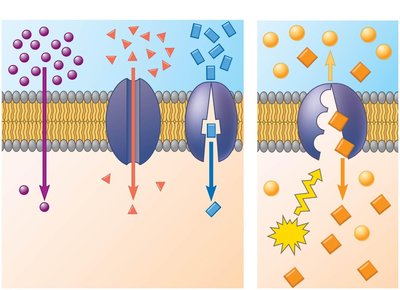
Primary and Secondary Active Transport
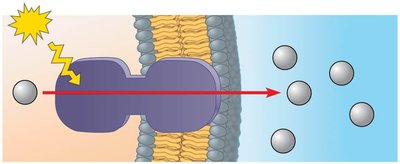
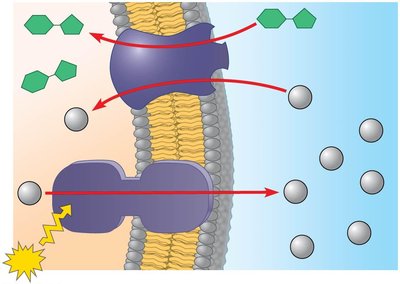
Active transport mechanisms use energy to move substances against their concentration gradients. Primary active transport uses ATP directly, while secondary active transport uses the energy stored in gradients created by primary transport.
Primary active transport: Direct use of ATP to transport ions (e.g., proton pumps).
Secondary active transport (cotransport): Uses the potential energy from the gradient of one solute to drive the transport of another solute against its gradient.
Example: Proton gradient created by ATP-driven pump is used to transport sucrose via a cotransporter.
Summary Table: Types of Membrane Transport
The following table summarizes the main types of membrane transport, their energy requirements, and examples:
Type of Transport | Energy Required | Direction | Example |
|---|---|---|---|
Simple Diffusion | No | Down gradient | O2, CO2 |
Facilitated Diffusion | No | Down gradient | Glucose, ions |
Primary Active Transport | Yes (ATP) | Against gradient | Na+/K+ pump, proton pump |
Secondary Active Transport | Indirect (gradient) | Against gradient | H+/sucrose cotransport |
Key Equations
Membrane transport often involves concentration gradients, which can be described mathematically:
Diffusion rate:
Electrochemical gradient:
Additional info: The notes expand on brief points from the original slides, providing definitions, examples, and context for each concept. All images included are directly relevant to the adjacent explanations, visually reinforcing the academic content.
