 Back
BackMembrane Structure and Function: Study Notes for Biology Students
Study Guide - Smart Notes
 Tailored notes based on your materials, expanded with key definitions, examples, and context.
Membrane Structure and Function
Overview of the Plasma Membrane
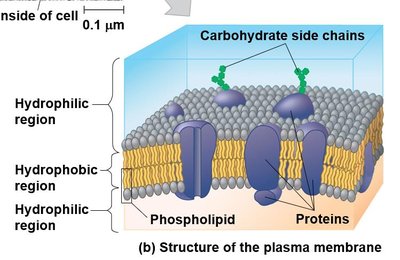
The plasma membrane is a fundamental structure that separates the living cell from its surroundings and regulates the exchange of substances with the environment. It exhibits selective permeability, allowing some substances to cross more easily than others. The general structure is a double layer of phospholipids with embedded proteins and carbohydrates.
Selective permeability: Only certain molecules can pass through the membrane efficiently.
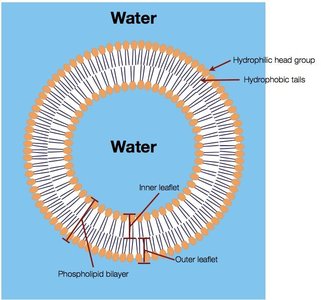
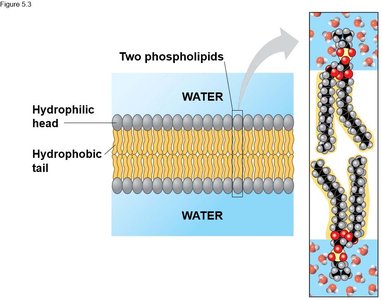
Phospholipid bilayer: The main structural component, with hydrophobic tails facing inward and hydrophilic heads facing outward.
Phospholipid Structure and Amphipathic Nature
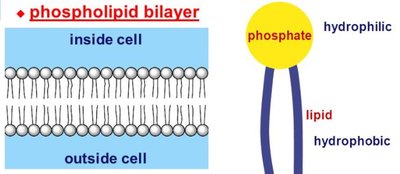
Phospholipids are amphipathic molecules, meaning they contain both hydrophobic and hydrophilic regions. This property allows them to form a stable bilayer in aqueous environments, creating a boundary between two compartments.
Hydrophilic head: Attracted to water, faces outward.
Hydrophobic tail: Repelled by water, faces inward.
Fluid Mosaic Model of Membrane Structure
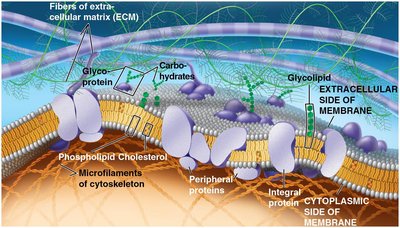
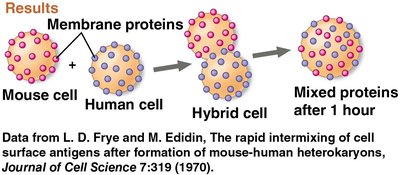
The fluid mosaic model describes the current understanding of membrane structure. The membrane is a mosaic of protein molecules bobbing in a fluid bilayer of phospholipids. Proteins are not randomly distributed; they often form groups that carry out common functions.
Membrane proteins: Amphipathic, with hydrophilic regions oriented toward the cytosol and extracellular fluid, and hydrophobic regions embedded in the bilayer.
Fluidity: Lipids and some proteins can move laterally; flip-flop movement is rare.
Membrane Fluidity and Its Regulation
Membrane fluidity is essential for proper function, affecting permeability and movement of transport proteins. Fluidity is influenced by temperature, lipid composition, and cholesterol content.
Temperature: Membranes become less fluid at lower temperatures.
Lipid type: Unsaturated fatty acids increase fluidity; saturated fatty acids decrease fluidity.
Cholesterol: Restrains movement at warm temperatures, maintains fluidity at cool temperatures.
Membrane Proteins and Their Functions
Proteins determine most of the membrane’s specific functions. They are classified as integral (penetrate the hydrophobic core) or peripheral (bound to the surface). Integral proteins that span the membrane are called transmembrane proteins.
Transport: Move substances across the membrane.
Enzymatic activity: Catalyze reactions.
Signal transduction: Relay signals from outside to inside the cell.
Cell-cell recognition: Identify other cells.
Intercellular joining: Connect cells together.
Attachment: Anchor to cytoskeleton and extracellular matrix.
Membrane Carbohydrates and Cell-Cell Recognition
Membrane carbohydrates are important for cell-cell recognition. They are covalently bonded to lipids (glycolipids) or proteins (glycoproteins) and vary among species, individuals, and cell types.
Function: Serve as markers for cell identification.
Diversity: Enables specific recognition and communication.
Membrane Sidedness and Synthesis
Membranes have distinct inside and outside faces, with asymmetrical distribution of proteins, lipids, and carbohydrates. This sidedness is determined during membrane synthesis by the ER and Golgi apparatus.
Cytoplasmic face: Faces the inside of the cell.
Extracellular face: Faces the outside environment.
Selective Permeability of the Membrane
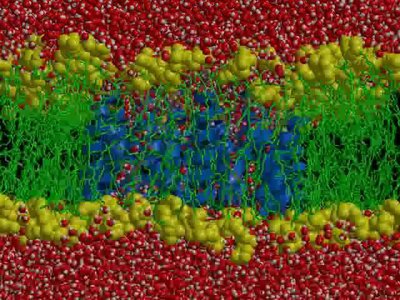
The plasma membrane’s structure results in selective permeability. Hydrophobic (nonpolar) molecules pass easily, while hydrophilic (polar) molecules and ions require transport proteins.
Hydrophobic molecules: Hydrocarbons, CO2, O2 pass rapidly.
Hydrophilic molecules: Sugars, water, ions pass slowly or not at all.
Transport Proteins
Transport proteins facilitate the passage of hydrophilic substances. Channel proteins provide tunnels, while carrier proteins bind and shuttle specific molecules across the membrane.
Channel proteins: Aquaporins for water, ion channels for ions.
Carrier proteins: Undergo shape changes to move molecules.
Passive Transport: Diffusion and Osmosis
Passive transport is the diffusion of substances across a membrane without energy investment. Molecules move down their concentration gradient. Osmosis is the diffusion of water across a selectively permeable membrane.
Isotonic solution: Equal solute concentration; no net water movement.
Hypertonic solution: Higher solute concentration outside; cell loses water.
Hypotonic solution: Lower solute concentration outside; cell gains water.
Osmoregulation and Adaptations
Organisms must regulate solute concentrations and water balance. For example, the protist Paramecium caudatum uses a contractile vacuole to pump excess water out of the cell.
Facilitated Diffusion
Facilitated diffusion is passive transport aided by proteins. Channel proteins provide corridors, and carrier proteins undergo shape changes to move molecules. No energy input is required.
Active Transport
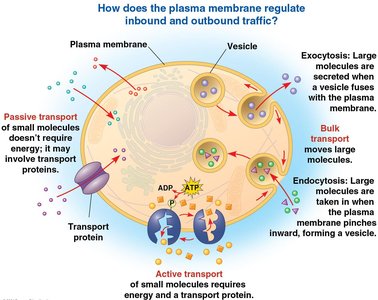
Active transport moves substances against their concentration gradients and requires energy, usually from ATP. The sodium-potassium pump is a major example, maintaining electrochemical gradients in animal cells.
Electrochemical gradient: Combination of chemical and electrical forces driving ion diffusion.
Electrogenic pumps: Generate voltage across membranes (e.g., proton pump in plants).
Cotransport: Active transport of one solute indirectly drives transport of another.
Bulk Transport: Exocytosis and Endocytosis
Large molecules cross the membrane in bulk via vesicles. Exocytosis releases contents outside the cell, while endocytosis brings in molecules by forming vesicles. Endocytosis includes phagocytosis, pinocytosis, and receptor-mediated endocytosis.
Phagocytosis: Cell engulfs particles.
Pinocytosis: Cell "drinks" extracellular fluid.
Receptor-mediated endocytosis: Specific uptake of molecules via receptors.
Summary Table: Types of Membrane Transport
Type | Energy Required | Direction | Example |
|---|---|---|---|
Passive Transport | No | Down gradient | Diffusion, Osmosis |
Facilitated Diffusion | No | Down gradient | Aquaporins, Ion channels |
Active Transport | Yes (ATP) | Against gradient | Sodium-potassium pump |
Bulk Transport | Yes | Varies | Exocytosis, Endocytosis |
Key Equations
Osmosis: Water moves from low solute concentration to high solute concentration.
Electrochemical gradient:
Additional info:
Membrane composition and fluidity are adapted to environmental conditions in many species.
Cell-surface proteins are important in medicine, e.g., HIV entry via CD4 and CCR5.
