 Back
Membrane Transport and Lipid Structure: Study Guidance for General Biology
Study Guide - Smart Notes
 Tailored notes based on your materials, expanded with key definitions, examples, and context.
Q1. Describe the three types of lipids and their function in life.
Background
Topic: Lipid Types and Biological Functions
This question tests your understanding of the major classes of lipids—fats (fatty acids), steroids, and phospholipids—and their roles in living organisms.
Key Terms:
Fats (Triglycerides): Energy storage, insulation, and protection.
Steroids: Hormones and signaling molecules.
Phospholipids: Structural component of cell membranes.
Step-by-Step Guidance
Identify each lipid type: fats, steroids, and phospholipids.
Describe the structure of each lipid (e.g., fatty acid chains, ring structure for steroids, phosphate group for phospholipids).
Explain the primary function of each lipid in biological systems.
Consider examples of each type (e.g., cholesterol for steroids, cell membrane for phospholipids).
Try solving on your own before revealing the answer!
Final Answer:
Fats store energy, steroids act as hormones and signaling molecules, and phospholipids form the structural basis of cell membranes. Cholesterol is a steroid that serves as a precursor for other steroids.
Q2. Draw a structure for saturated and unsaturated lipids and describe the differences.
Background
Topic: Lipid Structure and Saturation
This question tests your ability to distinguish between saturated and unsaturated fatty acids based on their chemical structure and physical properties.
Key Terms:
Saturated fatty acids: No double bonds, straight chains.
Unsaturated fatty acids: One or more double bonds, kinked chains.
Step-by-Step Guidance
Draw a saturated fatty acid with only single bonds between carbon atoms.
Draw an unsaturated fatty acid with at least one double bond, causing a bend or kink in the chain.
Describe how the presence of double bonds affects the physical properties (e.g., liquid vs. solid at room temperature).
Try solving on your own before revealing the answer!
Final Answer:
Saturated fats have straight chains and are solid at room temperature; unsaturated fats have kinks due to double bonds and are liquid at room temperature.
Q3. What is the role of saturated and unsaturated fats in health, food, and biological membranes?
Background
Topic: Lipid Function in Health and Membranes
This question explores how the saturation level of fats affects their function in diet, health, and cell membrane structure.
Key Terms:
Saturated fats: Associated with higher cholesterol and cardiovascular risk.
Unsaturated fats: Healthier, promote membrane fluidity.
Step-by-Step Guidance
Discuss the impact of saturated fats on health (e.g., cholesterol levels).
Explain the role of unsaturated fats in food (e.g., oils vs. butter).
Describe how both types affect membrane fluidity and function.
Try solving on your own before revealing the answer!
Final Answer:
Saturated fats are solid at room temperature and can raise cholesterol; unsaturated fats are liquid and promote healthy membranes and lower cardiovascular risk.
Q4. What factors determine the fluidity of the plasma membrane?
Background
Topic: Membrane Fluidity
This question tests your understanding of the structural and environmental factors that influence how fluid or rigid a cell membrane is.
Key Terms:
Fatty acid saturation
Cholesterol content
Temperature
Step-by-Step Guidance
List the factors affecting membrane fluidity (e.g., saturated vs. unsaturated fatty acids, cholesterol, temperature).
Explain how each factor increases or decreases fluidity.
Relate these factors to cell function and adaptation.
Try solving on your own before revealing the answer!
Final Answer:
Membrane fluidity is determined by fatty acid saturation, cholesterol content, and temperature. Unsaturated fats and higher temperatures increase fluidity; cholesterol stabilizes membranes.
Q5. Describe the different types of steroids and their function. Which molecule acts as the base for many other steroids?
Background
Topic: Steroid Structure and Function
This question tests your knowledge of steroid diversity and their biological roles, as well as the precursor molecule for steroid synthesis.
Key Terms:
Cholesterol: Precursor for steroid hormones.
Steroid hormones: e.g., estrogen, testosterone, cortisol.
Step-by-Step Guidance
List examples of steroids and their functions (e.g., hormones, signaling).
Identify the molecule that serves as the base for steroid synthesis.
Explain how cholesterol is converted into other steroids.
Try solving on your own before revealing the answer!
Final Answer:
Cholesterol is the base molecule for many steroids, including hormones like estrogen, testosterone, and cortisol.
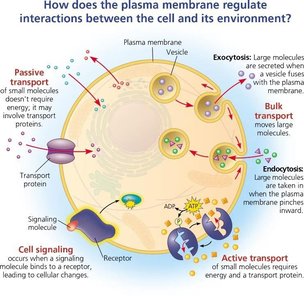
Q6. What is the purpose of the plasma membrane? Describe its structure as seen in the figure.
Background
Topic: Plasma Membrane Structure and Function
This question tests your understanding of the plasma membrane's role and its structural components.
Key Terms:
Selective permeability
Phospholipid bilayer
Proteins, cholesterol, carbohydrates
Step-by-Step Guidance
Describe the plasma membrane's function (e.g., boundary, regulation of transport).
Identify the main structural components (phospholipids, proteins, cholesterol).
Explain how these components contribute to membrane function.
Try solving on your own before revealing the answer!
Final Answer:
The plasma membrane defines cell boundaries, regulates transport, and is composed of a phospholipid bilayer with embedded proteins, cholesterol, and carbohydrates.
Q7. Describe the role of each component in the membrane.
Background
Topic: Membrane Components and Functions
This question tests your ability to identify and explain the function of membrane components such as lipids, proteins, and carbohydrates.
Key Terms:
Phospholipids: Structure and barrier
Proteins: Transport, signaling
Cholesterol: Fluidity
Carbohydrates: Cell recognition
Step-by-Step Guidance
List each component (phospholipids, proteins, cholesterol, carbohydrates).
Describe the function of each in the membrane.
Explain how these components interact to regulate transport and communication.
Try solving on your own before revealing the answer!
Final Answer:
Phospholipids form the bilayer, proteins facilitate transport and signaling, cholesterol modulates fluidity, and carbohydrates aid in cell recognition.
Q8. Describe the factors that affect the fluidity of the membrane.
Background
Topic: Membrane Fluidity
This question tests your understanding of how lipid composition, cholesterol, and temperature influence membrane fluidity.
Key Terms:
Unsaturated vs. saturated fatty acids
Cholesterol
Temperature
Step-by-Step Guidance
Identify the types of fatty acids present in the membrane.
Explain how cholesterol affects fluidity.
Discuss the impact of temperature on membrane fluidity.
Try solving on your own before revealing the answer!
Final Answer:
Membrane fluidity increases with unsaturated fatty acids and higher temperatures; cholesterol stabilizes fluidity.
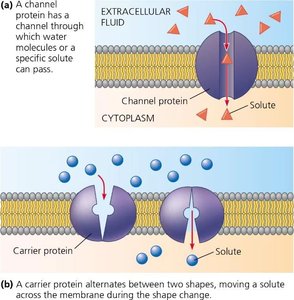
Q9. Describe the structure of the membrane and the properties of each molecule (large, small, polar, non-polar, charged, etc) and if they would easily cross the membrane.
Background
Topic: Membrane Permeability
This question tests your understanding of how molecular size, polarity, and charge affect the ability of substances to cross the plasma membrane.
Key Terms:
Selective permeability
Small non-polar molecules
Large, polar, or charged molecules
Step-by-Step Guidance
Describe the phospholipid bilayer and its selective permeability.
List the properties of each molecule (water, glucose, small lipids, oxygen, sodium ions).
Explain which molecules can cross easily and which require transport proteins.
Try solving on your own before revealing the answer!
Final Answer:
Small non-polar molecules (like O2) cross easily; large, polar, or charged molecules (like glucose and Na+) require transport proteins.
Q31. Describe each type of passive transport. Write 3 key points for each.
Background
Topic: Passive Transport Mechanisms
This question tests your knowledge of simple diffusion, facilitated diffusion, and osmosis.
Key Terms:
Simple diffusion: Movement down concentration gradient, no energy required.
Facilitated diffusion: Uses transport proteins, no energy required.
Osmosis: Diffusion of water across a membrane.
Step-by-Step Guidance
Define each type of passive transport.
List three key points for each (e.g., direction, energy requirement, involvement of proteins).
Compare and contrast the mechanisms.
Try solving on your own before revealing the answer!
Final Answer:
Simple diffusion moves small, non-polar molecules; facilitated diffusion uses proteins for larger or polar molecules; osmosis is water movement. All are passive and move substances down their concentration gradient.
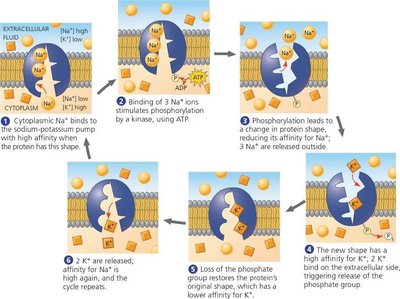
Q32. Describe the operation of the sodium-potassium pump. Give examples of cell types that use this system.
Background
Topic: Active Transport
This question tests your understanding of the sodium-potassium pump, a classic example of active transport in cells.
Key Terms and Formula:
Active transport: Requires ATP
Sodium-potassium pump: Moves 3 Na+ out, 2 K+ in
Step-by-Step Guidance
Describe the steps of the sodium-potassium pump cycle (binding, phosphorylation, conformational change, release).
Explain the role of ATP in powering the pump.
List cell types that rely on this pump (e.g., neurons, muscle cells).
Try solving on your own before revealing the answer!
Final Answer:
The sodium-potassium pump uses ATP to move 3 Na+ out and 2 K+ in, maintaining gradients essential for nerve and muscle function.
Q33. Are exocytosis and endocytosis active or passive transport?
Background
Topic: Bulk Transport
This question tests your understanding of whether bulk transport processes require energy.
Key Terms:
Active transport: Requires energy
Bulk transport: Exocytosis and endocytosis
Step-by-Step Guidance
Define exocytosis and endocytosis.
Explain whether these processes require energy input.
Try solving on your own before revealing the answer!
Final Answer:
Both exocytosis and endocytosis are active transport processes that require energy.
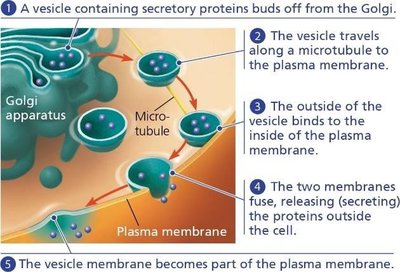
Q34. How do exocytosis and endocytosis use vesicles to transport materials across cell membranes? What types of molecules use each process?
Background
Topic: Bulk Transport Mechanisms
This question tests your understanding of vesicle-mediated transport and the types of molecules involved.
Key Terms:
Vesicle: Membrane-bound transport structure
Exocytosis: Secretion of large molecules
Endocytosis: Uptake of large molecules
Step-by-Step Guidance
Describe the steps of exocytosis (vesicle fusion, release).
Describe the steps of endocytosis (membrane invagination, vesicle formation).
List types of molecules transported (e.g., proteins, polysaccharides).
Try solving on your own before revealing the answer!
Final Answer:
Exocytosis and endocytosis use vesicles to move large molecules like proteins and polysaccharides across membranes.
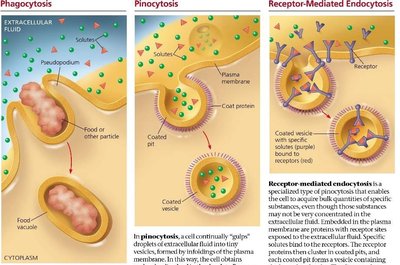
Q35. Describe the difference between phagocytosis and pinocytosis.
Background
Topic: Types of Endocytosis
This question tests your understanding of the two main forms of endocytosis: phagocytosis (cell eating) and pinocytosis (cell drinking).
Key Terms:
Phagocytosis: Uptake of large particles
Pinocytosis: Uptake of fluid and small molecules
Step-by-Step Guidance
Define phagocytosis and pinocytosis.
Describe the process and what is taken up in each.
Compare the size and type of material transported.
Try solving on your own before revealing the answer!
Final Answer:
Phagocytosis engulfs large particles (e.g., bacteria); pinocytosis takes in fluids and small molecules.
Q36. Describe how receptor-mediated endocytosis differs.
Background
Topic: Specialized Endocytosis
This question tests your understanding of receptor-mediated endocytosis, a highly specific form of endocytosis.
Key Terms:
Receptor-mediated endocytosis: Specific uptake via receptors
Coated vesicle
Step-by-Step Guidance
Describe the role of receptors in recognizing specific molecules.
Explain how coated vesicles form and internalize the target molecules.
Compare to other forms of endocytosis.
Try solving on your own before revealing the answer!
Final Answer:
Receptor-mediated endocytosis uses specific receptors to selectively internalize target molecules, forming coated vesicles.
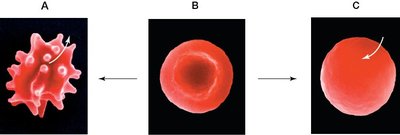
Q4 (Pulling it all together): Describe the concentration of the outside vs inside of the red blood cell in each image below. Be sure to describe what is occurring with the white arrows.
Background
Topic: Osmosis and Tonicity
This question tests your understanding of how water movement affects cell shape in different solutions (hypotonic, isotonic, hypertonic).
Key Terms:
Hypotonic: Lower solute outside, water enters cell
Isotonic: Equal solute, no net water movement
Hypertonic: Higher solute outside, water leaves cell
Step-by-Step Guidance
Identify the concentration gradient in each image (A, B, C).
Describe the direction of water movement indicated by the arrows.
Explain the effect on cell shape (swelling, shrinking, normal).
Try solving on your own before revealing the answer!
Final Answer:
In hypotonic solution, water enters and cell swells; in isotonic, cell remains normal; in hypertonic, water leaves and cell shrivels.
Q5. If the concentration of glucose in a liver cell is higher than in the surrounding fluid, what mechanism could the cell use to import even more glucose? Why would only this mode of transport work?
Background
Topic: Active Transport
This question tests your understanding of transport mechanisms when moving substances against their concentration gradient.
Key Terms:
Active transport: Requires energy
Concentration gradient
Step-by-Step Guidance
Identify the direction of glucose movement (against gradient).
Explain why passive transport would not work.
Describe how active transport enables import against the gradient.
Try solving on your own before revealing the answer!
Final Answer:
Active transport is required to import glucose against its concentration gradient, using energy (ATP).
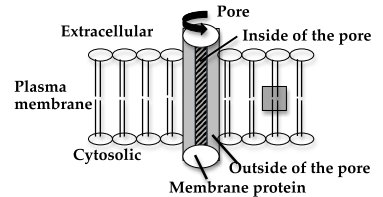
Q6. What type of interior lining would be in the inside of the protein pore? What type of lining would be for the outside of the pore?
Background
Topic: Membrane Protein Structure
This question tests your understanding of how membrane proteins are structured to facilitate transport.
Key Terms:
Hydrophilic: Attracts water, inside of pore
Hydrophobic: Repels water, outside of pore
Step-by-Step Guidance
Describe the environment inside the pore (hydrophilic, interacts with ions/water).
Describe the environment outside the pore (hydrophobic, interacts with lipid bilayer).
Try solving on your own before revealing the answer!
Final Answer:
The inside of the pore is hydrophilic; the outside is hydrophobic, matching the lipid bilayer environment.
Q7. Why are individuals with fewer cholesterol LDL receptors on their membranes more likely to develop cardiovascular disease?
Background
Topic: Receptor-Mediated Endocytosis and Disease
This question tests your understanding of how LDL receptor numbers affect cholesterol uptake and cardiovascular risk.
Key Terms:
LDL receptor: Uptake of cholesterol
Cardiovascular disease: Linked to high blood cholesterol
Step-by-Step Guidance
Explain the role of LDL receptors in cholesterol uptake.
Describe what happens when receptor numbers are low.
Relate this to cholesterol accumulation and disease risk.
Try solving on your own before revealing the answer!
Final Answer:
Fewer LDL receptors mean less cholesterol is removed from blood, increasing risk of cardiovascular disease.
Q8. Some cancer cells are insensitive to typical chemotherapy because they pump the drug out against its concentration gradient. What type of transport are the resistant cells using?
Background
Topic: Drug Resistance and Active Transport
This question tests your understanding of how cells use active transport to resist chemotherapy.
Key Terms:
Active transport: Moves substances against gradient
Drug resistance
Step-by-Step Guidance
Identify the direction of drug movement (out of cell, against gradient).
Explain why this requires active transport.
Relate to cancer cell resistance mechanisms.
Try solving on your own before revealing the answer!
Final Answer:
Resistant cancer cells use active transport to pump drugs out, reducing effectiveness of chemotherapy.
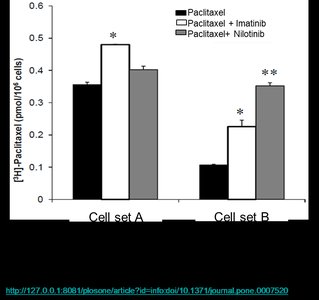
Q8b. Do the additional drugs seem to be effective in overcoming the pump and which set of graphs (A or B) BEST supports your answer?
Background
Topic: Drug Inhibition and Data Interpretation
This question tests your ability to interpret experimental data on drug effectiveness.
Key Terms:
Statistical significance
Drug uptake
Step-by-Step Guidance
Examine the graph for changes in drug uptake with additional drugs.
Identify which cell set shows a significant increase in drug retention.
Explain how this supports effectiveness in overcoming the pump.
Try solving on your own before revealing the answer!
Final Answer:
Cell set B shows a significant increase in drug retention with additional drugs, indicating effectiveness in overcoming the pump.
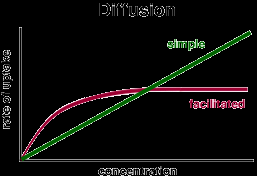
Q9. The letters on the graph correspond to which types of transport?
Background
Topic: Transport Mechanisms and Data Interpretation
This question tests your ability to match graph patterns to transport types.
Key Terms:
Active transport
Simple diffusion
Step-by-Step Guidance
Analyze the graph for linear vs. saturating patterns.
Match each pattern to the correct transport mechanism.
Try solving on your own before revealing the answer!
Final Answer:
A corresponds to active transport; B corresponds to simple diffusion.
