 Back
Mendel and the Gene Idea: Patterns and Mechanisms of Inheritance
Study Guide - Smart Notes
 Tailored notes based on your materials, expanded with key definitions, examples, and context.
Mendel and the Gene Idea
Introduction to Mendelian Genetics
Mendelian genetics forms the foundation of classical genetics, describing how traits are inherited from one generation to the next. Gregor Mendel's experiments with pea plants led to the formulation of key principles that explain the transmission of heritable traits.
Before Mendel: The Blending Hypothesis
Blending Hypothesis of Inheritance
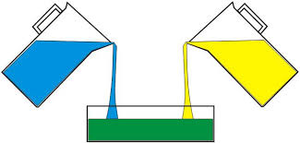
Before Mendel, the prevailing theory was the blending hypothesis, which proposed that offspring are a uniform blend of parental traits. This model could not explain why traits sometimes skip generations or why variation persists in populations.
Blending Hypothesis: Parental traits mix to produce intermediate offspring.
Problems: Does not account for traits reappearing after skipping generations or the persistence of variation.
Gregor Mendel and the Particulate Hypothesis
Mendel's Background and Experiments
Gregor Mendel, trained in science and a monk, conducted experiments on pea plants in 1857. He proposed the particulate hypothesis, suggesting that traits are inherited as discrete units called genes, which do not blend but are passed intact from generation to generation.
Particulate Hypothesis: Traits are inherited as whole units (genes).
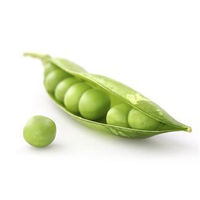
Pea Plant Experiments: Mendel used pea plants due to their many heritable characters, short generation time, and controlled fertilization.
Characters and Traits in Pea Plants
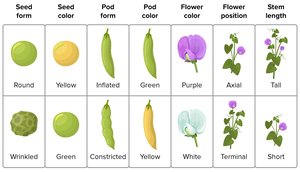
Mendel studied several characters (heritable features) and their traits (variants of characters) in pea plants, such as flower color, seed shape, and pod color.
Character: Heritable feature (e.g., flower color).
Trait: Variant of a character (e.g., purple or white flowers).
Pollination Methods
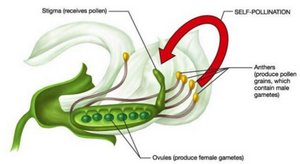
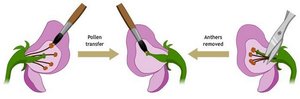
Mendel controlled fertilization in pea plants through self-pollination and cross-pollination to study inheritance patterns.
Self-Pollination: Pollen from a flower fertilizes ovules of the same flower.
Cross-Pollination: Pollen from one plant fertilizes ovules of another plant.
True-Breeding Plants
True-breeding plants, when self-fertilized, always produce offspring with the same trait. Mendel used these as the parental (P) generation in his experiments.
Mendel’s Crosses and Generations
P, F1, and F2 Generations
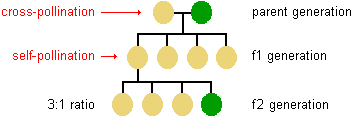
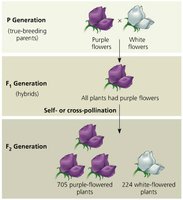
Mendel crossed true-breeding plants (P generation) to produce the first filial (F1) generation, then self- or cross-pollinated F1 plants to produce the second filial (F2) generation.
P Generation: True-breeding parents.
F1 Generation: Offspring of P generation; all showed dominant trait.
F2 Generation: Offspring of F1; showed a 3:1 ratio of dominant to recessive traits.
Dominant and Recessive Traits
In the F1 generation, only the dominant trait appeared, while the recessive trait was masked but reappeared in the F2 generation, disproving the blending hypothesis.
Mendel’s Laws
Law of Segregation
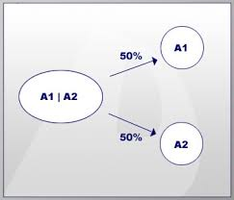
The Law of Segregation states that two alleles for a gene separate during gamete formation, so each gamete carries only one allele for each gene. This explains the 3:1 ratio observed in the F2 generation.
Alleles: Different versions of a gene.
Homozygous: Two identical alleles (e.g., PP or pp).
Heterozygous: Two different alleles (e.g., Pp).
Punnett Squares
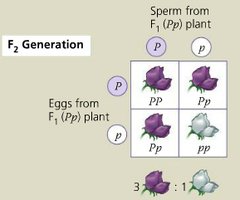
Punnett squares are used to predict the genetic makeup and phenotypes of offspring from parental crosses.
F2 Generation: 1/4 PP, 1/2 Pp, 1/4 pp (genotype); 3/4 purple, 1/4 white (phenotype).
Law of Independent Assortment
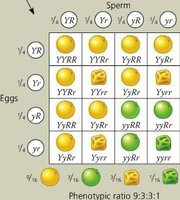
The Law of Independent Assortment states that alleles of different genes assort independently during gamete formation, provided the genes are on different chromosomes or far apart on the same chromosome. This law explains the inheritance of multiple traits.
Demonstrated using dihybrid crosses (e.g., seed color and seed shape).
F2 generation shows a 9:3:3:1 phenotypic ratio.
Genetic Vocabulary
Key Terms
Phenotype: Observable physical traits.
Genotype: Genetic makeup (allele combination).
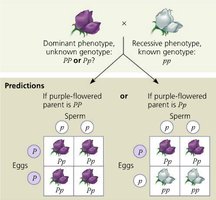
Testcross: Cross between an individual with a dominant phenotype and a homozygous recessive to determine genotype.
Human Inheritance Patterns
Recessively Inherited Disorders
Recessive genetic disorders occur when an individual inherits two mutated alleles. Heterozygotes are typically healthy carriers. Examples include Tay Sachs disease, Cystic Fibrosis, and Sickle Cell Anemia.
Tay Sachs Disease: Defective enzyme leads to lipid accumulation and neurological damage.
Cystic Fibrosis: Malfunctioning chloride channel causes thick mucus and affects multiple organs (pleiotropy).
Sickle Cell Anemia: Mutant hemoglobin causes sickle-shaped red blood cells; heterozygotes have malaria resistance.
Dominantly Inherited Disorders
Dominant disorders require only one mutated allele to express the disease. Examples include Achondroplasia (dwarfism) and Huntington’s Disease (neurodegenerative disorder).
Pedigrees and Genetic Testing
Pedigrees
Pedigrees are diagrams that trace the inheritance of traits through generations, useful for studying human genetics and predicting genetic disorders.
Genetic Testing
Genetic testing includes carrier screening, preimplantation genetic diagnosis (IVF), fetal testing (amniocentesis, CVS), and newborn screening (e.g., PKU). These methods help identify genetic disorders before or after birth.
Beyond Simple Mendelian Inheritance
Degrees of Dominance
Complete Dominance: Heterozygote is identical to dominant homozygote.
Incomplete Dominance: Heterozygote shows an intermediate phenotype (e.g., red x white = pink flowers).
Codominance: Both alleles are fully expressed (e.g., human blood types IA, IB, i).
Multiple Alleles and Pleiotropy
Multiple Alleles: More than two alleles exist for a gene (e.g., ABO blood group).
Pleiotropy: One gene affects multiple traits (e.g., sickle cell anemia affects blood, organs, and resistance to malaria).
Polygenic Inheritance and Epistasis
Polygenic Inheritance: Multiple genes contribute to a single trait, resulting in continuous variation (e.g., skin color, height).
Epistasis: One gene affects the expression of another gene (e.g., coat color in Labrador retrievers).
Environmental Effects on Phenotype
The environment can influence gene expression and phenotype. Examples include melanin production in snowshoe hares, temperature-sensitive enzymes in Siamese cats, and the effect of nutrition on human height.
Summary Table: Mendelian vs. Non-Mendelian Inheritance
Inheritance Pattern | Description | Example |
|---|---|---|
Complete Dominance | Dominant allele masks recessive | Purple/white pea flowers |
Incomplete Dominance | Heterozygote is intermediate | Red x White = Pink flowers |
Codominance | Both alleles expressed equally | AB blood type |
Multiple Alleles | More than two alleles for a gene | ABO blood group |
Pleiotropy | One gene, multiple effects | Sickle cell anemia |
Epistasis | One gene affects another's expression | Labrador coat color |
Polygenic Inheritance | Multiple genes, one trait | Skin color, height |
Key Equations and Concepts
Mendelian Monohybrid Ratio (F2): (genotype), (phenotype)
Dihybrid Ratio (F2): (phenotype)
Punnett Square: Visual tool for predicting offspring genotypes and phenotypes
