 Back
Mendel and the Gene Idea: Patterns and Mechanisms of Genetic Inheritance
Study Guide - Smart Notes
 Tailored notes based on your materials, expanded with key definitions, examples, and context.
Mendel and the Gene Idea
Historical Context and Mendel's Experiments
Gregor Mendel's work established the foundation for modern genetics by demonstrating how traits are inherited as discrete units, now known as genes. Prior to Mendel, the blending hypothesis suggested offspring were a mix of parental traits, but this could not explain traits skipping generations or the persistence of distinct characteristics.
Blending Hypothesis: Proposed that parental traits mix in offspring, leading to uniformity over generations. This was disproven by Mendel's findings.
Particulate Hypothesis: Mendel showed that traits are inherited as whole units (genes), not blended, allowing for the reappearance of traits in later generations.
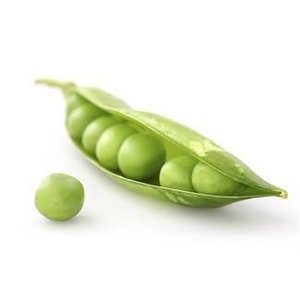
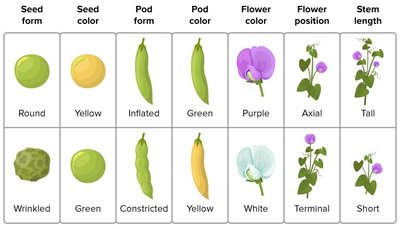
Experimental System: Mendel used pea plants (Pisum sativum) due to their distinct traits, short generation time, and ability to control fertilization.
Pea Plant Fertilization and True-Breeding
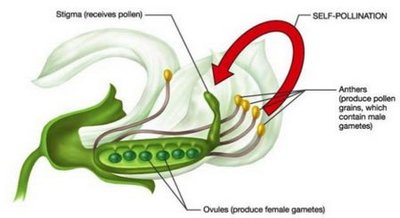
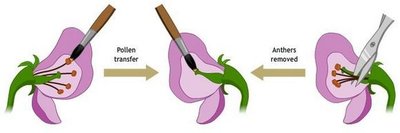
Mendel controlled fertilization in pea plants through self-pollination and cross-pollination, enabling him to track inheritance patterns across generations.
Self-Pollination: Pollen from a flower fertilizes ovules of the same flower, producing true-breeding plants.
Cross-Pollination: Pollen from one plant fertilizes another, allowing for hybridization.
True-Breeding: Plants that consistently produce offspring with the same trait when self-pollinated.
Mendel's Crosses and Generations
Mendel's experiments involved crossing true-breeding plants to observe trait inheritance in subsequent generations.
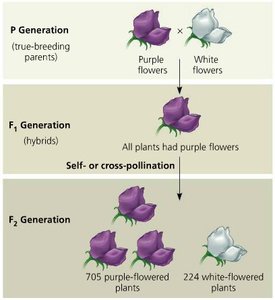
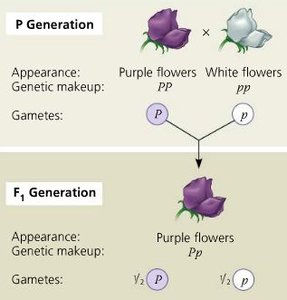
P Generation: Parental generation, true-breeding for a trait.
F1 Generation: First filial generation, all offspring showed the dominant trait.
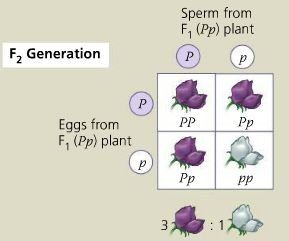
F2 Generation: Second filial generation, traits segregated in a 3:1 ratio (dominant:recessive).
Mendel's Laws of Inheritance
Mendel formulated two fundamental laws based on his experiments: the Law of Segregation and the Law of Independent Assortment.
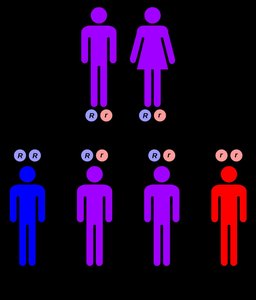
Law of Segregation: Each individual has two alleles for each gene, which segregate during gamete formation so each gamete receives one allele. This explains the 3:1 ratio in the F2 generation.
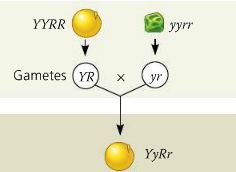
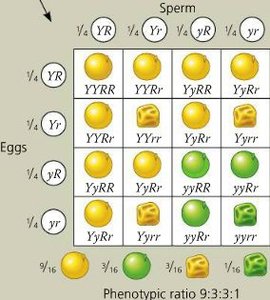
Law of Independent Assortment: Genes for different traits assort independently during gamete formation, provided they are on different chromosomes or far apart on the same chromosome.
Genetic Vocabulary and Punnett Squares
Understanding genetic inheritance requires familiarity with key terms and tools such as Punnett squares.
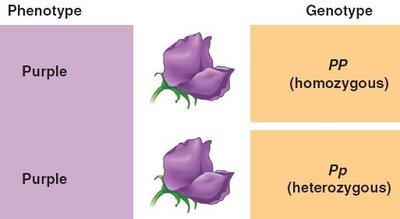
Phenotype: Observable physical traits.
Genotype: Genetic makeup (allele combinations).
Homozygous: Two identical alleles for a gene.
Heterozygous: Two different alleles for a gene.
Punnett Square: Diagram used to predict allele combinations in offspring.
Testcross and Determining Genotypes
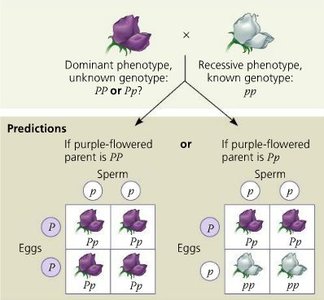
A testcross is used to determine the genotype of an individual with a dominant phenotype by crossing it with a homozygous recessive individual.
If the dominant individual is homozygous, all offspring will show the dominant phenotype.
If heterozygous, offspring will show a 1:1 ratio of dominant to recessive phenotypes.
How Genotype Confers Phenotype
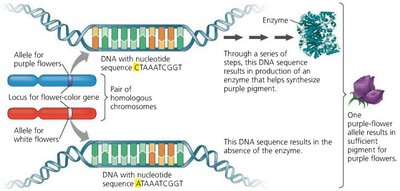
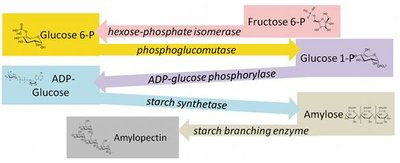
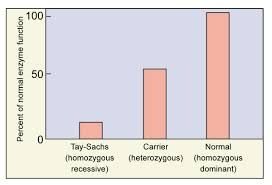
The genotype determines the phenotype through the production of proteins and enzymes. Mutations in genes can lead to defective proteins, resulting in altered phenotypes or genetic disorders.
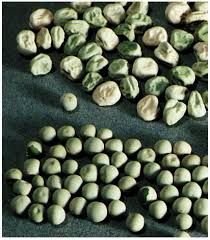
Example: The r allele in peas causes wrinkled seeds due to a defective starch branching enzyme.
Patterns of Inheritance in Humans
Human traits often follow Mendelian patterns, but can be influenced by dominance, multiple alleles, pleiotropy, epistasis, and polygenic inheritance.
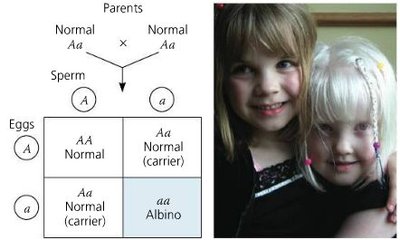
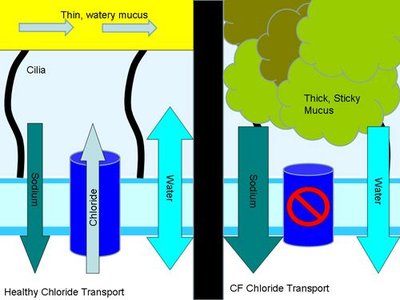
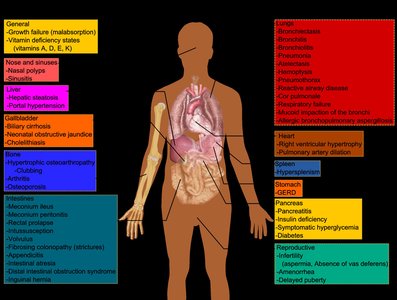
Recessively Inherited Disorders: Caused by mutated recessive alleles. Heterozygotes are carriers and usually healthy.
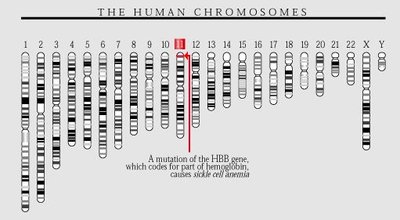
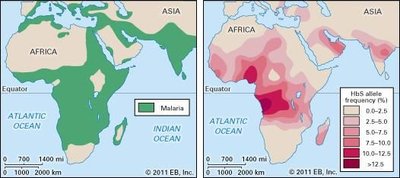
Examples: Tay Sachs disease, cystic fibrosis, sickle cell anemia.
Dominantly Inherited Disorders: Only one copy of the dominant allele is needed to express the disorder (e.g., achondroplasia, Huntington's disease).
Pedigrees and Genetic Testing
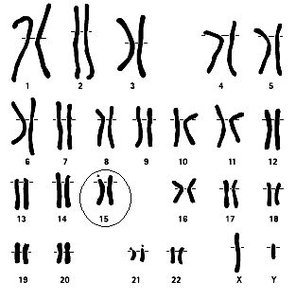
Pedigrees are diagrams that track the inheritance of traits across generations. Genetic testing can identify carriers, diagnose genetic disorders, and inform reproductive decisions.
Pedigrees: Used to analyze inheritance patterns of traits such as widow's peak or earlobe attachment.
Genetic Testing: Includes preimplantation diagnosis, fetal testing (amniocentesis, CVS), and newborn screening (e.g., PKU).
Beyond Simple Mendelian Inheritance
Many traits do not follow simple Mendelian patterns. Variations include degrees of dominance, multiple alleles, pleiotropy, epistasis, and polygenic inheritance.
Complete Dominance: Dominant allele completely masks the recessive allele in heterozygotes.
Incomplete Dominance: Heterozygotes show a phenotype intermediate between the two homozygotes (e.g., red x white = pink flowers).
Codominance: Both alleles are fully expressed in heterozygotes (e.g., blood type).
Multiple Alleles: More than two alleles exist for a gene (e.g., blood type IA, IB, i).
Pleiotropy: One gene affects multiple traits (e.g., sickle cell anemia).
Epistasis: Expression of one gene affects the expression of another gene (e.g., lab coat color).
Polygenic Inheritance: Multiple genes contribute to a single trait, often resulting in continuous variation (e.g., skin color, height).
Environmental Effects on Phenotype
The environment can influence the expression of genetic traits, leading to variation in phenotype.
Examples: Melanin production in snowshoe hares, temperature-sensitive enzymes in Siamese cats, sun tanning, nutrition, and soil conditions.
Summary Table: Mendelian Ratios in Pea Plant Traits
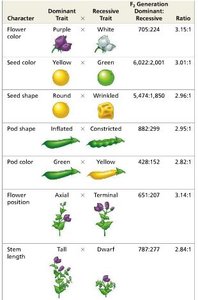
The following table summarizes Mendel's observed ratios for various traits in pea plants:
Character | Dominant Trait | Recessive Trait | F2 Generation Ratio |
|---|---|---|---|
Flower color | Purple | White | 3.15:1 |
Seed color | Yellow | Green | 3.01:1 |
Seed shape | Round | Wrinkled | 2.96:1 |
Pod shape | Inflated | Constricted | 2.82:1 |
Pod color | Green | Yellow | 2.83:1 |
Flower position | Axial | Terminal | 3.14:1 |
Stem length | Tall | Dwarf | 2.84:1 |
Key Equations
Probability of offspring genotype in a monohybrid cross:
Dihybrid cross phenotypic ratio:
Law of Segregation (allele separation):
Law of Independent Assortment (for two genes):
