 Back
BackMendel and the Gene Idea: Principles of Inheritance
Study Guide - Smart Notes
 Tailored notes based on your materials, expanded with key definitions, examples, and context.
Chapter 14: Mendel and the Gene Idea
Introduction to Mendelian Genetics
Gregor Mendel's experiments with pea plants established the fundamental principles of heredity, forming the basis of modern genetics. By analyzing patterns of inheritance, Mendel identified how traits are transmitted from one generation to the next.
Mendel’s Experimental Approach
Why Pea Plants?
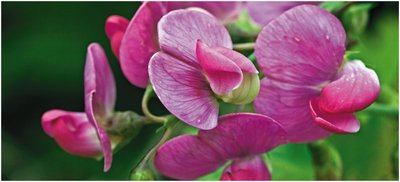
Variety: Pea plants (Pisum sativum) were available in many distinct varieties with easily observable traits.
Short Generation Time: Rapid life cycle allowed for observation of multiple generations.
Large Offspring Numbers: Enabled statistical analysis of inheritance patterns.
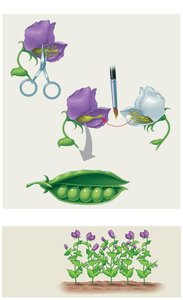
Controlled Mating: Pea plants can self-pollinate or be cross-pollinated, allowing precise experimental crosses.
Key Terms in Mendelian Genetics
Character: A heritable feature that varies among individuals (e.g., flower color).
Trait: Each variant for a character (e.g., purple or white flowers).
True-breeding: Plants that produce offspring of the same variety when self-pollinated.
Hybridization: Mating of two contrasting, true-breeding varieties.
P Generation: Parental generation in a genetic cross.
F1 Generation: First filial generation, hybrid offspring of the P generation.
F2 Generation: Offspring resulting from self- or cross-pollination of F1 individuals.
Mendel’s Laws of Inheritance
The Law of Segregation
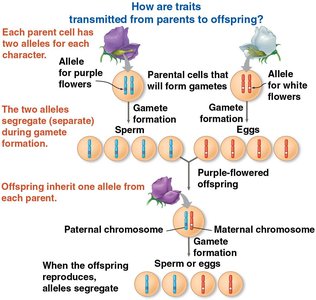
Mendel observed that when crossing true-breeding purple-flowered and white-flowered pea plants, all F1 offspring had purple flowers. However, in the F2 generation, both purple and white flowers appeared in a 3:1 ratio. This led to the formulation of the law of segregation.
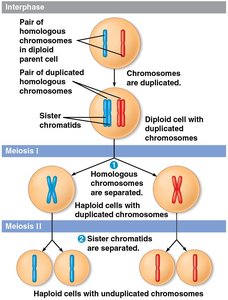
Law of Segregation: The two alleles for a heritable character separate during gamete formation and end up in different gametes.
Dominant Trait: The trait that appears in the F1 generation (e.g., purple flowers).
Recessive Trait: The trait that is masked in the F1 but reappears in the F2 generation (e.g., white flowers).
Particulate vs. Blending Hypothesis
Blending Hypothesis: Genetic material from two parents blends together (now disproven).
Particulate Hypothesis: Parents pass on discrete heritable units (genes), as shown by Mendel's experiments.
Mendel’s Model of Inheritance
Mendel's model explains the 3:1 inheritance pattern in F2 offspring using four key concepts:
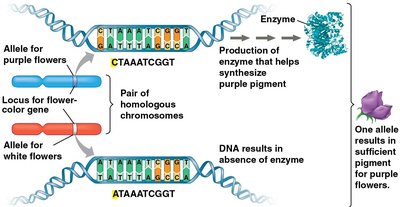
Alternative versions of genes (alleles) account for variations in inherited characters.
Each organism inherits two alleles for each character, one from each parent.
If the two alleles differ, the dominant allele determines the organism’s appearance; the recessive allele has no noticeable effect.
The law of segregation: The two alleles for a heritable character segregate during gamete formation and end up in different gametes.
Punnett Squares and Genetic Vocabulary
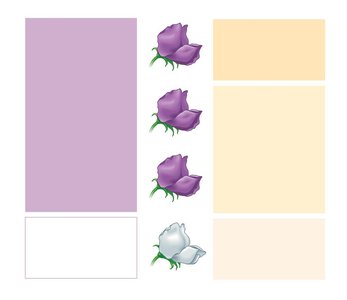
Punnett Square: Diagram used to predict the results of a genetic cross between individuals of known genotype.
Genotype: Genetic makeup of an organism (e.g., PP, Pp, pp).
Phenotype: Observable physical or physiological trait (e.g., purple or white flowers).
Homozygous: Two identical alleles for a gene (e.g., PP or pp).
Heterozygous: Two different alleles for a gene (e.g., Pp).
The Testcross
A testcross is used to determine the genotype of an individual with a dominant phenotype by crossing it with a homozygous recessive individual. If any offspring display the recessive phenotype, the mystery parent must be heterozygous.
Monohybrid and Dihybrid Crosses
Monohybrid Cross: Cross between heterozygotes for one character (e.g., Pp x Pp).
Dihybrid Cross: Cross between individuals heterozygous for two characters (e.g., YyRr x YyRr).
The Law of Independent Assortment
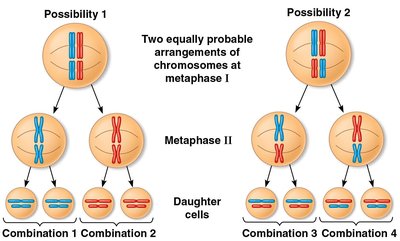
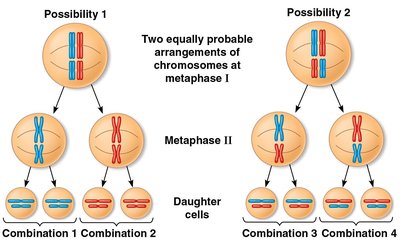
Mendel’s second law states that each pair of alleles segregates independently of other pairs during gamete formation. This law applies to genes on different chromosomes or those far apart on the same chromosome.
Independent Assortment: Genes for different traits can segregate independently during the formation of gametes.
Probability in Mendelian Inheritance
Rules of Probability
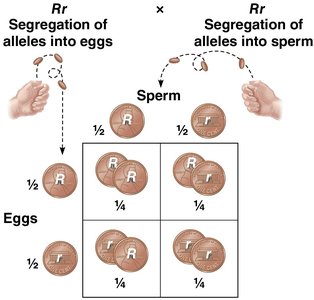
Multiplication Rule: The probability that two or more independent events will occur together is the product of their individual probabilities.
Addition Rule: The probability that any one of two or more mutually exclusive events will occur is calculated by adding their individual probabilities.
Solving Complex Genetics Problems
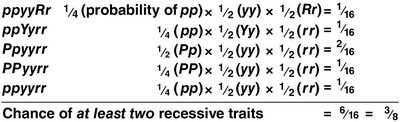
For crosses involving multiple characters, each character is considered separately, and the individual probabilities are multiplied to determine the overall probability of a particular genotype or phenotype.

Summary Table: Mendel’s Seven Pea Plant Characters
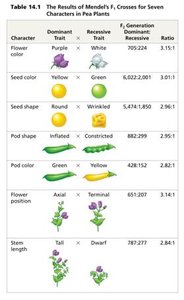
The table below summarizes the results of Mendel's F1 crosses for seven characters in pea plants, showing dominant and recessive traits and their observed ratios.
Character | Dominant Trait | Recessive Trait | F2 Generation Ratio (Dominant:Recessive) |
|---|---|---|---|
Flower color | Purple | White | 3.15:1 |
Seed color | Yellow | Green | 3.01:1 |
Seed shape | Round | Wrinkled | 2.96:1 |
Pod shape | Inflated | Constricted | 2.95:1 |
Pod color | Green | Yellow | 2.82:1 |
Flower position | Axial | Terminal | 3.14:1 |
Stem length | Tall | Dwarf | 2.84:1 |
Key Equations
Probability of two independent events (A and B):
Probability of either of two mutually exclusive events (A or B):
Conclusion
Mendel’s principles of segregation and independent assortment, supported by probability laws, form the foundation of classical genetics. These concepts explain how traits are inherited and predict the outcomes of genetic crosses, providing essential tools for understanding heredity in all organisms.
