 Back
BackMendel and the Gene Idea: Principles of Inheritance
Study Guide - Smart Notes
 Tailored notes based on your materials, expanded with key definitions, examples, and context.
Chapter 14: Mendel and the Gene Idea
Introduction to Mendelian Genetics
Gregor Mendel's experiments with garden peas established the fundamental principles of heredity, which form the basis of classical genetics. His methodical approach and quantitative analysis allowed him to deduce how traits are inherited from one generation to the next.
Character: A heritable feature that varies among individuals (e.g., flower color).
Trait: Each variant for a character (e.g., purple or white flowers).
Mendel used garden peas due to their short generation time, large number of offspring, and controlled mating possibilities.
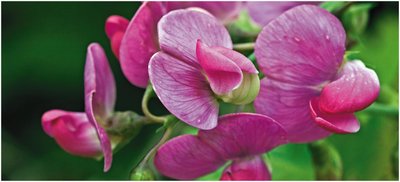
Mendel’s Experimental Approach
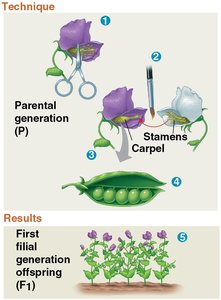
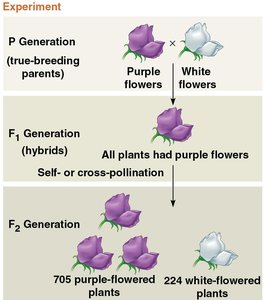
Mendel tracked characters that occurred in two distinct forms and started with true-breeding varieties. He performed hybridization experiments, crossing two contrasting, true-breeding varieties (P generation) to produce hybrid offspring (F1 generation). Self- or cross-pollination of F1 hybrids produced the F2 generation.
True-breeding: Plants that produce offspring of the same variety when self-pollinated.
Hybridization: Mating of two contrasting true-breeding varieties.
P generation: Parental generation.
F1 generation: First filial generation (hybrids).
F2 generation: Second filial generation, produced by self- or cross-pollination of F1 individuals.
The Law of Segregation
Mendel observed that crossing F1 hybrids resulted in a 3:1 ratio of dominant to recessive traits in the F2 generation. He concluded that the heritable factor for the recessive trait was not destroyed but segregated during gamete formation.
Dominant trait: Trait that appears in the F1 generation (e.g., purple flowers).
Recessive trait: Trait that is masked in the F1 generation but reappears in F2 (e.g., white flowers).
Gene: Mendel's "heritable factor"; a unit of inheritance.
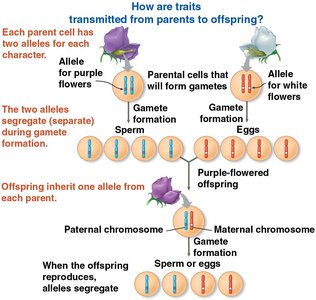
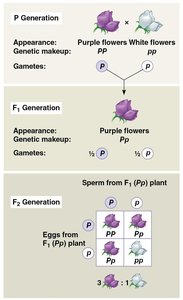
Mendel’s Model of Inheritance
Mendel proposed a model with four key concepts to explain the 3:1 inheritance pattern:
Alternative versions of genes (alleles) account for variations in inherited characters. Each gene is located at a specific locus on a chromosome.
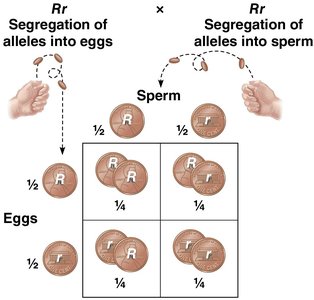
Each organism inherits two alleles for each gene, one from each parent. These alleles may be identical (homozygous) or different (heterozygous).
If the alleles differ, the dominant allele determines the phenotype, while the recessive allele has no noticeable effect.
Law of segregation: The two alleles for a heritable character segregate during gamete formation and end up in different gametes.
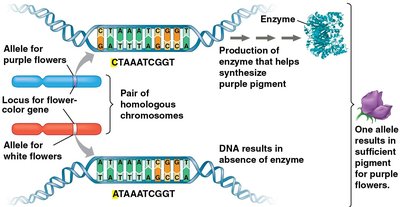
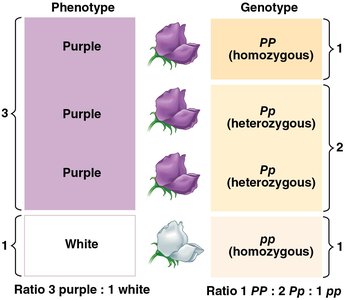
Genetic Vocabulary
Homozygote: An organism with two identical alleles for a gene (e.g., PP or pp).
Heterozygote: An organism with two different alleles for a gene (e.g., Pp).
Phenotype: Physical appearance or observable traits.
Genotype: Genetic makeup of an organism.
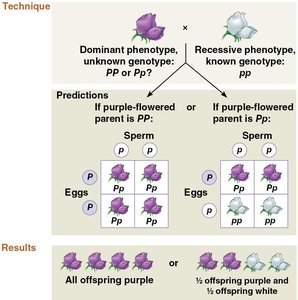
The Testcross
A testcross is used to determine the genotype of an individual with a dominant phenotype by crossing it with a homozygous recessive individual. If any offspring display the recessive phenotype, the mystery parent must be heterozygous.
The Law of Independent Assortment
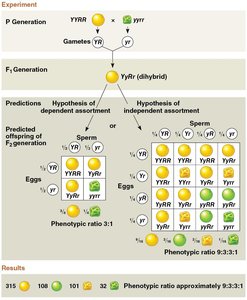
Mendel’s second law states that each pair of alleles segregates independently of other pairs during gamete formation. This law applies to genes on different chromosomes or those far apart on the same chromosome.
Dihybrid cross: A cross between F1 dihybrids (heterozygous for two characters).
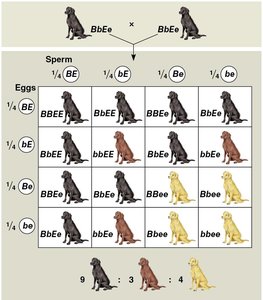
Phenotypic ratio: Dihybrid crosses typically yield a 9:3:3:1 ratio.
Probability in Mendelian Inheritance
Mendelian inheritance follows the rules of probability:
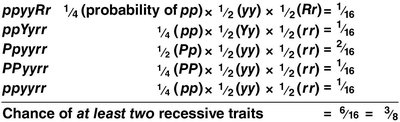
Multiplication rule: The probability of two independent events occurring together is the product of their individual probabilities.
Addition rule: The probability of any one of two or more mutually exclusive events is the sum of their individual probabilities.

Extending Mendelian Genetics
Inheritance patterns can be more complex than Mendel predicted. These include incomplete dominance, codominance, multiple alleles, pleiotropy, epistasis, and polygenic inheritance.
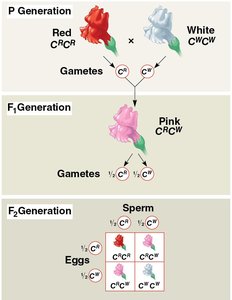
Incomplete dominance: The phenotype of F1 hybrids is intermediate between the parental varieties.
Codominance: Both alleles affect the phenotype in distinguishable ways.
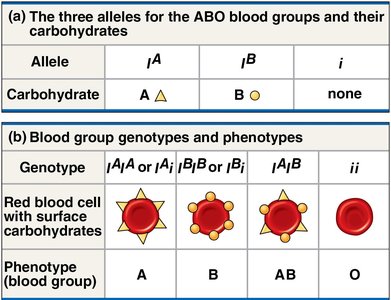
Multiple alleles: More than two allelic forms exist in the population (e.g., ABO blood groups).
Pleiotropy: One gene affects multiple phenotypic traits.
Epistasis: One gene affects the expression of another gene.
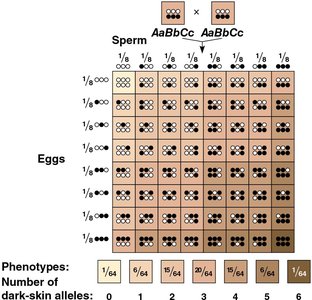
Polygenic inheritance: Multiple genes independently affect a single trait (e.g., skin color, height).
Environmental Impact on Phenotype
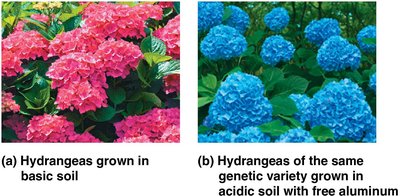
The phenotype for a character can depend on both genotype and environment. Traits influenced by multiple genes and environmental factors are called multifactorial.
Human Genetics and Pedigree Analysis
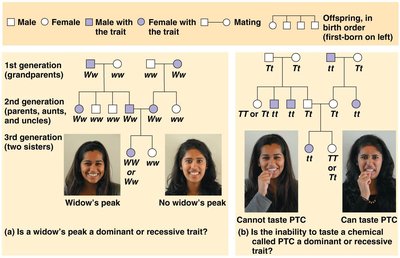
Humans are not ideal for genetic experiments, so geneticists use pedigree analysis to study inheritance patterns. Pedigrees can help predict the probability of traits appearing in future generations.
Recessively Inherited Disorders
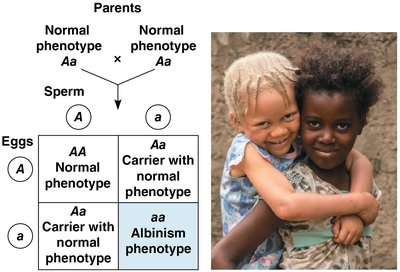
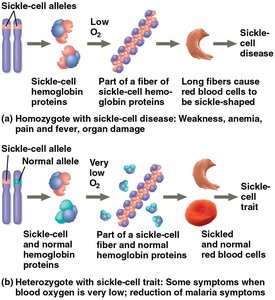
Many genetic disorders are inherited in a recessive manner. Carriers are heterozygous individuals who do not show symptoms but can pass the allele to offspring. Examples include albinism, cystic fibrosis, and sickle-cell disease.
Dominantly Inherited Disorders
Some disorders are caused by dominant alleles, though these are often rare and may have late onset (e.g., Huntington’s disease, achondroplasia).
Genetic Testing and Counseling
Genetic counselors use Mendelian genetics and probability rules to assess risks for prospective parents. Techniques such as amniocentesis and chorionic villus sampling (CVS) allow for fetal genetic testing. Newborn screening can detect certain genetic disorders early in life.
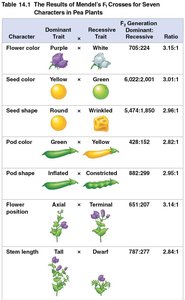
Summary Table: Mendel’s F1 Crosses for Seven Characters in Pea Plants
Character | Dominant Trait | Recessive Trait | F2 Generation Ratio |
|---|---|---|---|
Flower color | Purple | White | 3.15:1 |
Seed color | Yellow | Green | 3.01:1 |
Seed shape | Round | Wrinkled | 2.96:1 |
Pod color | Green | Yellow | 2.82:1 |
Pod shape | Inflated | Constricted | 2.96:1 |
Flower position | Axial | Terminal | 3.14:1 |
Stem length | Tall | Dwarf | 2.84:1 |
Key Equations
Probability of independent events:
Probability of mutually exclusive events:
