 Back
Mendel and the Gene Idea: Principles of Inheritance
Study Guide - Smart Notes
 Tailored notes based on your materials, expanded with key definitions, examples, and context.
Ch. 14 - Mendel and the Gene Idea
Learning Objectives
Explain Mendel’s two laws of inheritance.
Describe the laws of probability and their application in genetics.
Discuss how inheritance patterns are affected by dominance, multiple alleles, pleiotropy, epistasis, and polygenic inheritance.
Interpret pedigrees and Mendelian patterns in human traits.
Mendel’s Scientific Approach and Laws of Inheritance
Mendel’s Experimental Methodology
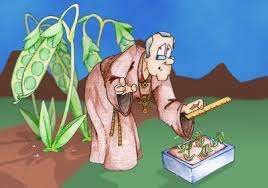
Mendel used garden peas in controlled experiments to uncover the basic principles of heredity. His scientific approach was quantitative and systematic, allowing him to deduce principles that had eluded others.
Character: A heritable feature that varies among individuals (e.g., flower color).
Trait: Each variant for a character (e.g., purple or white flowers).
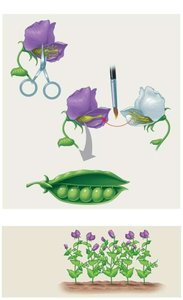
Advantages of peas: short generation time, large numbers of offspring, controlled mating (self- or cross-pollination).
Mendel’s Experiments and Results
Mendel performed crosses between true-breeding plants and observed inheritance patterns across generations.
True-breeding: Plants that produce offspring of the same variety when self-pollinated.
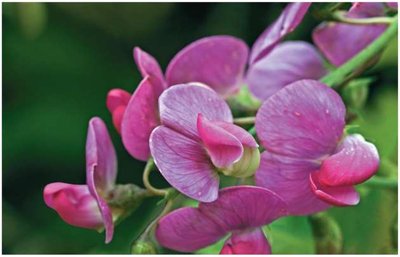
Crosses between purple and white flowers yielded all purple F1 offspring; F2 generation showed a 3:1 ratio of purple to white.
Dominant trait: purple flower; recessive trait: white flower.
"Heritable factor" is now known as a gene.
Results of Mendel’s F2 Crosses
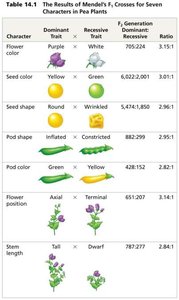
Mendel observed consistent ratios for seven pea plant characters, each with two contrasting traits.
Character | Dominant Trait | Recessive Trait | F2 Ratio |
|---|---|---|---|
Flower color | Purple | White | 3.15:1 |
Seed color | Yellow | Green | 3.01:1 |
Seed shape | Round | Wrinkled | 2.96:1 |
Pod shape | Inflated | Constricted | 2.91:1 |
Pod color | Green | Yellow | 2.82:1 |
Flower position | Axial | Terminal | 3.14:1 |
Stem length | Tall | Dwarf | 2.84:1 |
Mendel’s Model of Inheritance
Four Key Concepts
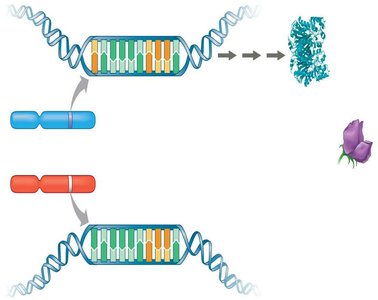
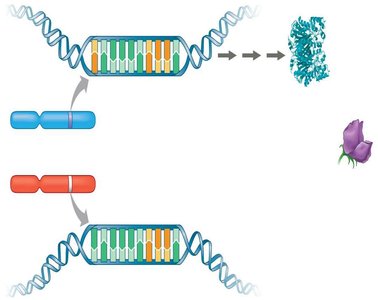
Alternative versions of genes (alleles) account for variations in inherited characters. Example: Allele for purple flowers vs. allele for white flowers.
For each character, an organism inherits two alleles, one from each parent.
If the two alleles differ, the dominant allele determines the phenotype; the recessive allele is masked.
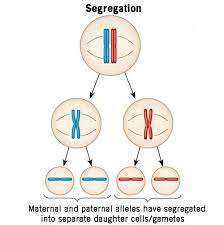
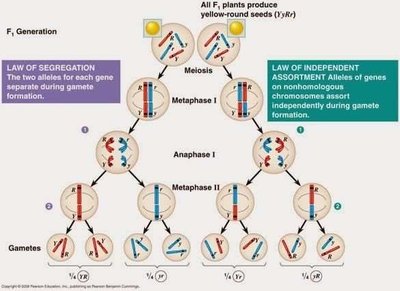
Law of Segregation: The two alleles for a heritable character segregate during gamete formation and end up in different gametes.
Punnett Squares and Genetic Vocabulary
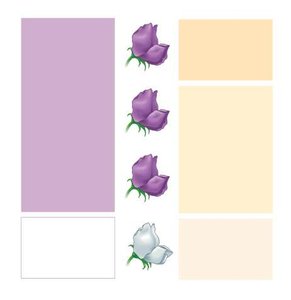
Punnett squares are used to predict the outcome of genetic crosses. Capital letters represent dominant alleles, lowercase represent recessive.
Homozygous: Two identical alleles for a gene (e.g., PP or pp).
Heterozygous: Two different alleles for a gene (e.g., Pp).
Phenotype: Physical appearance.
Genotype: Genetic makeup.
The Testcross
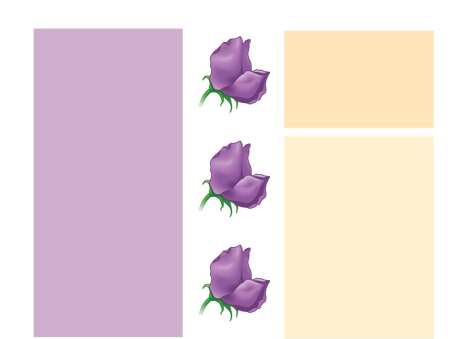
A testcross is used to determine the genotype of an individual with a dominant phenotype by crossing it with a homozygous recessive individual.
Mendel’s Laws: Segregation and Independent Assortment
Law of Segregation
Each allele segregates into separate gametes during meiosis, explaining the 3:1 ratio in the F2 generation.
Law of Independent Assortment
Alleles of genes on different chromosomes assort independently during gamete formation. This law applies to genes on different, nonhomologous chromosomes or those far apart on the same chromosome.
Probability in Genetics
Multiplication and Addition Rules
The rules of probability apply to genetic crosses:
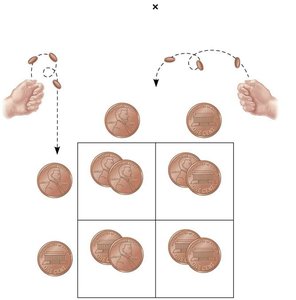
Multiplication rule: Probability of two independent events occurring together is the product of their probabilities.
Addition rule: Probability of either of two mutually exclusive events is the sum of their probabilities.

Complex Patterns of Inheritance
Degrees of Dominance
Complete dominance: Heterozygote phenotype is identical to dominant homozygote.
Incomplete dominance: Heterozygote phenotype is intermediate between two homozygotes.
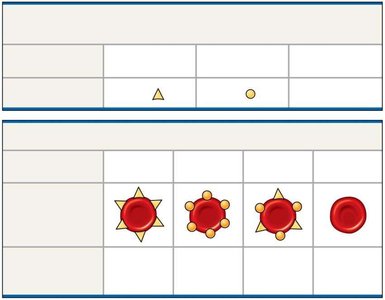
Codominance: Both alleles are fully expressed in the heterozygote.
Multiple Alleles
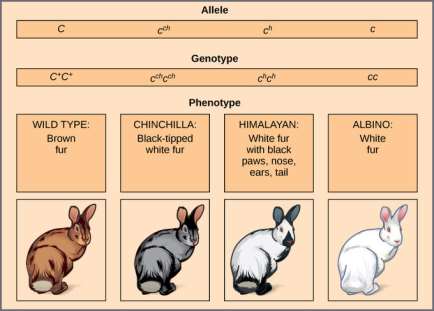
Most genes exist in populations in more than two allelic forms. Example: ABO blood group alleles in humans.
Pleiotropy
Pleiotropy occurs when one gene affects multiple phenotypic traits. Example: Sickle-cell disease and cystic fibrosis.
Epistasis
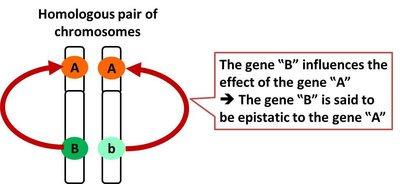
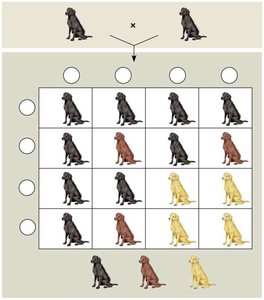
Epistasis is when a gene at one locus alters the expression of a gene at another locus. Example: Coat color in Labrador retrievers depends on two genes.
Polygenic Inheritance
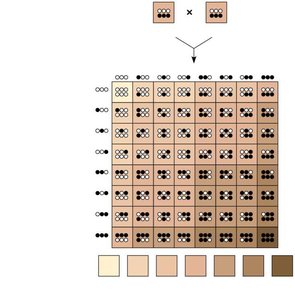
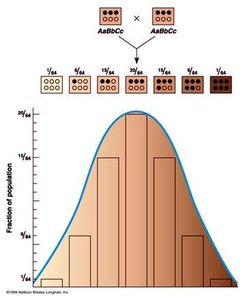
Polygenic inheritance occurs when multiple genes contribute to a single phenotype, often resulting in quantitative variation. Example: Human skin color.
Nature and Nurture: Environmental Impact on Phenotype
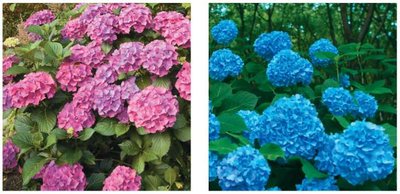
Phenotype is influenced by both genotype and environment. Multifactorial traits depend on multiple genes and environmental factors.
Human Genetics and Pedigree Analysis
Pedigrees
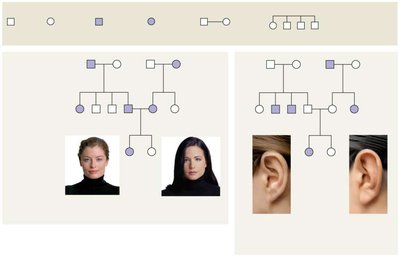
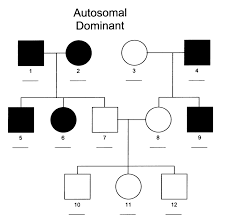
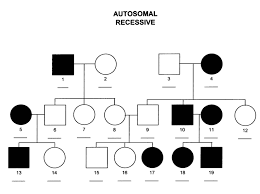
A pedigree is a family tree that tracks inheritance patterns across generations. Pedigrees help predict the probability of traits in future offspring.
Genetic Disorders and Inheritance
Recessively Inherited Disorders
Appear only in homozygous individuals.
Carriers are heterozygous and phenotypically normal.
Examples: Albinism, cystic fibrosis, sickle-cell disease.
Dominantly Inherited Disorders
Caused by dominant alleles; rare and often arise by mutation.
Examples: Achondroplasia (dwarfism), Huntington’s disease.
Multifactorial Disorders
Diseases with both genetic and environmental components (e.g., heart disease, diabetes, cancer).
Genetic Testing and Counseling
Carrier Identification and Fetal Testing
Tests for identifying carriers and predicting genetic risks.
Fetal testing methods: amniocentesis, chorionic villus sampling, ultrasound, fetoscopy.
Newborn Screening
Routine tests for genetic disorders at birth (e.g., phenylketonuria, PKU).
Summary Table: Patterns of Inheritance
Pattern | Description | Example |
|---|---|---|
Complete dominance | Heterozygote phenotype same as homozygous dominant | Purple flower color in peas |
Incomplete dominance | Heterozygote phenotype intermediate | Pink snapdragon flowers |
Codominance | Both phenotypes expressed in heterozygotes | AB blood group |
Multiple alleles | More than two alleles in population | ABO blood group |
Pleiotropy | One gene affects multiple traits | Sickle-cell disease |
Epistasis | One gene affects expression of another | Labrador coat color |
Polygenic inheritance | Multiple genes affect one trait | Skin color |
Conclusion
Mendel’s principles of inheritance form the foundation of genetics. While many traits follow simple Mendelian patterns, others are influenced by multiple genes and environmental factors. Understanding these principles is essential for studying heredity, genetic disorders, and the application of genetics in medicine and biology.
