 Back
Mendel and the Gene Idea: Principles of Inheritance
Study Guide - Smart Notes
 Tailored notes based on your materials, expanded with key definitions, examples, and context.
Mendel and the Gene Idea
Introduction to Mendelian Genetics
Mendelian genetics forms the foundation of classical inheritance, describing how traits are passed from parents to offspring. Gregor Mendel's experiments with pea plants led to the discovery of fundamental laws governing heredity.
Character: A heritable feature that varies among individuals (e.g., flower color).
Trait: Each variant for a character (e.g., purple or white flowers).
Allele: Alternative versions of a gene that account for variations in inherited characters.
True-breeding: Plants that produce offspring of the same variety when they self-pollinate.
P Generation: The parental generation in a genetic cross.
F1 Generation: The first filial generation, hybrid offspring of the P generation.
F2 Generation: The second filial generation, produced by self- or cross-pollination of F1 hybrids.
14.1 - Mendel's Experimental Approach
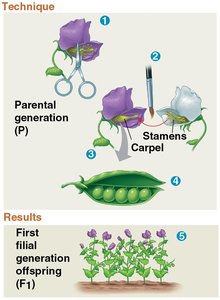
Mendel used controlled crosses between pea plants to study inheritance. He selected traits with clear, alternative forms and used true-breeding varieties to ensure consistent results.
Hybridization: Mating two contrasting, true-breeding varieties.
Controlled pollination: Mendel removed stamens and transferred pollen to control mating.
Short generation time and large offspring numbers: Pea plants were ideal for genetic studies.
Patterns of Inheritance: The Law of Segregation
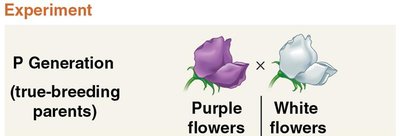
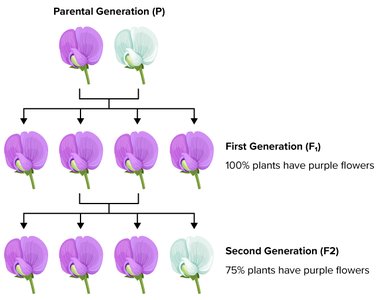
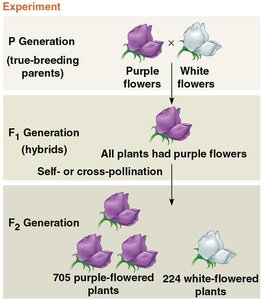
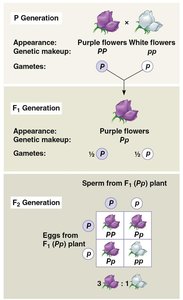
Mendel observed that traits do not blend but are inherited as discrete units. When crossing purple and white flowered plants, all F1 offspring were purple, but the F2 generation showed a 3:1 ratio of purple to white flowers.
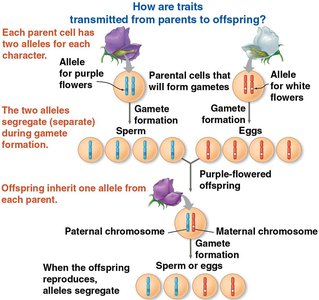
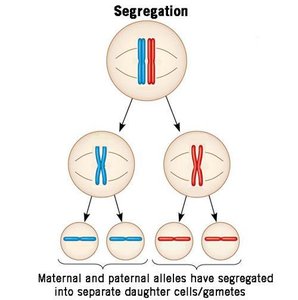
Law of Segregation: The two alleles for a heritable character separate during gamete formation and end up in different gametes.
Dominant trait: The trait that appears in the F1 generation (purple flowers).
Recessive trait: The trait that reappears in the F2 generation (white flowers).
Results of Mendel's Crosses
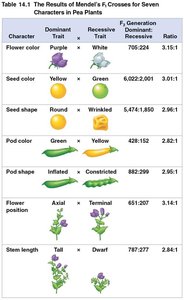
Mendel studied seven characters in pea plants, each with two contrasting traits. The F2 generation consistently showed a dominant to recessive ratio close to 3:1.
Character | Dominant Trait | Recessive Trait | F2 Generation Ratio |
|---|---|---|---|
Flower color | Purple | White | 3.15:1 |
Seed color | Yellow | Green | 3.01:1 |
Seed shape | Round | Wrinkled | 2.96:1 |
Pod color | Green | Yellow | 2.82:1 |
Pod shape | Inflated | Constricted | 2.96:1 |
Flower position | Axial | Terminal | 3.14:1 |
Stem length | Tall | Dwarf | 2.84:1 |
Mendel's Model: Genes and Chromosomes
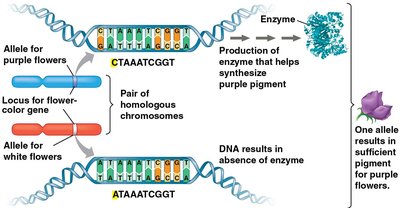
Mendel proposed that genes exist in alternative forms (alleles) and each gene resides at a specific locus on a chromosome. An organism inherits two alleles for each character, one from each parent.
Alleles: Alternative versions of a gene.
Locus: The specific location of a gene on a chromosome.
Homozygous: Two identical alleles for a gene.
Heterozygous: Two different alleles for a gene.
Law of Dominance
If the two alleles at a locus differ, the dominant allele determines the organism's appearance, while the recessive allele has no noticeable effect.
Complete dominance: Phenotypes of the heterozygote and dominant homozygote are identical.
Law of Segregation and Chromosome Behavior
The law of segregation corresponds to the distribution of homologous chromosomes to different gametes during meiosis. Each gamete receives only one allele for each gene.
Genotype vs. Phenotype
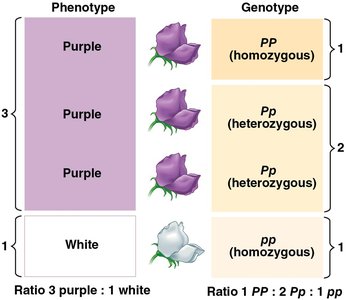
The genotype is the genetic makeup of an organism, while the phenotype is the observable trait. The 3:1 ratio in the F2 generation reflects the dominance relationship between alleles.
Genotype: PP (homozygous dominant), Pp (heterozygous), pp (homozygous recessive).
Phenotype: Purple or white flowers.
The Testcross
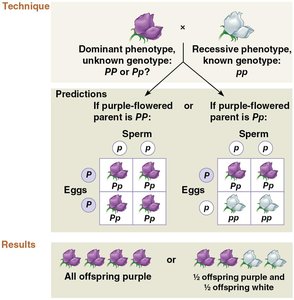
A testcross is used to determine the genotype of an individual with a dominant phenotype by crossing it with a homozygous recessive individual. If any offspring display the recessive phenotype, the mystery parent must be heterozygous.
Law of Independent Assortment
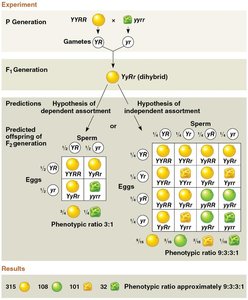
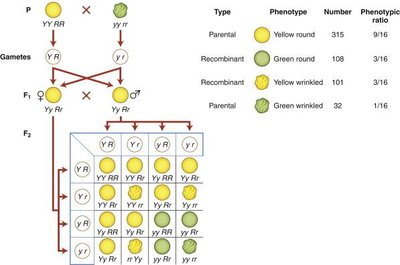
Mendel's second law states that each pair of alleles segregates independently of any other pair during gamete formation. This law applies to genes on different chromosomes or those far apart on the same chromosome.
Monohybrid cross: Cross between heterozygotes for one character.
Dihybrid cross: Cross between heterozygotes for two characters.
Independent assortment: Genes located near each other on the same chromosome tend to be inherited together (gene linkage).
14.3 - Extending Mendelian Genetics
Inheritance patterns may deviate from simple Mendelian rules in several ways:
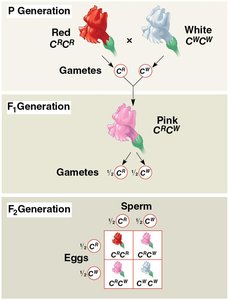
Incomplete dominance: The phenotype of F1 hybrids is intermediate between the two parental varieties.
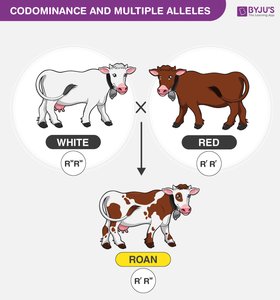
Codominance: Both alleles affect the phenotype in separate, distinguishable ways.
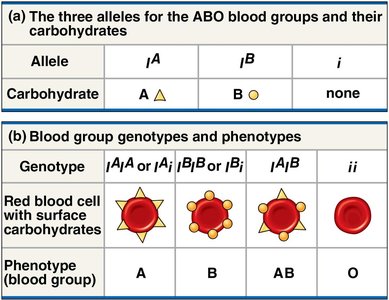
Multiple alleles: More than two allelic forms exist for a gene (e.g., ABO blood groups).
Pleiotropy: One gene affects multiple phenotypic traits.
Polygenic inheritance: Multiple genes contribute to a single trait.
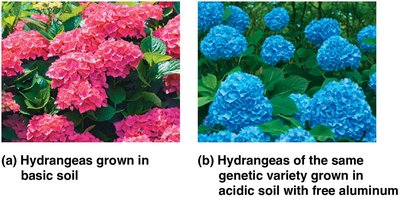
Environmental effects: Phenotype can be influenced by environmental conditions.
Environmental Impact on Phenotype
The environment can influence the expression of genetic traits, leading to a broad phenotypic range for polygenic characters. Traits influenced by both genes and environment are called multifactorial.
Frequency of Dominant Alleles
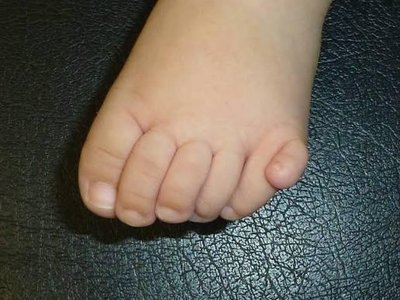
Dominant alleles are not necessarily more common in populations than recessive alleles. For example, polydactyly (extra fingers or toes) is caused by a dominant allele but is rare in the population.
14.4 Human Genetics and Pedigree Analysis
Human genetics relies on pedigree analysis to study inheritance patterns. Pedigrees are family trees that describe the inheritance of traits across generations.
Autosomal dominant: Only one copy of the dominant allele is needed to express the trait.
Autosomal recessive: Two copies of the recessive allele are needed to express the trait.
X-linked dominant/recessive: Traits determined by alleles on the X chromosome.
Y-linked: Traits determined by genes on the Y chromosome.
Mitochondrial inheritance: Traits determined by mitochondrial DNA, inherited from the mother.
Recessively Inherited Disorders
Recessive disorders appear only in individuals homozygous for the allele. Carriers are heterozygous and phenotypically normal. Consanguineous matings increase the likelihood of recessive disorders.
Sickle-Cell Disease
Sickle-cell disease is caused by a recessive allele affecting hemoglobin. Heterozygotes (sickle-cell trait) are less susceptible to malaria, providing an evolutionary advantage in certain regions.
Dominantly Inherited Disorders
Dominant disorders, such as Huntington's disease, may not manifest until later in life. Genetic testing can identify carriers of such alleles.
Genetic Testing and Screening
Modern techniques include preimplantation genetic testing (PGT), amniocentesis, chorionic villus sampling (CVS), and newborn screening for genetic disorders.
Additional info: These notes expand on brief points from the original materials, providing definitions, examples, and context for key concepts in Mendelian genetics. All included images directly reinforce the explanations adjacent to their placement.
