 Back
Mendel and the Gene Idea: Principles of Inheritance
Study Guide - Smart Notes
 Tailored notes based on your materials, expanded with key definitions, examples, and context.
Chapter 14 – Mendel and the Gene Idea
Introduction to Mendelian Genetics
Gregor Mendel's experiments with garden peas established the foundation for modern genetics. He demonstrated that traits are inherited as discrete units, now known as genes, rather than blending together. Mendel's work led to the formulation of key laws of inheritance that explain how traits are passed from parents to offspring.
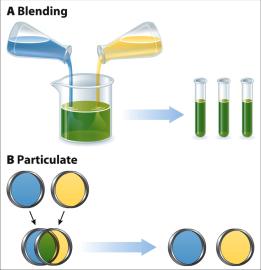
The Blending vs. Particulate Hypothesis
Historically, the "blending" hypothesis suggested that parental traits mix in offspring, producing intermediate forms. Mendel disproved this, showing that traits remain distinct through generations, supporting the "particulate" hypothesis.
Blending hypothesis: Traits mix like colors or liquids, resulting in intermediate offspring.
Particulate hypothesis: Traits are inherited as discrete units (genes), maintaining distinct characteristics.
Mendel’s Experimental Approach
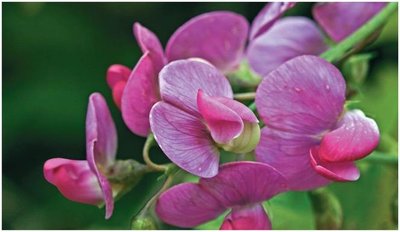
Mendel used the scientific method and quantitative analysis to study inheritance in pea plants (Pisum sativum). He selected traits with clear, contrasting forms and controlled pollination to ensure reliable results.
Character: A heritable feature (e.g., flower color).
Trait: Variant of a character (e.g., purple or white flowers).
Advantages of peas: Short generation time, large offspring numbers, controlled mating, and ethical simplicity.
Mendel’s Experimental Design
Mendel began with true-breeding plants (P generation), crossed them to produce hybrids (F1 generation), and then allowed F1 plants to self-pollinate, producing the F2 generation. He observed consistent ratios in the traits of offspring.
P generation: True-breeding parents.
F1 generation: Hybrid offspring.
F2 generation: Offspring from F1 self- or cross-pollination.
Observed ratio: 3:1 dominant to recessive trait in F2.
Mendel’s Model of Inheritance
Mendel proposed four key concepts to explain inheritance patterns:
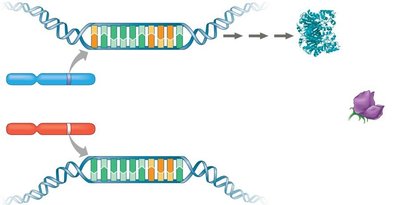
Alternative versions of genes (alleles) account for trait variation.
Each organism inherits two alleles for each gene, one from each parent.
Dominant alleles mask recessive alleles in heterozygotes.
Law of Segregation: Alleles separate during gamete formation, ensuring each gamete receives only one allele.
Punnett Squares and Genetic Vocabulary
Punnett squares are used to predict the probability of offspring genotypes and phenotypes. Key terms include:
Homozygous: Two identical alleles for a gene (e.g., PP or pp).
Heterozygous: Two different alleles for a gene (e.g., Pp).
Phenotype: Physical appearance.
Genotype: Genetic makeup.
Testcross
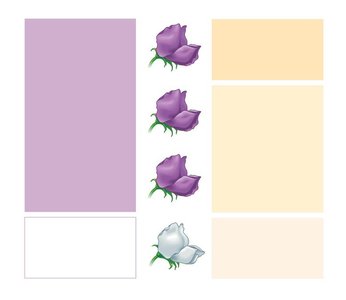
A testcross determines the genotype of an individual with a dominant phenotype by crossing it with a homozygous recessive individual. If any offspring display the recessive phenotype, the parent is heterozygous.
Testcross: Used to reveal unknown genotypes.
Law of Independent Assortment
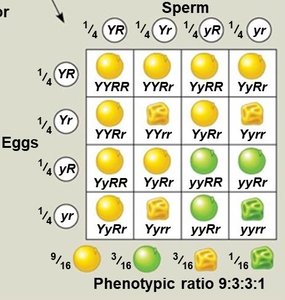
Mendel’s second law states that alleles of different genes assort independently during gamete formation. This law applies to genes on different chromosomes or those far apart on the same chromosome.
Monohybrid cross: Heterozygotes for one character.
Dihybrid cross: Heterozygotes for two characters.
Phenotypic ratio: 9:3:3:1 in dihybrid crosses.
Probability in Genetics
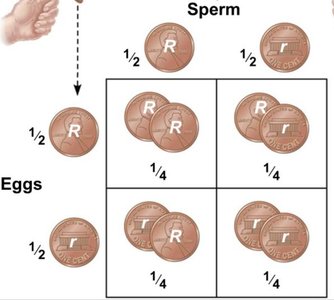
Mendelian inheritance follows rules of probability. The multiplication rule calculates the probability of independent events, while the addition rule calculates the probability of mutually exclusive events.
Multiplication rule:
Addition rule:
Complex Patterns of Inheritance
Inheritance patterns can deviate from simple Mendelian genetics due to incomplete dominance, codominance, multiple alleles, pleiotropy, epistasis, and polygenic inheritance.
Incomplete dominance: Heterozygotes show intermediate phenotype.
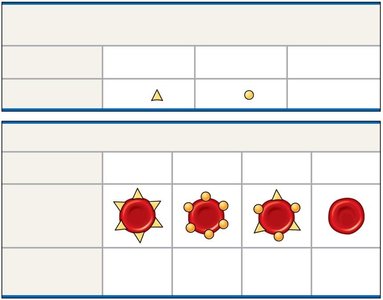
Codominance: Both alleles are fully expressed.
Multiple alleles: More than two alleles exist for a gene (e.g., ABO blood groups).
Pleiotropy: One gene affects multiple traits.
Epistasis: One gene affects the expression of another gene.
Polygenic inheritance: Multiple genes contribute to a single trait.
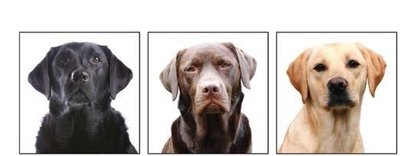
Environmental Impact on Phenotype
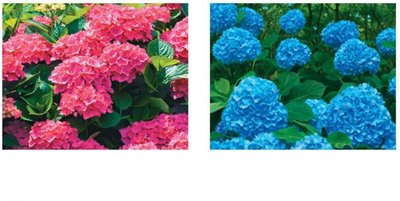
Phenotype can be influenced by environmental factors, especially for polygenic traits. This interaction is called multifactorial inheritance.
Example: Hydrangea flower color varies with soil pH.
Human Genetics and Pedigree Analysis
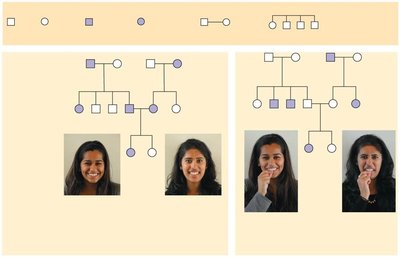
Pedigrees are used to trace inheritance patterns in families. Many human traits follow Mendelian patterns, but ethical and practical limitations prevent controlled breeding experiments.
Pedigree: Family tree showing inheritance of traits.
Carriers: Heterozygous individuals who carry a recessive allele but are phenotypically normal.
Recessive and Dominant Inherited Disorders
Genetic disorders can be inherited in a recessive or dominant manner. Recessive disorders appear only in homozygous individuals, while dominant disorders can appear in heterozygotes.
Recessive disorders: Albinism, cystic fibrosis, sickle-cell disease.
Dominant disorders: Achondroplasia, webbed digits.
Carriers: Individuals with one normal and one mutant allele for a recessive disorder.
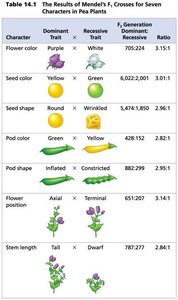
Summary Table: Mendel’s F1 Crosses for Seven Characters in Pea Plants
Character | Dominant Trait | Recessive Trait | F2 Generation Dominant:Recessive Ratio |
|---|---|---|---|
Flower color | Purple | White | 3.15:1 |
Seed color | Yellow | Green | 3.01:1 |
Seed shape | Round | Wrinkled | 2.96:1 |
Pod color | Green | Yellow | 2.82:1 |
Pod shape | Inflated | Constricted | 2.98:1 |
Flower position | Axial | Terminal | 3.14:1 |
Stem length | Tall | Dwarf | 2.84:1 |
Key Terms Defined
Gene: Unit of heredity, segment of DNA encoding a trait.
Allele: Alternative form of a gene.
Homozygous: Two identical alleles for a gene.
Heterozygous: Two different alleles for a gene.
Pleiotropy: One gene affects multiple traits.
Epistasis: One gene affects the expression of another gene.
Polygenic inheritance: Multiple genes affect a single trait.
Pedigree: Family tree tracing inheritance of traits.
Carrier: Heterozygous individual for a recessive disorder.
Conclusion
Mendel’s principles of inheritance—segregation and independent assortment—form the basis of classical genetics. These principles explain the transmission of traits and provide tools for predicting genetic outcomes, even as modern genetics reveals more complex patterns of inheritance.
