 Back
Mendel and the Gene: Patterns of Inheritance
Study Guide - Smart Notes
 Tailored notes based on your materials, expanded with key definitions, examples, and context.
Mendel and the Gene
Introduction to Mendelian Genetics
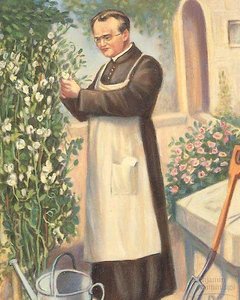
Gregor Mendel, often called the "Father of Genetics," conducted foundational experiments that revealed the basic patterns of inheritance. His work with pea plants (Pisum sativum) established the principles that underlie classical genetics, including the concepts of dominant and recessive traits, segregation, and independent assortment.
Mendel’s Experimental System
Why Peas?
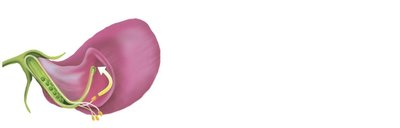
Mendel chose pea plants as his model organism because they are small, easy to grow, have a short generation time, and possess easily observable traits. Their sexual organs are enclosed within the flower, allowing for controlled self-pollination and cross-pollination.
Self-pollination: Pollen from a flower fertilizes eggs of the same flower, producing true-breeding lines.
Cross-pollination: Pollen from one plant fertilizes eggs of another, allowing tracking of heritable traits.
Traits Studied
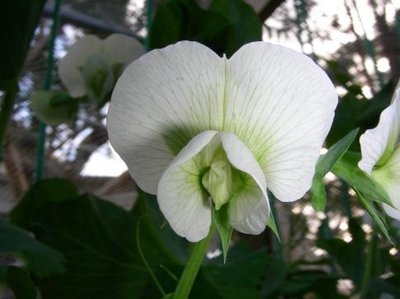
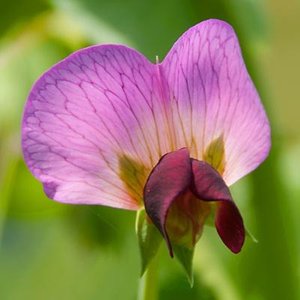
Mendel studied traits that were variable and easy to observe, such as flower color, seed shape, and pod color.
Monohybrid Crosses and Mendel’s Laws
Monohybrid Crosses
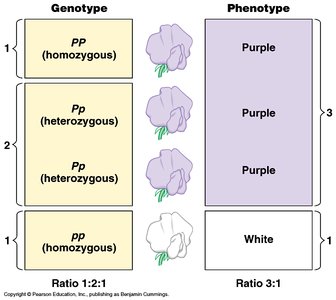
A monohybrid cross involves crossing two true-breeding lines that differ in only one trait. Mendel observed that the first filial (F1) generation all displayed the dominant trait, while the second filial (F2) generation showed a 3:1 ratio of dominant to recessive phenotypes.
P generation: Parental generation (true-breeding)
F1 generation: Offspring of P generation (all dominant phenotype)
F2 generation: Offspring of F1 self-fertilization (3:1 phenotypic ratio)
Mendel’s Laws of Heredity
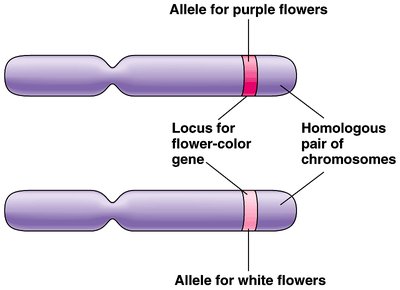
Law of Segregation: Alternative alleles segregate from each other during gamete formation, so each gamete carries only one allele for each gene.
Law of Independent Assortment: Genes for different traits assort independently of one another during gamete formation.
Law of Dominance: In heterozygotes, one allele may mask the expression of another (dominant vs. recessive).
Genotype vs. Phenotype
Genotype: The genetic makeup of an organism (e.g., PP, Pp, pp).
Phenotype: The observable trait (e.g., purple or white flowers).
Genotypic ratio: 1:2:1 (homozygous dominant : heterozygous : homozygous recessive)
Phenotypic ratio: 3:1 (dominant : recessive)
Punnett Squares and Probability
Punnett Squares
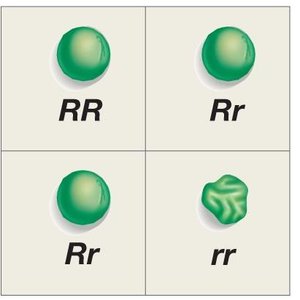
Punnett squares are used to predict the possible genotypes and phenotypes of offspring from genetic crosses. Each box represents a possible genotype resulting from the combination of parental gametes.
Dihybrid Crosses and Independent Assortment
Dihybrid Crosses
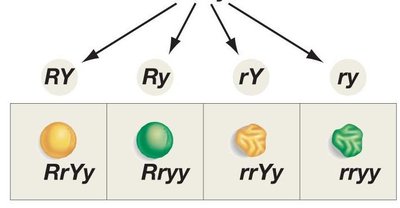
A dihybrid cross examines the inheritance of two different traits simultaneously. Mendel found that traits are inherited independently, resulting in a 9:3:3:1 phenotypic ratio in the F2 generation.
Example: RrYy x RrYy (seed shape and color)
Possible gametes: RY, Ry, rY, ry
Chromosome Theory of Inheritance
Connecting Mendel’s Laws to Chromosomes
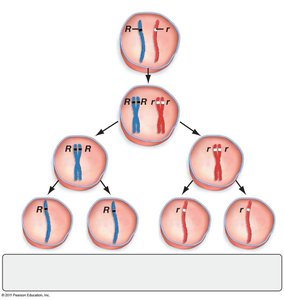
The behavior of chromosomes during meiosis explains Mendel’s laws. Homologous chromosomes separate during meiosis I, leading to segregation of alleles. Independent assortment occurs because different chromosome pairs align independently at metaphase I.
Extensions to Mendel’s Principles
Incomplete Dominance
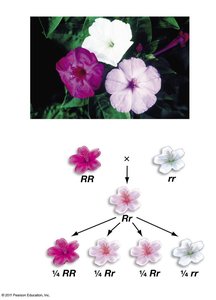
In incomplete dominance, the heterozygote expresses an intermediate phenotype between the two homozygotes. For example, crossing red and white flowers produces pink offspring.
Codominance and Multiple Alleles
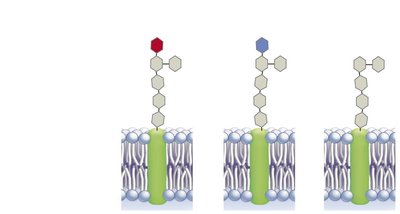
In codominance, both alleles are fully expressed in the heterozygote. The ABO blood group system is an example, where IA and IB alleles are codominant, and i is recessive.
Genotype | Blood Type |
|---|---|
IAIA, IAi | A |
IBIB, IBi | B |
IAIB | AB |
ii | O |
Quantitative Traits and Polygenic Inheritance
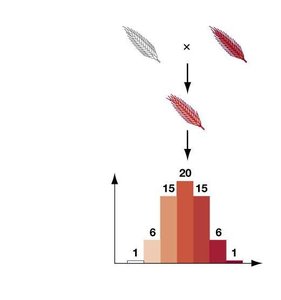
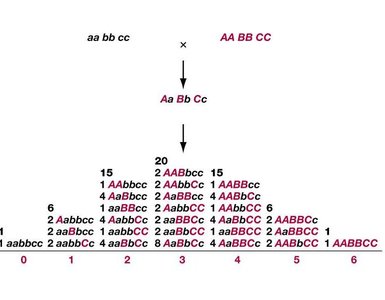
Quantitative traits are influenced by multiple genes (polygenic inheritance), resulting in a continuous range of phenotypes. Examples include human height and wheat kernel color.
Epistasis
Epistasis occurs when the expression of one gene is affected by another gene. For example, albinism can mask the expression of other pigment genes.
Linkage and Genetic Mapping
Linked genes are located on the same chromosome and tend to be inherited together, violating independent assortment. Recombination frequencies from test crosses can be used to create genetic maps, showing the relative positions of genes on a chromosome.
Sex-Linked Inheritance
X-Linked and Y-Linked Traits
Sex-linked traits are associated with genes located on the X or Y chromosomes. X-linked recessive traits, such as colorblindness and hemophilia, are more common in males because they have only one X chromosome.
X-Chromosome Inactivation
In female mammals, one X chromosome in each cell is inactivated during embryonic development, forming a Barr body. This leads to mosaic expression of X-linked traits.
Human Genetic Diseases and Pedigrees
Autosomal and Sex-Linked Disorders
Recessive disorders: Most human genetic diseases are recessive. Carriers have one normal and one mutant allele but do not show symptoms.
Dominant disorders: Less common; examples include Huntington’s disease and achondroplasia (a form of dwarfism).
Pedigree Analysis
Pedigrees are diagrams that show the inheritance of traits across generations in a family. They are used to determine the mode of inheritance (dominant, recessive, autosomal, or sex-linked) and to predict the probability of offspring inheriting a trait.
Gene-Environment Interactions
Phenotype = Genes + Environment
Many traits are influenced by both genetic and environmental factors. For example, human height is affected by nutrition as well as genetics. Lactose intolerance is another example, where both genetic mutations and cultural dietary practices play a role.
Key Terms and Concepts
Heredity: Transmission of traits from parents to offspring
Trait: Observable characteristic
Gene: Unit of heredity; segment of DNA encoding a trait
Allele: Alternative form of a gene
Genotype: Genetic makeup
Phenotype: Observable traits
Homozygous: Two identical alleles
Heterozygous: Two different alleles
Dihybrid cross: Cross involving two traits
Testcross: Cross with a homozygous recessive to determine unknown genotype
Linkage: Genes located on the same chromosome
Recombinant: Offspring with new combinations of traits
Pedigree: Family tree showing inheritance patterns
