 Back
BackMendel and the Gene: Principles of Inheritance
Study Guide - Smart Notes
 Tailored notes based on your materials, expanded with key definitions, examples, and context.
Mendel and the Gene: Principles of Inheritance
Introduction to Genetics
Genetics is the branch of biology that focuses on the inheritance of traits from one generation to the next. Gregor Mendel, through his experiments on garden peas from 1856 to 1864, laid the foundation for the chromosome theory of inheritance. This theory, later proposed by Sutton and Boveri, linked inheritance to meiosis and asserted that genes are located on chromosomes, beginning the field of genetics.
Key Terminology in Mendelian Genetics
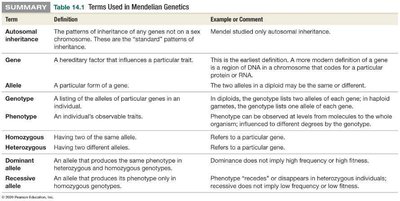
Understanding genetics requires familiarity with several key terms:
Term | Definition | Example or Comment |
|---|---|---|
Autosomal inheritance | Inheritance patterns not on sex chromosomes | Mendel studied only autosomal inheritance |
Gene | Hereditary factor influencing a trait | Modern: region of DNA coding for a protein or RNA |
Allele | Particular form of a gene | Diploids have two alleles for each gene |
Genotype | Listing of alleles in an individual | RR, Rr, or rr for seed shape |
Phenotype | Observable traits | Round or wrinkled seeds |
Homozygous | Two of the same allele | RR or rr |
Heterozygous | Two different alleles | Rr |
Dominant allele | Expressed in heterozygotes | Round seed shape (R) |
Recessive allele | Masked in heterozygotes | Wrinkled seed shape (r) |
Mendel’s Experimental System
Model Organism: Garden Pea (Pisum sativum)
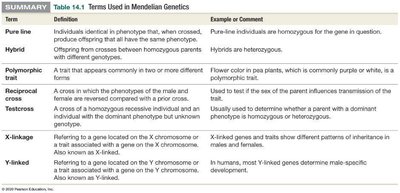
Mendel chose the garden pea as his model organism due to its practicality: it is inexpensive, easy to maintain, has a short generation time, produces many offspring, and allows controlled mating. The pea plant also exhibits polymorphic traits, meaning traits that appear in two or more distinct forms, such as purple versus white flowers.
Controlling Mating in Peas
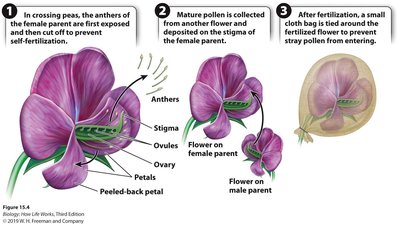
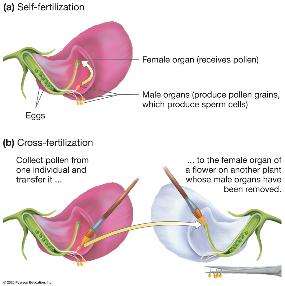
Mendel controlled mating by allowing self-fertilization or performing cross-fertilization. Self-fertilization occurs when pollen from a flower fertilizes ovules of the same flower. Cross-fertilization is achieved by removing anthers from one flower and transferring pollen from another.
Traits Studied by Mendel
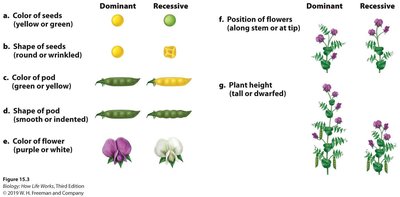
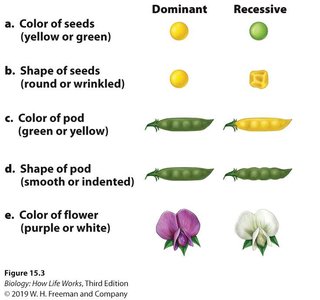
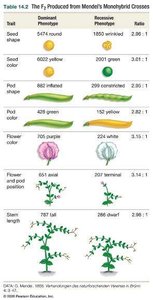
Mendel studied seven easily recognizable traits, each with two distinct phenotypes. These included seed color, seed shape, pod color, pod shape, flower color, flower position, and plant height.
Mendel’s Experiments with a Single Trait (Monohybrid Crosses)
Experimental Design and Results
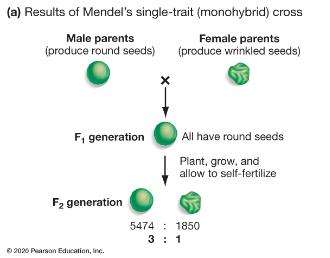
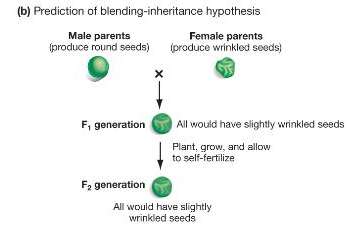
Mendel crossed true-breeding (homozygous) plants for a single trait, such as seed shape (round vs. wrinkled). The F1 generation showed only the dominant phenotype, while the recessive trait reappeared in the F2 generation in a 3:1 ratio.
Principle of Segregation
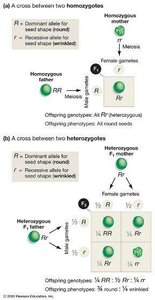
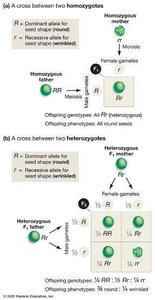
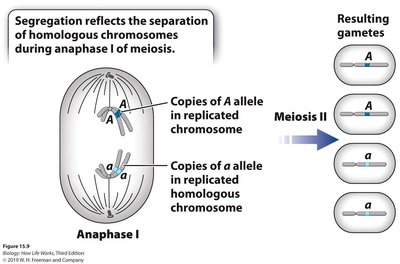
Mendel proposed that hereditary determinants (genes) do not blend but act as discrete particles (alleles). The principle of segregation states that alleles separate into different gametes during meiosis, explaining the 3:1 phenotypic ratio in the F2 generation.
Genotype: RR, Rr, rr
Phenotype: Round or wrinkled seeds
Punnett Squares and Probability
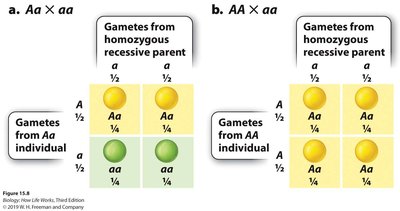
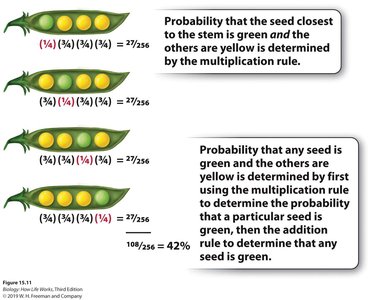
Punnett squares are used to predict the outcome of genetic crosses. The probability of specific genotypes and phenotypes can be calculated using the rules of addition and multiplication.
Mendel’s Experiments with Two Traits (Dihybrid Crosses)
Experimental Design and Results
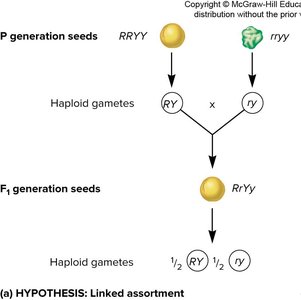
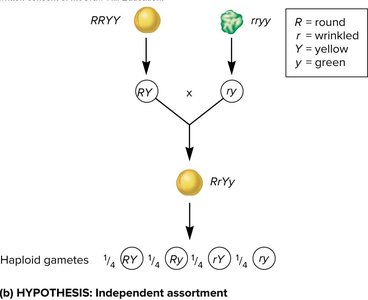
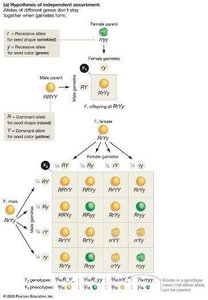
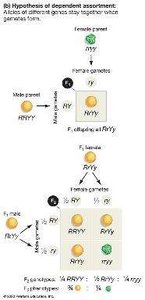
Mendel performed dihybrid crosses to study the inheritance of two traits simultaneously, such as seed shape and seed color. He tested two hypotheses: dependent assortment (alleles stay together) and independent assortment (alleles sort independently).
Principle of Independent Assortment
The results supported the principle of independent assortment: alleles of different genes assort independently during gamete formation. The F2 generation showed a 9:3:3:1 phenotypic ratio.
Chromosome Theory of Inheritance
Linking Genes to Chromosomes
Sutton and Boveri independently observed that genes are located on chromosomes at specific loci. The principle of segregation and independent assortment can be explained by the behavior of chromosomes during meiosis I.
Sex Linkage and Drosophila Experiments
Thomas Hunt Morgan's experiments with Drosophila melanogaster (fruit flies) demonstrated sex-linked inheritance. The gene for eye color was found on the X chromosome, explaining why white-eyed males appeared more frequently than females.
Extensions to Mendel’s Principles
Non-Mendelian Inheritance Patterns
Incomplete dominance: Heterozygotes have an intermediate phenotype.
Codominance: Both alleles are expressed in the phenotype (e.g., ABO blood types).
Multiple allelism: More than two alleles exist for a gene in a population, but individuals have only two alleles.
'/
Linkage and Crossing Over
Genes located on the same chromosome (linked genes) are usually inherited together, but crossing over during meiosis can produce recombinant types. The frequency of recombination is used to create genetic maps, with 1 map unit (centimorgan, cM) equaling 1% recombination.
Pleiotropy and Gene Interactions
Pleiotropy: A single gene affects multiple traits (e.g., cystic fibrosis).
Epistasis: One gene modifies the expression of another gene (e.g., coat color in Labrador retrievers).
Environmental Effects and Quantitative Traits
Phenotypes are often influenced by both genotype and environment. Quantitative traits, such as wheat kernel color, are controlled by multiple genes (polygenic inheritance) and show continuous variation.
Applying Mendel’s Rules to Human Inheritance
Modes of Transmission
Autosomal recessive: Affected individuals are homozygous; carriers are heterozygous and unaffected.
Autosomal dominant: Affected individuals can be heterozygous or homozygous; no carriers.
X-linked recessive: Males are more likely to be affected; females must be homozygous to express the trait.
X-linked dominant: Affected males pass the trait to all daughters, not sons. Affected sons always have affected mothers.
Y-linked: Only males are affected.
Pedigrees are used to study inheritance patterns in families and to determine the probability of offspring inheriting specific traits.
