 Back
Chapter 14 (part 2) Lecture Notes
Study Guide - Smart Notes
 Tailored notes based on your materials, expanded with key definitions, examples, and context.
Mendel and the Gene Idea
Introduction to Mendelian Genetics
Mendelian genetics forms the foundation of classical genetics, describing how traits are inherited from one generation to the next. Gregor Mendel's experiments with pea plants revealed predictable patterns of inheritance, which are explained by the behavior of genes and alleles.
Gene: A unit of heredity that encodes information for a specific trait.
Allele: Different forms of a gene found at the same locus on homologous chromosomes.
Genotype: The genetic makeup of an organism (e.g., RR, Rr, rr).
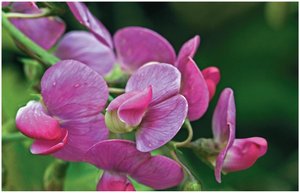
Phenotype: The observable traits of an organism (e.g., purple or white flowers).
Probability in Genetics
Basic Probability Concepts
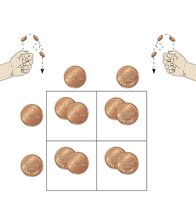
Probability is used to predict the likelihood of genetic outcomes. It is calculated as the number of favorable outcomes divided by the total number of possible outcomes.
Formula:
Probabilities range from 0 (impossible event) to 1 (certain event).
Example: The probability of getting heads in a coin toss is or 50%.
Product Rule in Genetics
When considering independent genetic events (such as the inheritance of two genes), the probability of both events occurring is the product of their individual probabilities.
Product Rule:
Used in dihybrid and trihybrid crosses to calculate genotype or phenotype probabilities.
Application to Genetics: Punnett Squares and Crosses
Monohybrid and Dihybrid Crosses
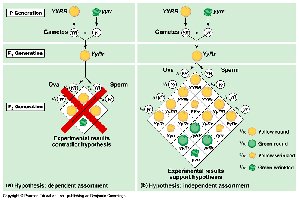
Punnett squares are used to visualize the possible combinations of alleles from parental gametes. In dihybrid crosses, each gene is considered independently, and the product rule is applied to determine combined probabilities.
Monohybrid cross: Examines inheritance of a single gene.
Dihybrid cross: Examines inheritance of two genes simultaneously.
For a dihybrid cross (e.g., RrYy x RrYy), the probability of a specific genotype (e.g., yyrr) is .
Patterns of Inheritance
Complete Dominance
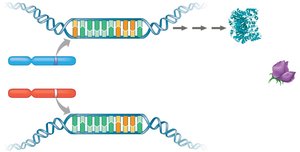
In complete dominance, the phenotype of the heterozygote is identical to that of the dominant homozygote. The recessive allele often produces no functional protein.
Example: Mendel's pea plants—purple flower color is dominant over white.
Incomplete Dominance
In incomplete dominance, the heterozygote displays an intermediate phenotype between the two homozygotes. This is not blending inheritance; both alleles contribute to the phenotype in a dosage-dependent manner.
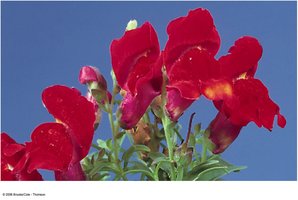
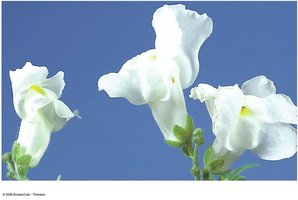
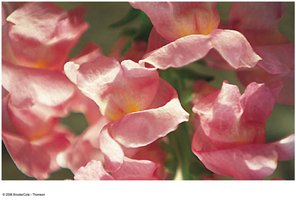
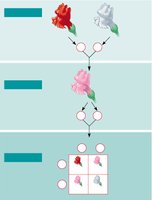
Example: Snapdragons—crossing red (CRCR) and white (CWCW) flowers produces pink (CRCW) offspring.
F2 generation shows a 1:2:1 ratio of red:pink:white flowers.
Codominance
In codominance, both alleles in a heterozygote are fully expressed, resulting in a phenotype that simultaneously displays traits of both alleles.
Example: MN blood group in humans—individuals with genotype LMLN express both M and N surface molecules.
Multiple Alleles
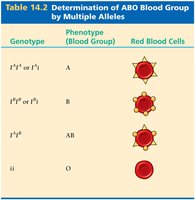
Some genes have more than two allelic forms in the population, though each individual still carries only two alleles. The ABO blood group system is a classic example.
Alleles: IA, IB, and i
IA and IB are codominant; i is recessive to both.
Genotypes and phenotypes:
Genotype | Phenotype (Blood Group) |
|---|---|
IAIA or IAi | A |
IBIB or IBi | B |
IAIB | AB |
ii | O |
Epistasis
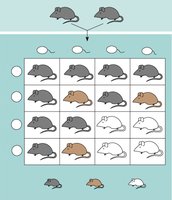
Epistasis occurs when the expression of one gene is affected by another gene. One gene can mask or modify the phenotypic expression of another gene.
Example: Coat color in mice—Gene B determines pigment color (black or brown), while gene C determines whether pigment is produced at all. If gene C is homozygous recessive (cc), no pigment is produced, resulting in an albino mouse regardless of gene B.
Polygenic Inheritance
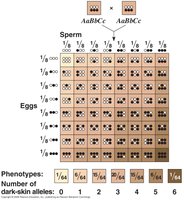
Polygenic inheritance involves two or more genes influencing a single trait, resulting in continuous variation (quantitative traits). Each gene adds to the overall phenotype in an additive manner.
Example: Human skin color and height are controlled by multiple genes, each contributing to the phenotype.
Distribution of phenotypes often forms a bell-shaped curve.
Multifactorial Inheritance
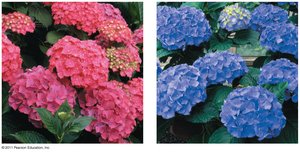
Multifactorial traits are influenced by both genetic and environmental factors. The environment can modify the expression of genetic traits, increasing phenotypic variation.
Example: Hydrangea flower color varies depending on soil pH—acidic soil produces blue flowers, while basic soil produces pink flowers.
Pleiotropy
Pleiotropy occurs when a single gene affects multiple, seemingly unrelated phenotypic traits.
Example: Phenylketonuria (PKU)—a single gene defect leads to multiple symptoms, including intellectual disability, seizures, and changes in skin and hair pigmentation.
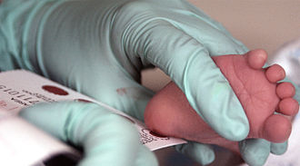
Human Genetic Traits
Examples of Simple Mendelian Traits in Humans
Widow's peak: Dominant trait for hairline shape.
PTC tasting: Ability to taste phenylthiocarbamide is a dominant trait.
Albinism: Recessive trait resulting in lack of pigment.
Dwarfism: Some forms are caused by dominant alleles.
Review Questions
For a Bb x Bb cross, what is the probability of dominant and recessive phenotypes? Draw the Punnett square.
Given genotype AaBBccDd, what gametes can be produced? (Each gamete gets one allele per gene.)
Describe an enzyme pathway for pigment production explaining epistasis in mice, using the terms precursor, intermediate, pigment, enzyme 1, enzyme 2, gene B, and gene C.
