 Back
Mendelian Genetics and Extensions: Principles of Heredity
Study Guide - Smart Notes
 Tailored notes based on your materials, expanded with key definitions, examples, and context.
Genetics and Heredity
Introduction to Mendelian Genetics
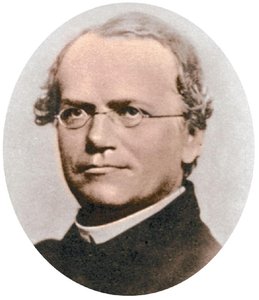
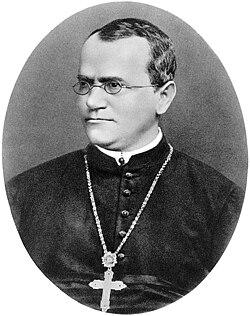
Genetics is the scientific study of heredity, the process by which traits are transmitted from one generation to the next. Gregor Mendel, through his experiments with garden peas, established the foundational principles of heredity, demonstrating that parents pass discrete units called genes to their offspring. These genes retain their individual identities across generations.
Why Mendel Used Pea Plants
Variety: Peas are available in many distinct varieties.
Short Generation Time: They reproduce quickly, allowing for multiple generations to be studied in a short period.
Large Offspring Numbers: Each plant produces many seeds, providing robust data.
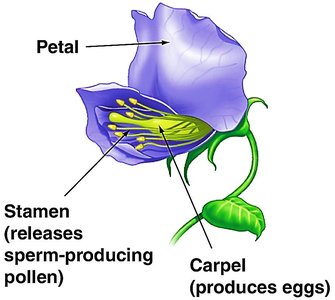
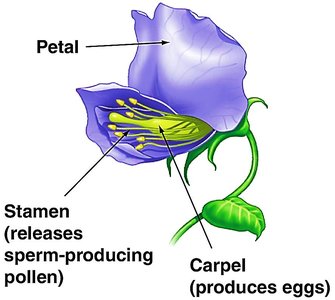
Controlled Mating: Pea plants can self-pollinate or be cross-pollinated by hand, allowing precise control over parentage.
Characters, Traits, and True-Breeding
Definitions and Experimental Design
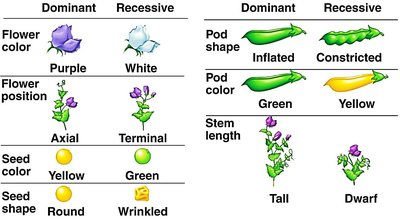
Character: A heritable feature that varies among individuals (e.g., flower color).
Trait: Each variant for a character (e.g., purple or white flowers).
True-breeding: Plants that produce offspring of the same variety when self-pollinated.
Mendel’s Experimental Crosses
Hybridization and Generations
Hybridization: Crossing two contrasting, true-breeding varieties.
P Generation: The true-breeding parental plants.
F1 Generation: The first filial generation, hybrid offspring of the P generation.
F2 Generation: The second filial generation, offspring of F1 hybrids.
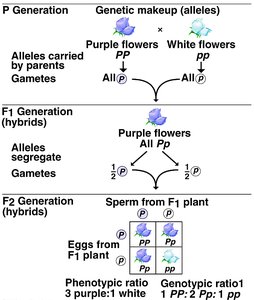
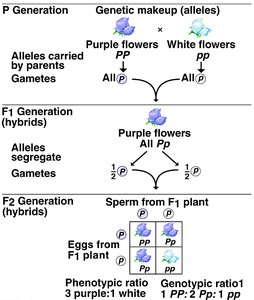
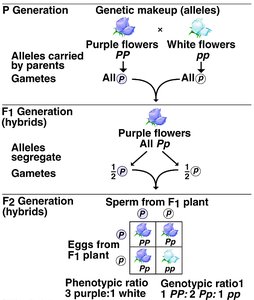
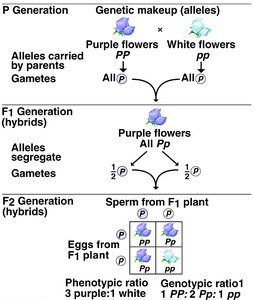
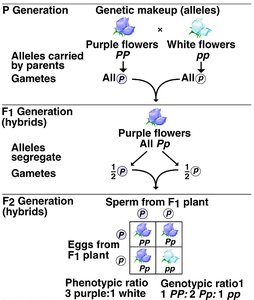
When Mendel crossed true-breeding purple and white flowered plants, all F1 hybrids were purple. Self-pollination of F1 hybrids produced F2 offspring with a 3:1 ratio of purple to white flowers.
Mendel’s Model of Inheritance
Key Principles
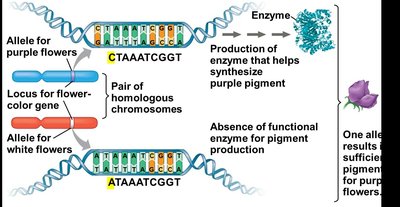
Alternative versions of genes (alleles) account for variations in inherited characters. Each gene is located at a specific locus on a chromosome.
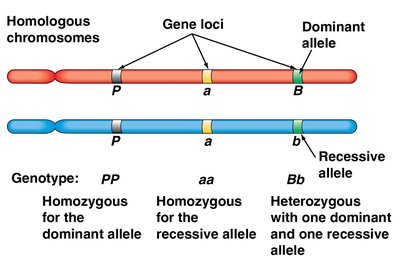
Each organism inherits two alleles for each gene, one from each parent. Homozygous individuals have identical alleles; heterozygous individuals have different alleles.
Dominance: If two alleles differ, the dominant allele determines the phenotype, while the recessive allele has no noticeable effect.
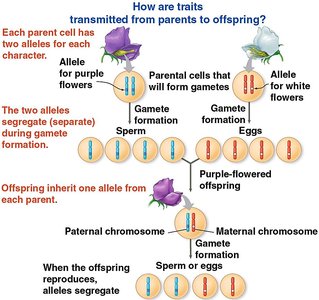
Law of Segregation: The two alleles for a gene segregate during gamete formation, so each gamete carries only one allele for each gene.
Molecular Basis for Mendel’s Law of Segregation
The segregation of alleles corresponds to the distribution of homologous chromosomes to different gametes during meiosis.
Punnett Squares and Genetic Ratios
Predicting Offspring Genotypes and Phenotypes
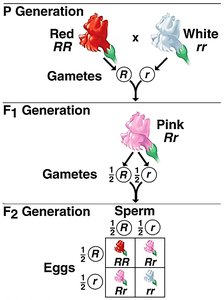
Punnett Square: A diagram used to predict the allele composition of offspring from a genetic cross.
Notation: Dominant alleles are represented by uppercase letters (e.g., P), recessive alleles by lowercase (e.g., p).
Genotype: The genetic makeup (e.g., PP, Pp, pp).
Phenotype: The observable traits (e.g., purple or white flowers).

Alleles and Chromosomes
Gene Loci and Homologous Chromosomes
Gene locus: The specific location of a gene on a chromosome.
Alleles of a gene reside at the same locus on homologous chromosomes, which may carry identical or different alleles.
Testcrosses
Determining Unknown Genotypes
A dominant phenotype can result from either a homozygous dominant or heterozygous genotype.
A testcross involves crossing the individual with a recessive homozygote to determine the unknown genotype based on offspring ratios.
Monohybrid and Dihybrid Crosses
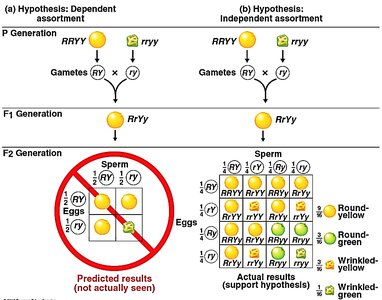
Law of Independent Assortment
Mendel’s dihybrid crosses showed that each pair of alleles segregates independently during gamete formation. This means the inheritance of one character does not affect the inheritance of another, leading to the Law of Independent Assortment.
Relationship Between Dominance and Phenotype
Dominance Does Not Imply Superiority
Dominant traits are not always better or more common than recessive traits.
Dominance refers only to which allele is expressed in heterozygotes.
Human Genetic Disorders
Recessively Inherited Disorders
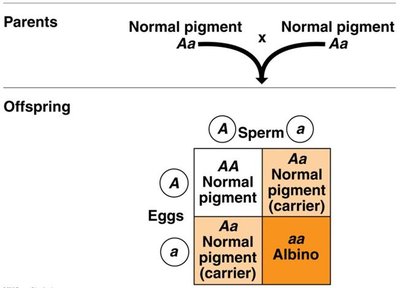
Disorders appear only in individuals homozygous for the recessive allele.
Carriers are heterozygotes who do not show symptoms but can pass the allele to offspring.
Examples: Albinism, cystic fibrosis, phenylketonuria (PKU), sickle-cell disease, Tay-Sachs disease.
Dominantly Inherited Disorders
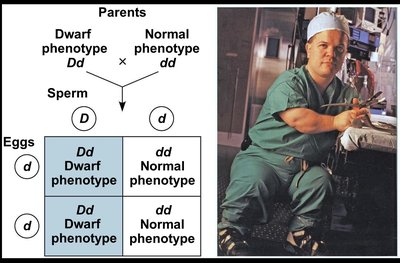
Caused by dominant alleles; heterozygotes express the disorder.
Examples: Achondroplasia (dwarfism), Huntington’s disease.
Homozygous dominant genotype may be lethal (e.g., achondroplasia).
Family Pedigrees
Tracing Inheritance Patterns
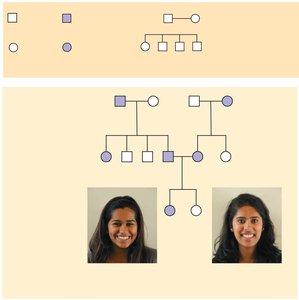
Pedigrees are diagrams that show the occurrence of phenotypes and genotypes in multiple generations of a family, useful for studying human inheritance patterns.
Prenatal Genetic Testing
Methods and Applications
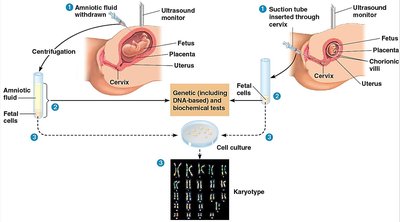
Ultrasound: Non-invasive imaging of the fetus.
Amniocentesis: Sampling amniotic fluid for genetic testing (15-20 weeks).
Chorionic Villus Sampling (CVS): Sampling placental tissue for earlier genetic testing (10-12 weeks).
Cell-free fetal DNA: Non-invasive, early detection (as early as 5-7 weeks).
Extensions to Mendelian Genetics
Degrees of Dominance
Complete dominance: Heterozygote and dominant homozygote are phenotypically identical.
Incomplete dominance: Heterozygote phenotype is intermediate between the two homozygotes.
Codominance: Both alleles are fully expressed in heterozygotes.
Multiple Alleles and Codominance: ABO Blood Groups
The ABO blood group system is determined by three alleles (IA, IB, i).
IA and IB are codominant; i is recessive.
Blood type compatibility is crucial for safe transfusions.
Pleiotropy
Pleiotropy: One gene influences multiple phenotypic traits.
Example: Sickle-cell disease affects red blood cell shape, anemia, pain, organ damage, and more.
Epistasis
Epistasis: The expression of one gene affects the phenotypic expression of another gene.
Results in modified phenotypic ratios (e.g., 9:3:4).
Polygenic Inheritance
Multiple genes contribute additively to a single phenotypic character.
Examples: Human height, skin color, hair color.
Multifactorial Traits
Traits influenced by genetic, environmental, developmental, and physiological factors.
Examples: Heart disease, cancer, diabetes, cognitive abilities, and many aspects of personality.
