 Back
Mendelian Genetics and Extensions: Principles, Patterns, and Applications
Study Guide - Smart Notes
 Tailored notes based on your materials, expanded with key definitions, examples, and context.
Introduction to Mendelian Genetics
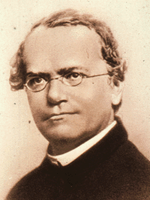
Gregor Mendel: The Father of Genetics
Gregor Mendel was an Austrian monk whose experiments with garden peas laid the foundation for the science of genetics. His systematic approach and quantitative analysis of inheritance patterns revealed the basic laws governing heredity.
The Seven Traits Studied by Mendel
Distinct Phenotypes in Pea Plants
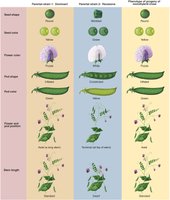
Mendel studied seven traits in garden peas, each with two contrasting forms (phenotypes). By crossing plants with different traits, he observed consistent inheritance patterns, which led to the formulation of Mendel's laws.
Trait Examples: Seed shape (round vs. wrinkled), seed color (yellow vs. green), flower color (purple vs. white), pod shape, pod color, flower position, and stem length.
Dominant and Recessive: In each cross, one trait was dominant and the other recessive.
Mendelian Terminology
Key Terms in Classical Genetics
True-breeding: Organisms that, when self-crossed, produce offspring with the same phenotype due to a homozygous genotype.
Hybrid: Offspring from parents differing in one or more traits; typically heterozygous.
P (Parental) Generation: The initial generation in a genetic cross.
F1 Generation: The first filial generation, offspring of the P generation.
F2 Generation: The second filial generation, offspring of the F1 generation.
Molecular Basis of Mendelian Traits
Wrinkled Seed Mutation in Peas
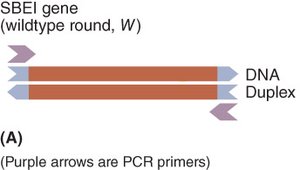
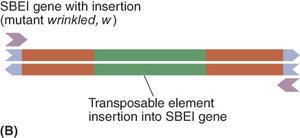
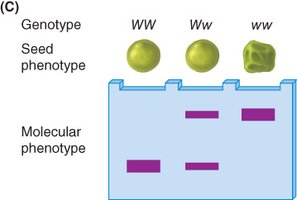
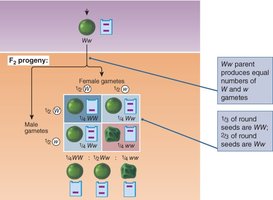
The round (W) and wrinkled (w) seed phenotypes are determined by alleles of the SBEI gene. The wildtype allele (W) encodes a functional starch branching enzyme, while the mutant allele (w) contains a transposable element insertion, resulting in an inactive enzyme and wrinkled seeds.
Genotypes: WW and Ww produce round seeds; ww produces wrinkled seeds.
Controlled Crosses in Plants
Self-Fertilization and Cross-Fertilization
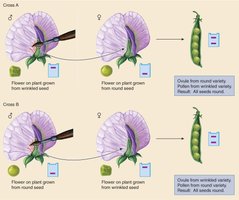
Pea plants can self-fertilize or be artificially cross-fertilized. Mendel used controlled crosses to study inheritance patterns, ensuring accurate tracking of traits across generations.
Self-fertilization: Natural process in peas.
Cross-fertilization: Removal of anthers and manual pollination with desired pollen.
Monohybrid Crosses and Segregation of Alleles
Inheritance Patterns in Single-Gene Crosses
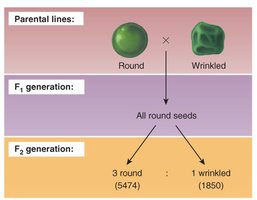
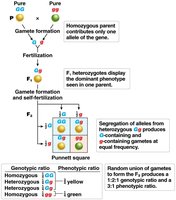
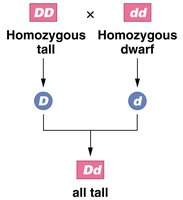
Monohybrid crosses involve parents differing in one trait. The F1 generation displays the dominant phenotype, while the F2 generation reveals a 3:1 ratio of dominant to recessive phenotypes, demonstrating the segregation of alleles.
Dominant phenotype: Expressed in F1 hybrids.
Recessive phenotype: Reappears in F2 generation.
Key Features of Single-Gene Inheritance
Principles of Mendelian Genetics
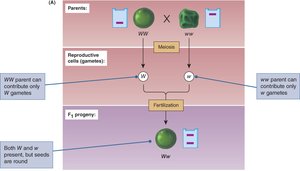
Genes exist in pairs (alleles) in diploid organisms.
Each gamete receives only one allele from each gene pair.
Fertilization restores the pair of alleles in the offspring.
Allele segregation is random during gamete formation.
The Testcross
Determining Unknown Genotypes
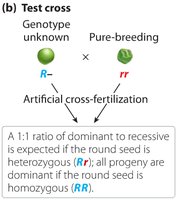
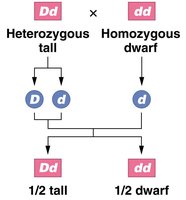
A testcross involves crossing an individual with an unknown genotype to a homozygous recessive individual. The phenotypes of the offspring reveal whether the unknown is homozygous dominant or heterozygous.
All dominant phenotype offspring: Unknown is homozygous dominant.
1:1 ratio of dominant to recessive: Unknown is heterozygous.
Mendel's Laws
Law of Segregation
Mendel's first law states that allele pairs separate during gamete formation, and each gamete has an equal chance of receiving either allele. This explains the 3:1 ratio in the F2 generation of a monohybrid cross.
Law of Independent Assortment
Mendel's second law states that alleles of different genes assort independently during gamete formation. This leads to the formation of new combinations of traits in the offspring.
Dihybrid crosses: Reveal a 9:3:3:1 phenotypic ratio in the F2 generation.
Probability in Genetics
Product and Sum Rules
Probability theory is essential for predicting genetic outcomes. The product rule is used for independent events, while the sum rule is used for mutually exclusive events.
Product Rule: Probability of independent events occurring together is the product of their individual probabilities.
Sum Rule: Probability of mutually exclusive events is the sum of their individual probabilities.
Branch Method for Multi-Locus Problems
The branch method is a systematic approach for solving complex genetic problems involving multiple genes. Probabilities are assigned to each branch, multiplied along paths, and summed for like phenotypes.
Chi-Square Test in Genetics
Testing Hypotheses with Chi-Square
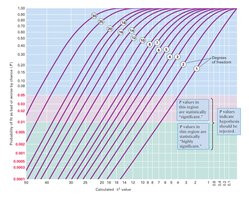
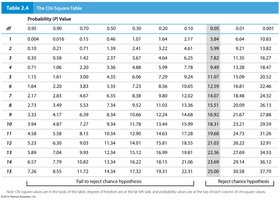
The chi-square (χ²) test is used to compare observed genetic data with expected ratios. It helps determine if deviations from expected results are due to chance or other factors.
Formula:
Degrees of freedom: where n is the number of classes.
Interpretation: A large χ² value suggests a poor fit; a large p-value suggests a good fit.
Modes and Mechanisms of Inheritance
Autosomal Dominant and Recessive Inheritance
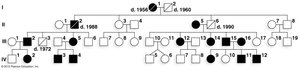
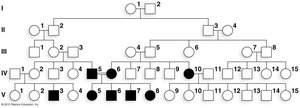
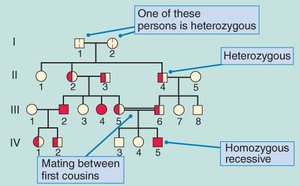
Autosomal dominant traits appear in every generation, affecting males and females equally. Autosomal recessive traits often skip generations and are more likely to appear in offspring of related parents.
Autosomal dominant: Each affected individual has at least one affected parent; both sexes equally affected.
Autosomal recessive: Most affected individuals have unaffected parents; both sexes equally affected.
Extensions of Mendelian Genetics
Incomplete Dominance
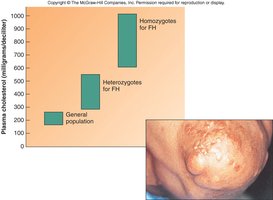
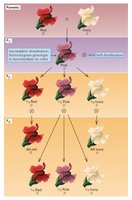
In incomplete dominance, heterozygotes display an intermediate phenotype between the two homozygotes. The F2 generation shows a 1:2:1 phenotypic ratio.
Codominance
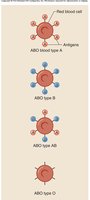
In codominance, both alleles in a heterozygote are fully expressed, resulting in phenotypes that show characteristics of both alleles. An example is the ABO blood group system in humans.
Gene-Environment Interactions
Environmental Modification of Genetic Disorders
Some genetic disorders, such as phenylketonuria (PKU), can be managed or prevented by environmental interventions, such as dietary restrictions, demonstrating the importance of gene-environment interactions in phenotype expression.
Epistasis
Gene Interactions Affecting Phenotypic Ratios
Epistasis occurs when the alleles of one gene mask or modify the expression of alleles at another gene. This can alter the expected Mendelian ratios in dihybrid crosses, such as the 9:3:4 ratio seen in Labrador retrievers for coat color.
Probability and Statistics in Genetics
Binomial Probability and Pascal's Triangle
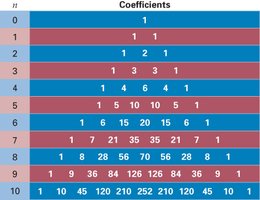
Binomial probability is used to calculate the likelihood of a specific number of successes in a series of independent trials. Pascal's Triangle provides the coefficients for binomial expansions.
Conditional Probability and Bayes' Theorem
Conditional probability is used when prior information affects the likelihood of genetic outcomes. Bayes' theorem allows for updating probabilities as new data become available.
Bayes' Theorem Formula:
Conclusion
Mendelian genetics provides the foundation for understanding inheritance patterns, while extensions such as incomplete dominance, codominance, gene-environment interactions, and epistasis reveal the complexity of genetic traits. Probability and statistical analysis are essential tools for predicting and interpreting genetic outcomes.
