 Back
Mendelian Genetics and Extensions: Study Notes for General Biology
Study Guide - Smart Notes
 Tailored notes based on your materials, expanded with key definitions, examples, and context.
Mendel and the Gene Idea
Overview of Heredity
The study of heredity explores how traits are transmitted from parents to offspring. Early hypotheses included the "blending" model, which suggested offspring were a mix of parental traits. Mendel's "particulate" hypothesis proposed that parents pass on discrete heritable units called genes.
Blending hypothesis: Traits mix in offspring, leading to uniformity over generations.
Particulate hypothesis: Traits are inherited as distinct units (genes), maintaining variation.
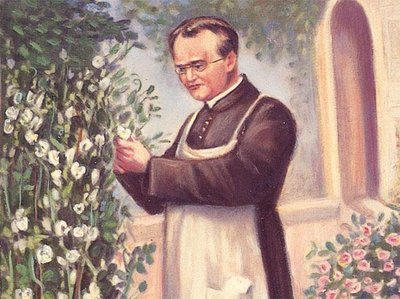
Gregor Mendel: Discovered basic principles of heredity through experiments with garden peas.
Genetic Vocabulary
Understanding genetics requires precise terminology:
Character: A heritable feature (e.g., flower color).
Trait: A variant of a character (e.g., purple or white flowers).
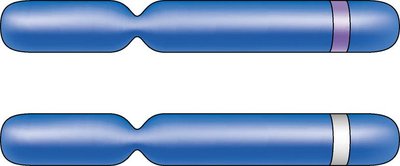
Alleles: Alternate versions of a gene.
Homozygous: Two identical alleles for a gene (AA or aa); exhibits true-breeding.
Heterozygous: Two different alleles for a gene (Aa).
Phenotype: Observable traits or physical appearance.
Genotype: Genetic makeup; all genes an individual carries.
Molecular Mechanisms of Pigmentation
Melanin Types and Genetic Control
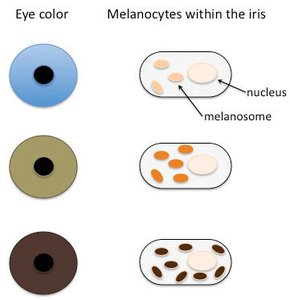
Human pigmentation is determined by the synthesis of two main types of melanin:
Eumelanin: Brown/black pigment.
Pheomelanin: Reddish-yellow pigment.
MC1R gene: Controls the switch between eumelanin and pheomelanin production in melanocytes.
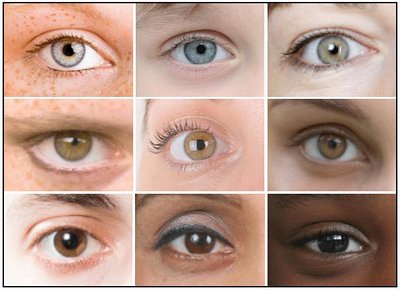
The ratio of dark to light pigment depends on MC1R activity, influencing traits like red hair and fair skin.
Mendelian Experiments and Principles
Hybridization and Generations
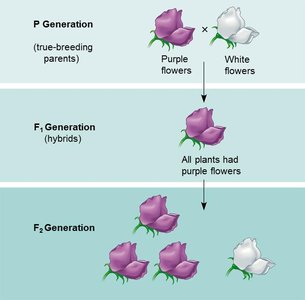
Mendel mated two contrasting, true-breeding varieties (hybridization):
P generation: True-breeding parents.
F1 generation: Hybrid offspring; all purple flowers when crossing purple and white.
F2 generation: Result of self-pollination of F1; both purple and white flowers appear.
Mendel's Model of Inheritance
Mendel explained the 3:1 ratio observed in the F2 generation with four concepts:
Alleles: Alternative versions of genes account for variations in inherited characters.
Two alleles per locus: Each organism inherits two alleles, one from each parent.
Dominance: If alleles differ, the dominant allele determines appearance; recessive allele has no noticeable effect.
Law of Segregation: Two alleles for a character separate during gamete formation and end up in different gametes.
Punnett Squares and Probability
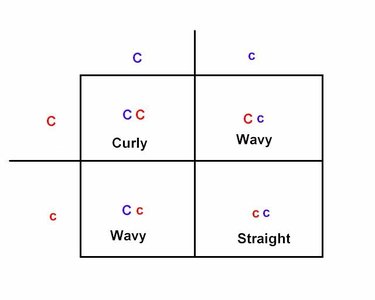
Punnett squares are used to predict genotypic and phenotypic ratios in offspring:
Monohybrid cross: Cross between individuals heterozygous for one trait.
Testcross: Used to determine genotype of an organism with dominant phenotype by crossing with homozygous recessive.
Phenotypic ratio: 3:1 (dominant:recessive).
Genotypic ratio: 1:2:1 (homozygous dominant:heterozygous:homozygous recessive).
Dihybrid Crosses and Law of Independent Assortment
By following two characters, Mendel discovered the law of independent assortment:
Dihybrid cross: Cross between individuals heterozygous for two traits.
Law of Independent Assortment: Each pair of alleles segregates independently during gamete formation.
Phenotypic ratio: 9:3:3:1 in F2 generation for two traits.
Extensions of Mendelian Genetics
Complex Inheritance Patterns
Inheritance patterns can be more complex than simple Mendelian genetics:
Complete dominance: Heterozygote and dominant homozygote have identical phenotypes.
Codominance: Both alleles affect phenotype in separate, distinguishable ways (e.g., ABO blood types).
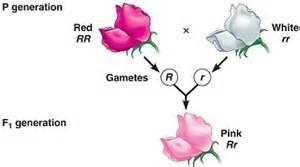
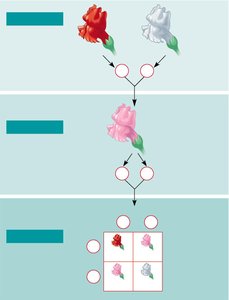
Incomplete dominance: F1 hybrids have phenotypes intermediate between parents.
Dominance and Phenotype
Dominant and recessive alleles do not interact; they produce different proteins.
Dominant alleles are not necessarily more common in populations.
Environmental Impact on Phenotype
The environment can influence the expression of genetic traits:
Norm of reaction: The phenotypic range of a genotype influenced by environmental factors.
Sex Determination and Sex Chromosomes
Chromosomal Basis of Sex
Sex is determined by the combination of sex chromosomes:
XX: Female
XY: Male
Sex chromosomes are inherited from each parent, determining the individual's sex.
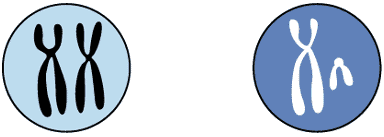
X and Y Chromosomes
X chromosome: Contains over 2,300 genes, most unrelated to sex; can be expressed in both sexes.
X-linked diseases: Hemophilia, colorblindness.
Y chromosome: Few genes; SRY gene determines male sex.
SRY gene: Presence leads to testes formation; absence leads to ovaries.
Sex Chromosome Abnormalities
Turner’s Syndrome (XO): Only one X chromosome; short, infertile females, reduced secondary sexual traits.
Klinefelter’s Syndrome (XXY): Extra X chromosome; tall males, sterile or nearly so, feminized traits.
Syndrome | Chromosome Composition | Phenotype |
|---|---|---|
Turner’s Syndrome | XO | Short, infertile female, reduced traits |
Klinefelter’s Syndrome | XXY | Tall male, sterile, feminized traits |
Example: A cross between a male with normal vision and a colorblind female will result in all sons being colorblind and all daughters being carriers.
Example: Incomplete dominance in flower color: crossing red and white flowers produces pink offspring.
Example: ABO blood types demonstrate codominance; IA and IB alleles both expressed in type AB individuals.
Additional info: These notes expand on Mendelian genetics, including molecular mechanisms, complex inheritance patterns, and chromosomal sex determination, providing a comprehensive overview suitable for General Biology students.
