 Back
Ch 14: Mendelian Genetics and Extensions: Understanding Heredity
Study Guide - Smart Notes
 Tailored notes based on your materials, expanded with key definitions, examples, and context.
Chapter 14: Mendel & Genetic Inheritance
Introduction to Heredity
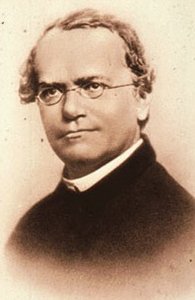
Heredity is the transmission of traits from parents to offspring. The study of heredity and variation is known as genetics. Gregor Mendel, often called the "father of genetics," established the basic principles of heredity through experiments with pea plants in the mid-19th century.
Historical Context
1838: Cell Theory proposed
1859: Darwin's Origin of Species published
1861: Germ Theory proposed
1866: Mendel's Genetic Theory published
Mendel’s Experiments and Principles
Mendel’s Experimental Approach
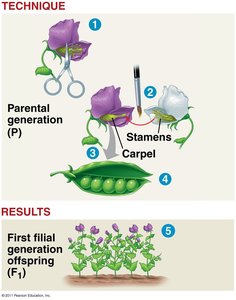
Mendel used pea plants (Pisum sativum) to study inheritance. He controlled pollination and observed how traits were passed through generations.
Monohybrid Crosses and the Law of Segregation
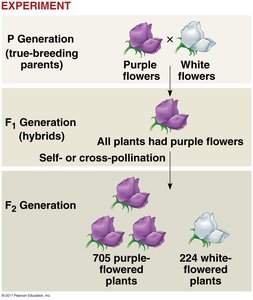
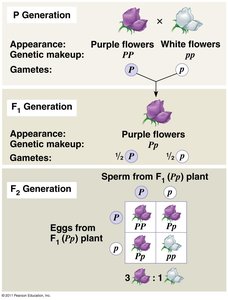
Mendel observed that crossing true-breeding purple and white flowered plants produced all purple F1 offspring. Self-pollination of F1 plants yielded a 3:1 ratio of purple to white flowers in the F2 generation, suggesting dominance and segregation of traits.
Law of Segregation: Each individual has two alleles for each gene, which segregate during gamete formation so that each gamete carries only one allele for each gene.
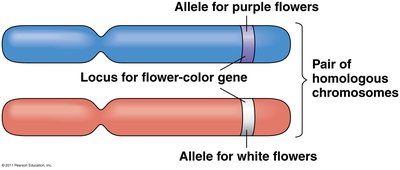
Alleles: Alternative forms of a gene found at the same locus on homologous chromosomes.
Punnett Squares and Genetic Ratios
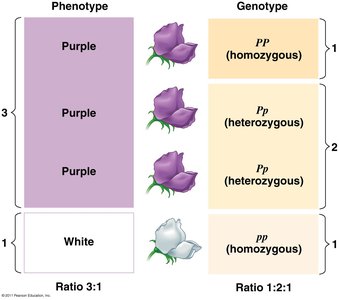
Punnett squares are used to predict the genotypic and phenotypic ratios of offspring from genetic crosses. In a monohybrid cross (Pp × Pp), the expected ratio is 3:1 for dominant to recessive phenotype and 1:2:1 for genotype.
Molecular Basis of Dominance
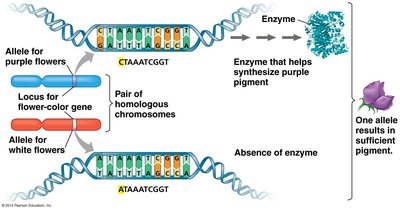
Dominant alleles often code for functional proteins, while recessive alleles may result in nonfunctional proteins. The presence of one dominant allele is usually sufficient to produce the dominant phenotype.
Testcross: Determining Genotype
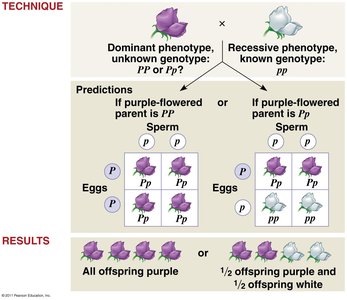
A testcross is used to determine whether an individual with a dominant phenotype is homozygous or heterozygous. This is done by crossing the individual with a homozygous recessive partner and analyzing the offspring.
Mendel’s Law of Independent Assortment
Dihybrid Crosses
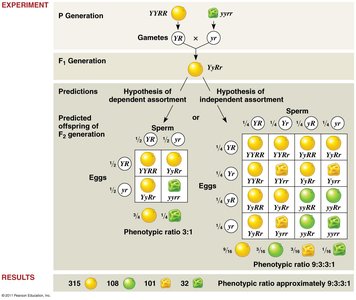
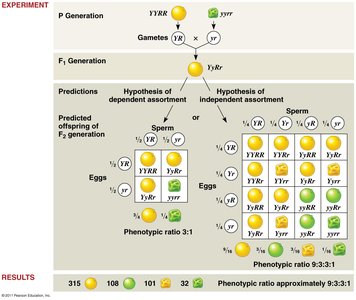
Mendel’s experiments with two traits (dihybrid crosses) showed that alleles of different genes assort independently during gamete formation, leading to new combinations of traits in the offspring. The classic phenotypic ratio for a dihybrid cross is 9:3:3:1.
Probability in Genetics
Rule of Multiplication: The probability of two independent events both occurring is the product of their individual probabilities.
Rule of Addition: The probability of an event that can occur in multiple ways is the sum of the probabilities for each way.
Example: In a cross BbTt × BBtt (B = black fur, b = brown fur, T = short tail, t = long tail), the probability of black fur and long tail can be calculated using these rules.
Extensions of Mendelian Genetics
Incomplete Dominance
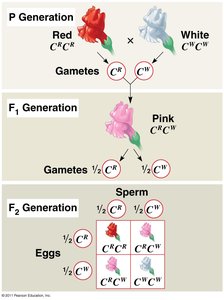
In incomplete dominance, the heterozygote displays a phenotype intermediate between the two homozygotes. For example, crossing red and white flowers yields pink offspring.
Multiple Alleles
Some genes have more than two alleles in the population. A classic example is the ABO blood group system in humans, which involves three alleles (IA, IB, i).

Epistasis
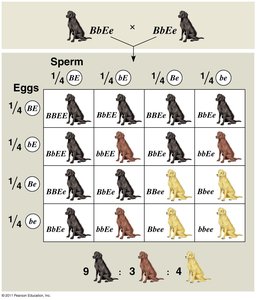
Epistasis occurs when the expression of one gene is affected by another gene. For example, coat color in Labrador retrievers is determined by two genes, and one gene can mask the expression of the other.
Polygenic Inheritance
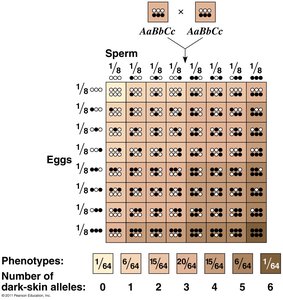
Polygenic inheritance involves multiple genes contributing to a single trait, resulting in continuous variation. Human skin color and height are examples of polygenic traits.
Inherited Disorders
Autosomal Recessive and Dominant Disorders
Cystic Fibrosis: A recessive disorder; individuals must inherit two defective alleles to express the disease.
Achondroplasia: A dominant disorder; only one copy of the mutant allele is needed for the phenotype to be expressed.
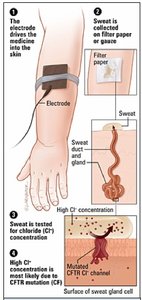

Heterozygous individuals for recessive disorders are typically carriers and do not show symptoms, while heterozygotes for dominant disorders usually express the disease phenotype.
