 Back
Mendelian Genetics and the Dihybrid Cross: Study Notes
Study Guide - Smart Notes
 Tailored notes based on your materials, expanded with key definitions, examples, and context.
Genetics: Mendel’s Laws and Dihybrid Crosses
Introduction to Mendelian Genetics
Mendelian genetics forms the foundation of classical genetics, describing how traits are inherited from one generation to the next. Gregor Mendel’s experiments with pea plants established three fundamental laws of inheritance, which explain the transmission of discrete traits and the mechanisms underlying genetic variation.
Mendel’s Experimental System
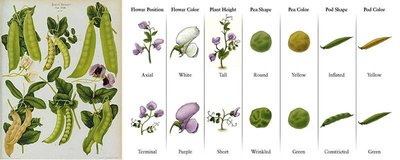
Mendel used Pisum sativum (pea plants) for his experiments, selecting traits that were easily distinguishable and could be tracked across generations. These traits included flower color, seed shape, and pod color.
Pure lines: Plants bred to be homozygous for a trait, ensuring consistent expression.
Hybrid crosses: Crosses between different pure lines to observe trait inheritance.
Mendel’s Three Laws of Inheritance
Mendel’s work established three key principles:
Law of Dominance: One variant of a trait may mask the expression of another. Dominant alleles are expressed in the phenotype when present.
Law of Segregation: Factors (alleles) of the same trait segregate from each other during reproduction and combine randomly at fertilization.
Law of Independent Assortment: Factors for different traits are unlinked and assort independently during reproduction, giving rise to all possible combinations.
Particulate inheritance describes how traits are inherited as discrete units, debunking the earlier theory of blended inheritance.
Dihybrid Crosses
A dihybrid cross examines the inheritance of two traits simultaneously. Mendel’s dihybrid crosses demonstrated that genes for different traits assort independently, resulting in a characteristic phenotypic ratio in the F2 generation.
F1 Generation: All offspring display the dominant phenotype for both traits.
F2 Generation: Four phenotypes appear in a 9:3:3:1 ratio.



Phenotypic Ratio Table for Dihybrid Cross
Phenotype | Ratio |
|---|---|
Dominant for both traits | 9 |
Dominant for first, recessive for second | 3 |
Recessive for first, dominant for second | 3 |
Recessive for both traits | 1 |
Genotypic Ratios and Probability Calculations
The genotypic ratios in dihybrid crosses can be calculated using the Punnett square and probability rules:
Sum rule: Probability of a phenotype is the sum of probabilities of genotypes producing it.
Product rule: Probability of a combined genotype is the product of individual probabilities.
For n genes, the number of gametic types produced is , and the total number of genotypes is .
Test Crosses
A test cross is used to determine the genotype of an individual displaying the dominant phenotype by crossing it with a homozygous recessive individual. The resulting progeny ratios reveal whether the tested parent is homozygous or heterozygous.
All dominant phenotype progeny: Parent is homozygous dominant.
1:1 ratio of dominant to recessive: Parent is heterozygous.
Historical Context and Impact
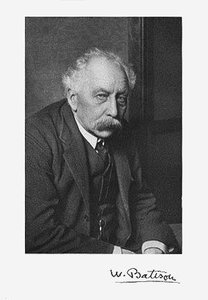
Mendel’s work was initially ignored but later resurrected by William Bateson, who translated and promoted Mendel’s findings. Mendel’s laws apply to all aspects of heredity and form the basis for modern genetics, linking qualitative and quantitative biology.
Summary Table: Mendel’s Laws
Law | Description |
|---|---|
Dominance | One allele masks the other |
Segregation | Alleles separate during gamete formation |
Independent Assortment | Alleles for different traits assort independently |
Applications and Further Study
Mendelian genetics is fundamental to understanding inheritance, genetic variation, and the mechanisms of evolution. The principles are applied in plant and animal breeding, medical genetics, and biotechnology.
Example: Predicting the probability of offspring genotypes in a cross involving multiple traits using branch diagrams and Punnett squares.
Additional info: Mendel’s experiments with over 30,000 plants provided robust statistical evidence for his laws. His work explained the mechanism of evolution and established genetics as a quantitative science.
