 Back
Mendelian Genetics and the Gene Idea: Study Guide for General Biology
Study Guide - Smart Notes
 Tailored notes based on your materials, expanded with key definitions, examples, and context.
Mendelian Genetics: The Gene Idea
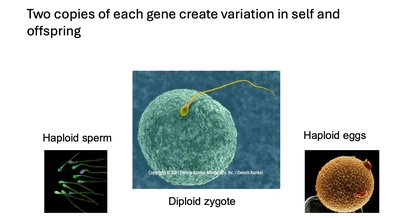
Haploid Gametes, Diploid Zygote, and Genetic Variation
Sexual reproduction in animals involves the fusion of haploid gametes (sperm and egg), each containing a single set of chromosomes (n), to form a diploid zygote (2n). This process restores the diploid chromosome number and creates genetic variation in offspring.
Haploid gametes: Reproductive cells with one set of chromosomes.
Diploid zygote: Formed by fusion of sperm and egg; contains two sets of chromosomes.
Genetic variation: Each parent contributes different alleles, resulting in unique offspring.
Fertilization: Mechanism for combining genetic material and generating variability.
Genes, Alleles, and Chromosome Structure
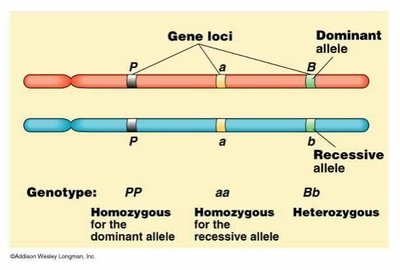
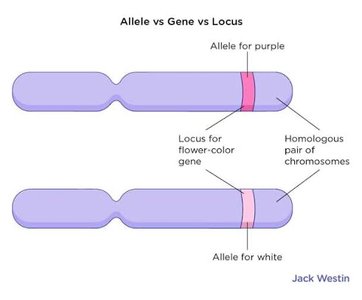
Genes are segments of DNA located at specific positions (loci) on chromosomes. Each gene can exist in different forms called alleles, which determine the traits (phenotypes) of an organism. The combination of alleles (genotype) inherited from each parent influences the organism's characteristics.
Gene loci: Fixed physical positions of genes on chromosomes.
Alleles: Alternative versions of a gene; can be dominant or recessive.
Genotype: The genetic makeup (allele combination) of an individual.
Phenotype: Observable traits determined by genotype and environment.
Homozygous: Two identical alleles for a gene (e.g., PP or aa).
Heterozygous: Two different alleles for a gene (e.g., Bb).
Mendel’s Experiments and Laws of Inheritance
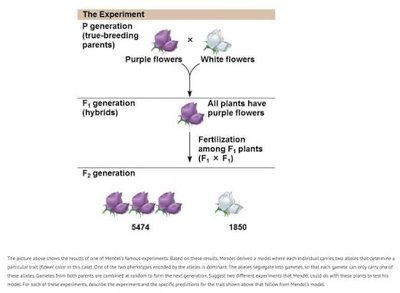
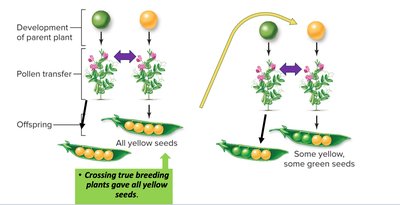
Gregor Mendel discovered the basic principles of heredity by breeding pea plants. He formulated two key laws: the law of segregation and the law of independent assortment. Mendel’s experiments involved crossing true-breeding plants and analyzing the resulting generations.
P generation: True-breeding parent plants.
F1 generation: First filial generation; hybrids from P cross.
F2 generation: Second filial generation; offspring from F1 self-pollination.
Law of segregation: Each organism inherits two alleles for each gene, which segregate during gamete formation.
Law of independent assortment: Alleles of different genes assort independently during gamete formation (applies to genes on different chromosomes or far apart on the same chromosome).
Chromosome Structure and Homologous Pairs
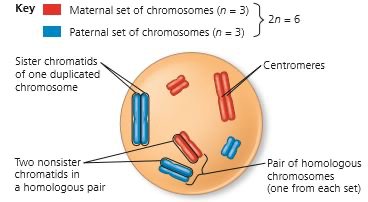
Each diploid cell contains pairs of homologous chromosomes, one from each parent. Chromosomes carry genes, and their arrangement is crucial for understanding inheritance patterns.
Homologous chromosomes: Chromosome pairs with the same gene loci but possibly different alleles.
Sister chromatids: Identical copies of a chromosome joined at the centromere.
Chromosome number: Diploid cells have two sets; haploid cells have one set.
Protein Structure and Sickle-Cell Disease
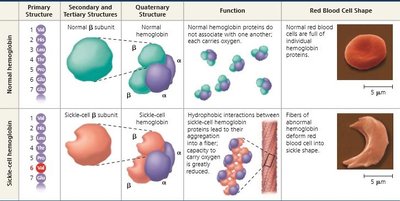
The structure of proteins determines their function. Sickle-cell disease is caused by a mutation in the hemoglobin gene, resulting in altered protein structure and function.
Normal hemoglobin: Tetramer of two α-globin and two β-globin molecules; does not aggregate.
Sickle-cell hemoglobin: Mutation causes aggregation into fibers, distorting red blood cell shape.
Protein structure: Changes in primary and quaternary structure affect function.
Gene Expression: DNA to Protein
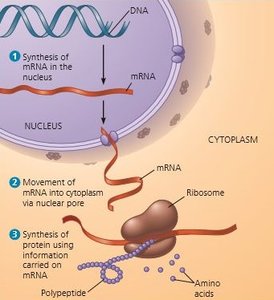
Genetic information in DNA is transcribed into mRNA and then translated into proteins. This process is essential for expressing traits and maintaining cellular functions.
Transcription: DNA is used to synthesize mRNA in the nucleus.
Translation: mRNA is translated into protein at the ribosome.
Products: Proteins, mRNA, tRNA.
Inheritance Patterns and Punnett Squares
Punnett squares are used to predict the genotypic and phenotypic ratios of offspring from genetic crosses. They illustrate how alleles are distributed among progeny.
Monohybrid cross: Tracks inheritance of one gene.
Dihybrid cross: Tracks inheritance of two genes.
Test cross: Determines genotype of an organism with dominant phenotype.
Symbols: Outside boxes represent gametes; inside boxes represent progeny.
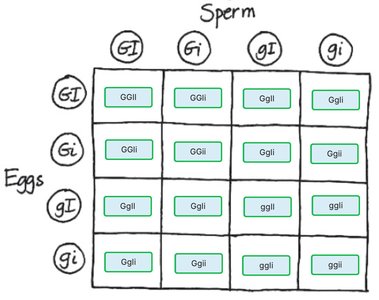
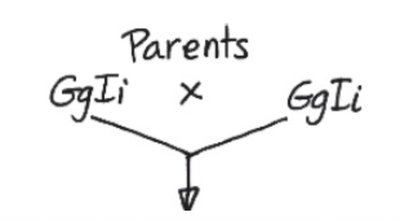
Dominance Relationships and Multiple Alleles
Genes can exhibit different dominance relationships, affecting how traits are expressed. Some genes have more than two alleles, leading to complex inheritance patterns.
Complete dominance: Heterozygote phenotype is identical to dominant homozygote.
Incomplete dominance: Heterozygote phenotype is intermediate between parental phenotypes.
Codominance: Both alleles are fully expressed in the phenotype.
Multiple alleles: More than two allele forms exist in a population (e.g., ABO blood group).
Genetic Disorders and Carriers
Recessive and dominant alleles can cause genetic disorders. Carriers are heterozygous individuals who can transmit recessive alleles without showing symptoms.
Recessive disorders: Expressed only in homozygous recessive individuals.
Carriers: Heterozygous individuals; phenotypically normal but can pass on the disorder.
Dominant disorders: Expressed in individuals with at least one dominant allele.
Polygenic Traits, Environmental Effects, and Multifactorial Inheritance
Some traits are influenced by multiple genes (polygenic) and environmental factors. This results in continuous variation and multifactorial inheritance.
Polygenic traits: Traits controlled by multiple genes (e.g., skin color, height).
Continuous variation: Smooth range of phenotypes in a population.
Environmental effects: Phenotype can be influenced by external factors (e.g., soil acidity affects hydrangea flower color).
Multifactorial inheritance: Phenotype depends on both genotype and environment.
Sample Questions and Applications
Understanding Mendelian genetics allows prediction of inheritance patterns and identification of genotypes and phenotypes in offspring.
Chromosome number in diploid cells: 48 chromosomes (24 from each parent).
Allele definition: Alternative version of a gene.
Homozygous vs heterozygous: Homozygotes produce identical gametes; heterozygotes produce different gametes.
Punnett square: Used to predict offspring ratios.
Phenotype from multiple genotypes: True; different genotypes can produce the same phenotype.
Dominant phenotype expression: False; can be expressed in heterozygotes.
Test cross: Used to determine genotype of dominant phenotype (A? x aa).
Tables
The following table summarizes the relationship between gene loci, alleles, and genotypes:
Gene Locus | Allele | Genotype | Phenotype |
|---|---|---|---|
P | Dominant (P) | PP | Purple flower |
a | Recessive (a) | aa | White flower |
b | Dominant (B), Recessive (b) | Bb | Depends on dominance |
Additional info: Table inferred from image_2 and study guide text.
Another table summarizes the differences between normal and sickle-cell hemoglobin:
Hemoglobin Type | Structure | Function | Red Blood Cell Shape |
|---|---|---|---|
Normal | Tetramer (2 α, 2 β) | Does not aggregate | Round |
Sickle-cell | Mutant β-globin | Aggregates into fibers | Sickle-shaped |
Additional info: Table inferred from image_7 and study guide text.
Key Equations
Probability of genotype in monohybrid cross: for each allele from a heterozygous parent.
Dihybrid cross ratio: phenotypic ratio for two genes assorting independently.
