 Back
Mendelian Genetics: Experimental Design and Principles
Study Guide - Smart Notes
 Tailored notes based on your materials, expanded with key definitions, examples, and context.
Genetics and Mendel’s Contributions
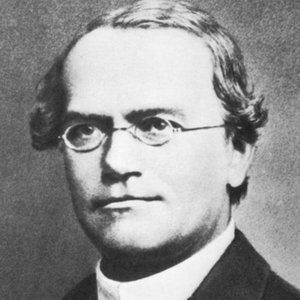
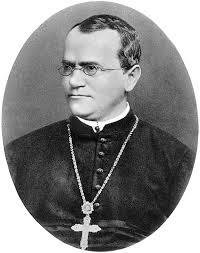
Father of Genetics: Gregor Mendel
Gregor Mendel is recognized as the founder of modern genetics due to his pioneering experiments with pea plants. His work established the fundamental laws governing heredity and the transmission of traits from one generation to the next.
Key Objective: To discover the general laws governing the formation and development of hybrids.
Approach: Mendel applied mathematical and statistical analysis to biological data, a revolutionary method for his time.
Importance: Mendel’s experiments provided empirical evidence for the existence of discrete hereditary units (now called genes).

Experimental Design: Why Pea Plants?
Selection of Model Organism
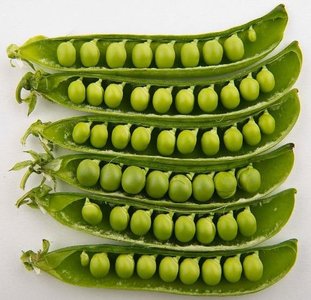
Mendel chose Pisum sativum (pea plants) as his experimental organism due to their suitability for controlled breeding and clear trait distinctions.
Distinguishable Phenotypes: Pea plants exhibit discrete, observable traits (e.g., flower color, seed shape).
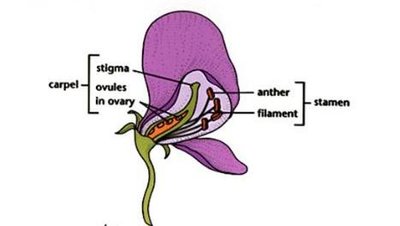
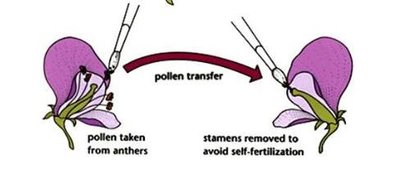
Controlled Fertilization: The structure of pea flowers allows for easy manipulation of pollination, enabling both self- and cross-fertilization.
Fast Generation Time: Pea plants mature quickly and can be grown in limited space, facilitating large-scale experiments.
Bred True: Certain lines consistently produced the same trait when self-pollinated, ensuring experimental reliability.


Mendel’s Experimental Design
Seven Key Aspects
Mendel’s experiments were meticulously designed to ensure scientific rigor and reproducibility. He focused on seven main aspects:
Discrete Phenotypes: Traits studied were clear-cut, not continuous.
Reproduction: Both self-pollination and cross-pollination were used to control genetic crosses.
True-Breeding Plants: Only plants that consistently produced the same trait were used as parents.
Hybrids: Crosses produced strong and viable hybrids, allowing study of multiple generations.
Reciprocal Crosses: Mendel reversed the roles of male and female parents to test for sex-linked effects.
Ratios and Algebra: Observed trait ratios were analyzed mathematically.
Large Sample Sizes: Over 30,000 plants were studied to ensure statistical validity.
Identifying Traits and Variants
Trait Selection and Pure Lines
Mendel selected seven traits, each with two distinct variants, and bred pure lines for two years to ensure trait fidelity.
Traits Studied: Examples include seed shape (round vs. wrinkled), flower color (purple vs. white).
Pure Lines: Plants were self-fertilized for multiple generations to confirm invariance of traits.


Monohybrid Crosses and Results
Experimental Crosses
Mendel performed monohybrid crosses, focusing on a single trait at a time. He observed the inheritance patterns across generations.
Parental Generation (P): Pure lines with distinct traits were crossed.
First Filial Generation (F1): All offspring displayed only one of the parental traits (dominant).
Second Filial Generation (F2): When F1 plants were self-crossed, both parental traits reappeared in a specific ratio.
Mendel’s Laws of Inheritance
Law of Dominance
One trait variant (allele) can mask the expression of another. The dominant allele is expressed in the F1 generation, while the recessive allele is latent.
Dominant Trait: The trait that appears in the F1 generation.
Recessive Trait: The trait that is hidden in the F1 but reappears in the F2.
Law of Segregation
Alleles for a trait segregate during gamete formation and reunite at fertilization. This explains the reappearance of the recessive trait in the F2 generation.
Genotypic Ratio: (AA:Aa:aa)
Phenotypic Ratio: (dominant:recessive)
Example: If parent 1 is AA and parent 2 is aa, all F1 are Aa (hybrids). Self-crossing F1 (Aa x Aa) produces F2 with genotypes AA, Aa, and aa.
Equation:
Scientific Rigor and Statistical Analysis
Importance of Large Sample Sizes
Mendel’s use of large sample sizes and statistical analysis ensured the reliability of his results and allowed him to derive mathematical ratios for trait inheritance.
Sample Size: Over 30,000 plants were studied.
Statistical Analysis: Ratios and algebraic terms were used to interpret data.
Summary Table: Mendel’s Experimental Design
Aspect | Description |
|---|---|
Discrete Phenotypes | Clear, observable trait variants |
Controlled Reproduction | Self- and cross-pollination |
True-Breeding Plants | Consistent trait inheritance |
Viable Hybrids | Strong offspring for generational study |
Reciprocal Crosses | Testing for sex-linked effects |
Mathematical Analysis | Ratios and algebraic interpretation |
Large Sample Size | Statistical rigor |
Additional info: Mendel’s work laid the foundation for modern genetics, including the concepts of haploidy, diploidy, dominance, and recessiveness. His empirical approach and use of mathematics in biology were unprecedented and remain central to genetic analysis today.
