 Back
BackMendelian Genetics: Principles and Extensions
Study Guide - Smart Notes
 Tailored notes based on your materials, expanded with key definitions, examples, and context.
Mendelian Genetics
Introduction to Mendelian Genetics
Mendelian genetics is the foundation of classical genetics, describing how traits are inherited from one generation to the next through discrete units called genes. Gregor Mendel's experiments with pea plants established the basic principles of heredity, including the concepts of dominant and recessive alleles, segregation, and independent assortment.
Foundational Concepts in Mendelian Genetics
The Blending vs. Particulate Hypothesis
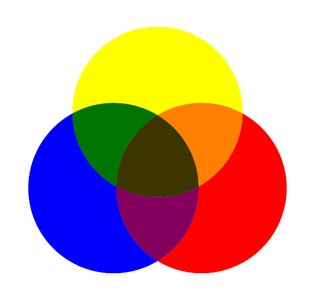
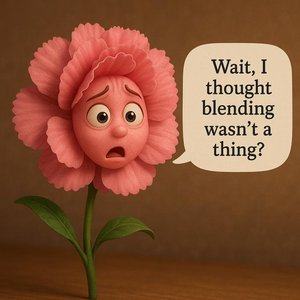
Blending Hypothesis: Suggested that parental traits mix in offspring, like paint colors blending. This hypothesis could not explain the reappearance of traits after skipping a generation.
Particulate Hypothesis: Mendel's experiments supported this idea, where parents pass on discrete heritable units (genes) that retain their identity across generations.
Mendel's Experimental Approach
Model Organism: Mendel used pea plants (Pisum sativum) due to their short generation time, large number of offspring, and controlled mating (self- or cross-pollination).
True-Breeding: Plants that consistently produce offspring with the same traits when self-pollinated.
Hybridization: Mating two contrasting true-breeding varieties to produce hybrids.
Generations: P generation (parental), F1 generation (first filial, hybrids), F2 generation (second filial, offspring of F1 self- or cross-pollination).
Dominant and Recessive Traits
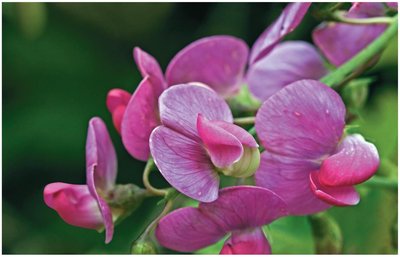
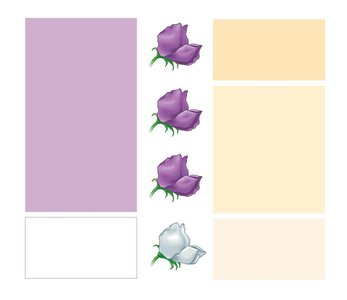
Dominant Trait: Expressed in the F1 generation (e.g., purple flowers).
Recessive Trait: Masked in the F1 generation but reappears in F2 (e.g., white flowers).
3:1 Ratio: In the F2 generation, Mendel observed a consistent ratio of three dominant to one recessive phenotype.
Mendel's Four-Part Model
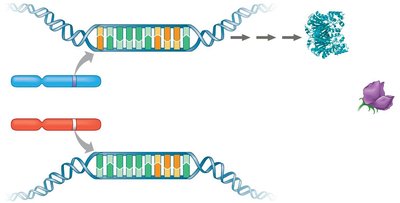
Alternative versions of genes (alleles) account for variations in inherited characters.
Each organism inherits two alleles for each gene, one from each parent.
If the alleles differ, the dominant allele determines the phenotype; the recessive allele has no noticeable effect.
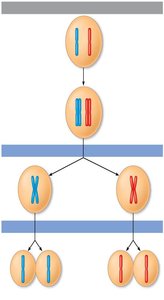
Law of Segregation: The two alleles for a heritable character segregate during gamete formation and end up in different gametes.
Punnett Squares and Genetic Vocabulary
Punnett Square: Diagram used to predict the allele composition of offspring from a cross.
Genotype: Genetic makeup (e.g., PP, Pp, pp).
Phenotype: Observable trait (e.g., purple or white flowers).
Homozygous: Two identical alleles for a gene (PP or pp).
Heterozygous: Two different alleles for a gene (Pp).

Extensions of Mendelian Genetics
Law of Independent Assortment
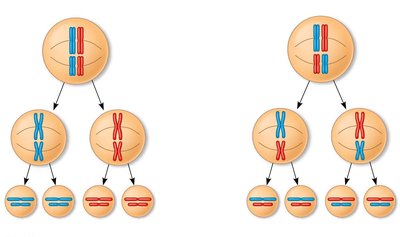
The law of independent assortment states that each pair of alleles segregates independently of other pairs during gamete formation. This law applies to genes on different chromosomes or those far apart on the same chromosome.
Probability in Genetics
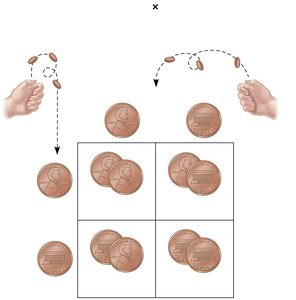
Multiplication Rule: Probability that two independent events occur together is the product of their probabilities.
Addition Rule: Probability that any one of two or more mutually exclusive events occurs is the sum of their probabilities.
Complex Patterns of Inheritance
Incomplete Dominance: Heterozygotes have a phenotype intermediate between the two homozygotes (e.g., pink flowers from red and white parents).
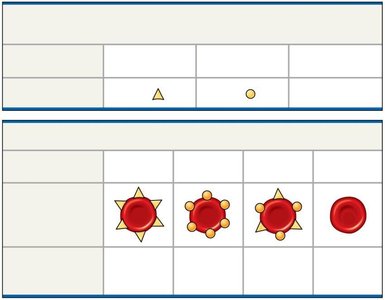
Codominance: Both alleles are fully expressed in heterozygotes (e.g., AB blood type).
Multiple Alleles: More than two alleles exist for a gene in a population (e.g., ABO blood group: IA, IB, i).
Pleiotropy: One gene affects multiple phenotypic traits (e.g., sickle-cell disease, cystic fibrosis).
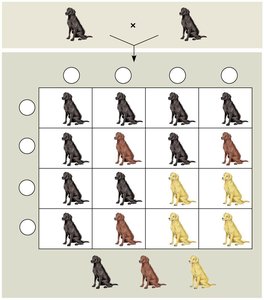
Epistasis: One gene affects the expression of another gene (e.g., coat color in Labrador retrievers).
Polygenic Inheritance: Multiple genes contribute additively to a single trait (e.g., human skin color).
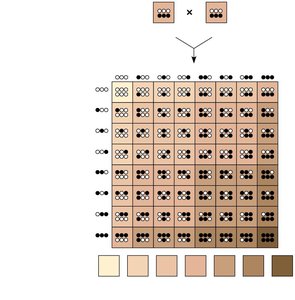
Environmental Impact and Human Genetics
Nature and Nurture
Multifactorial Traits: Traits influenced by both genetic and environmental factors (e.g., hydrangea flower color varies with soil pH).
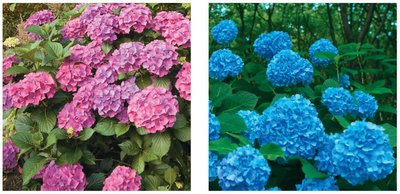
Pedigree Analysis
Pedigree: Family tree that traces inheritance patterns of traits across generations.
Used to predict the probability of inheriting certain traits or disorders.
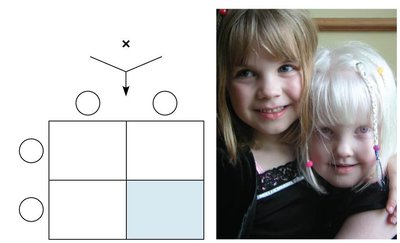
Human Genetic Disorders
Recessively Inherited Disorders: Only expressed in homozygous individuals (e.g., albinism, cystic fibrosis, sickle-cell disease).
Dominantly Inherited Disorders: Expressed in heterozygotes (e.g., achondroplasia, Huntington's disease).
Carriers: Heterozygous individuals who carry a recessive allele but do not express the trait.
Summary Table: Extensions of Mendelian Genetics
Relationship | Description | Example |
|---|---|---|
Complete dominance | Heterozygote phenotype same as homozygous dominant | Purple flower color in peas |
Incomplete dominance | Heterozygote phenotype intermediate | Pink snapdragon flowers |
Codominance | Both phenotypes expressed in heterozygotes | AB blood group |
Multiple alleles | More than two alleles in the population | ABO blood group |
Pleiotropy | One gene affects multiple traits | Sickle-cell disease |
Epistasis | One gene affects expression of another | Labrador coat color |
Polygenic inheritance | Multiple genes affect one trait | Human skin color |
Additional info: These principles form the basis for understanding inheritance patterns in all sexually reproducing organisms, including humans. Modern genetics continues to build on Mendel's discoveries, integrating molecular biology and genomics to explain complex traits and diseases.
