 Back
BackMendelian Genetics: Principles of Heredity and Experimental Foundations
Study Guide - Smart Notes
 Tailored notes based on your materials, expanded with key definitions, examples, and context.
Genetics: The Study of Heredity
Gregor Mendel and the Foundations of Genetics
Genetics is the branch of biology concerned with the study of heredity and variation in organisms. The field was founded by Gregor Mendel, whose experiments with pea plants established the basic laws of inheritance. Mendel's work, initially overlooked, became the cornerstone of modern genetics after its rediscovery in 1900.
Law of Segregation: Each parent possesses two alleles for each gene, which segregate during gamete formation.
Law of Independent Assortment: Genes for different traits assort independently during gamete formation.
Experimental Approach: Mendel used rigorous, quantitative methods with pea plants to analyze inheritance patterns.
Historical Context: Mendel published "Experiments With Plant Hybrids" in 1865, which laid the foundation for experimental genetics.
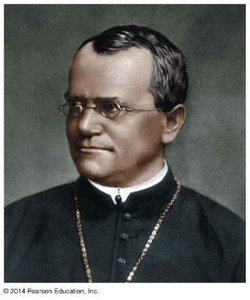
Mendel's Pea Plant Experiments
Characteristics and Traits
Mendel selected pea plants for their clear, binary characteristics, allowing for precise analysis of inheritance. A characteristic is a heritable feature that varies among individuals, while a trait is the specific form that a characteristic takes.
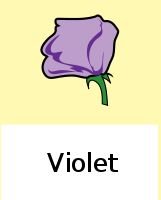
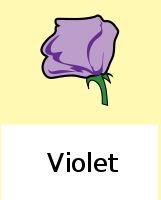
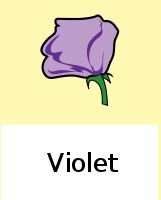
Binary Characteristic: Traits with only two possible values (e.g., purple vs. white flower color).
True-breeding: Plants that consistently produce offspring with the same trait generation after generation.
Examples: Flower color (purple or white), seed shape (round or wrinkled).

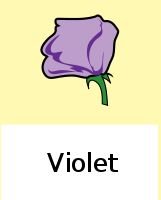
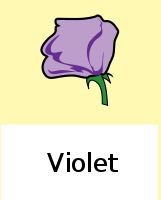


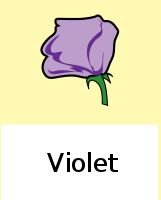
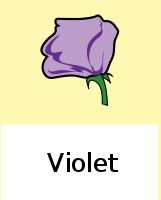

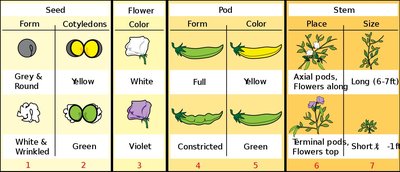

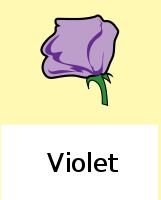
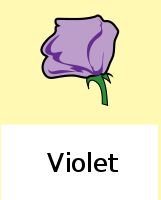
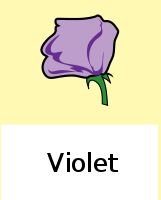
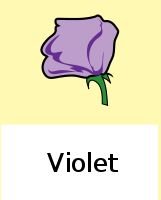

Major Traits Studied by Mendel
Mendel analyzed seven distinct traits in pea plants, each with two contrasting forms. These traits allowed him to observe clear patterns of inheritance.
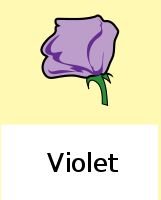
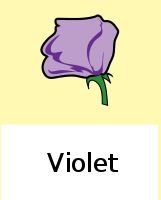
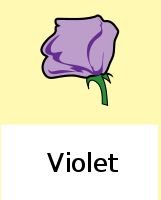
Seed Form | Cotyledons | Flower Color | Pod Form | Pod Color | Stem Place | Stem Size |
|---|---|---|---|---|---|---|
Grey & Round | Yellow | White | Full | Yellow | Axial pods, Flowers along | Long (6-7 ft) |
White & Wrinkled | Green | Violet | Constricted | Green | Terminal pods, Flowers top | Short (~1 ft) |
Mendel's First Law: Law of Segregation
Principles and Mechanisms
The Law of Segregation states that each individual has two alleles for each gene, which segregate during gamete formation. Fertilization restores the pair of alleles, determining the offspring's trait.
Alleles: Different forms of a gene.
Homozygous: Two identical alleles (e.g., PP or pp).
Heterozygous: Two different alleles (e.g., Pp).
Segregation: During gamete formation, alleles separate so each gamete receives one allele.
Example: Flower Color Inheritance
When true-breeding purple (PP) and white (pp) pea plants are crossed, all F1 offspring are purple (Pp). In the F2 generation, the ratio of purple to white flowers is approximately 3:1.
Phenotypic Ratio: 3 purple : 1 white
Genotypic Ratio: 1 PP : 2 Pp : 1 pp
Punnett Square Representation
The Punnett square is a tool used to predict the genotypes and phenotypes of offspring from a genetic cross.
P | p | |
|---|---|---|
P | PP | Pp |
p | Pp | pp |
This results in the following ratios:
1 homozygous dominant (PP)
2 heterozygous (Pp)
1 homozygous recessive (pp)
Key Equations
Probability of offspring genotype:
Mendel's Second Law: Law of Independent Assortment
Principles and Dihybrid Crosses
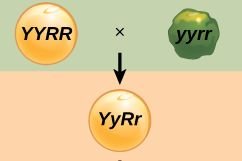
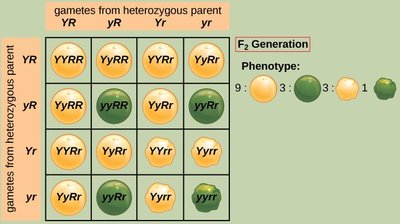
The Law of Independent Assortment states that alleles of different genes assort independently during gamete formation. This law is observed in dihybrid crosses, where two traits are considered simultaneously.
Dihybrid Cross: Cross between individuals heterozygous for two traits (e.g., YyRr x YyRr).
Phenotypic Ratio: 9:3:3:1 in the F2 generation.
Example: Seed color (yellow/green) and seed shape (round/wrinkled).
Punnett Square for Dihybrid Cross
YR | yR | Yr | yr | |
|---|---|---|---|---|
YR | YYRR | YyRR | YYRr | YyRr |
yR | YyRR | yyRR | YyRr | yyRr |
Yr | YYRr | YyRr | YYrr | Yyrr |
yr | YyRr | yyRr | Yyrr | yyrr |
The phenotypic ratio for the F2 generation is:
9 yellow round
3 yellow wrinkled
3 green round
1 green wrinkled
Summary Table: Mendelian Traits in Pea Plants
Mendel's experiments focused on seven traits, each with two contrasting forms. The table below summarizes these traits:
Trait | Dominant Form | Recessive Form |
|---|---|---|
Seed Shape | Round | Wrinkled |
Seed Color | Yellow | Green |
Flower Color | Violet | White |
Pod Shape | Full | Constricted |
Pod Color | Green | Yellow |
Flower Position | Axial | Terminal |
Stem Height | Tall | Dwarf |
Additional info: Mendel's principles are foundational for understanding inheritance patterns, genetic probability, and the molecular basis of heredity. These laws apply to many organisms beyond pea plants and are essential for fields such as molecular biology, genomics, and biotechnology.
