 Back
BackMendelian Genetics: Principles, Patterns, and Extensions
Study Guide - Smart Notes
 Tailored notes based on your materials, expanded with key definitions, examples, and context.
Mendelian Genetics
Introduction to Inheritance
Inheritance is the process by which traits are passed from parents to offspring. The study of inheritance has been central to biology and agriculture for centuries, as understanding heredity allows for the improvement of crops and livestock. Gregor Mendel, through his experiments with garden peas, established the foundational principles of heredity that are still used today.
Gregor Mendel and the Study of Heredity
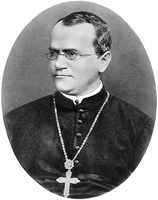
Gregor Mendel (1822–1884) was an Austrian monk who conducted experiments on pea plants to understand how traits are inherited.
He used quantitative methods and careful breeding experiments to reveal patterns of inheritance.
Mendel’s work laid the foundation for modern genetics.
Pre-Mendelian Theories of Inheritance
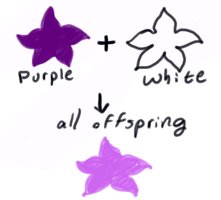
Before Mendel, the prevailing idea was blending inheritance, where offspring were thought to be a mix of parental traits (e.g., red + white flowers = pink flowers).
However, some traits did not blend and could skip generations, suggesting a different mechanism.
Mendel’s Experimental Approach
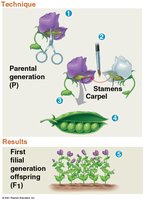
Mendel chose the garden pea (Pisum sativum) for his experiments due to its many varieties, short generation time, and ability to self- or cross-pollinate. He focused on seven distinct traits, each with two contrasting forms.
Character: A heritable feature (e.g., flower color).
Trait: A variant of a character (e.g., purple or white flowers).
True-breeding: Plants that produce offspring of the same variety when self-pollinated.
Hybridization: Crossing two different true-breeding varieties.
Mendel’s Model of Heredity
Mendel’s experiments led to the formulation of several key concepts:
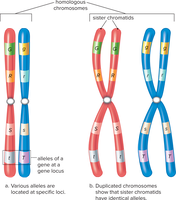
Alternative versions of genes (now called alleles) account for variations in inherited characters.
Each gene is located at a specific locus on a chromosome.
For each character, an organism inherits two alleles, one from each parent.
If the alleles differ, the dominant allele determines the organism’s appearance, while the recessive allele has no noticeable effect.
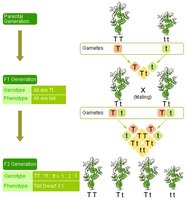
The law of segregation: The two alleles for a heritable character separate during gamete formation and end up in different gametes.
Key Terms and Concepts
Genotype: The genetic makeup of an organism (e.g., PP, Pp, or pp).
Phenotype: The observable physical traits (e.g., purple or white flowers).
Homozygous: Two identical alleles for a gene (e.g., PP or pp).
Heterozygous: Two different alleles for a gene (e.g., Pp).
Mendel’s Monohybrid Crosses
When Mendel crossed true-breeding purple and white flowered plants, all F1 offspring were purple, disproving the blending hypothesis. Self-pollination of F1 plants produced a 3:1 ratio of purple to white flowers in the F2 generation.
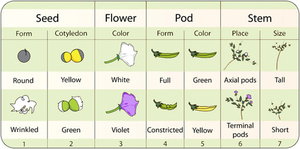
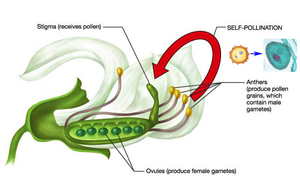
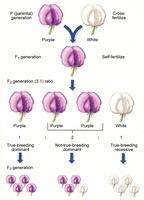
Summary Table: Mendel’s Seven Pea Plant Characters
Character | Dominant Trait | Recessive Trait |
|---|---|---|
Flower color | Purple | White |
Seed color | Yellow | Green |
Seed shape | Round | Wrinkled |
Pod color | Green | Yellow |
Pod shape | Full | Constricted |
Flower position | Axial | Terminal |
Stem length | Tall | Dwarf |
Punnett Squares and Probability
Punnett squares are used to predict the probability of offspring genotypes and phenotypes from parental crosses. A capital letter represents a dominant allele, and a lowercase letter represents a recessive allele.
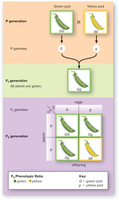
Multiplication rule: Probability of two independent events both occurring is the product of their individual probabilities.
Addition rule: Probability of any one of several mutually exclusive events is the sum of their individual probabilities.
Testcross
A testcross is used to determine the genotype of an individual with a dominant phenotype by crossing it with a homozygous recessive individual. If any offspring display the recessive phenotype, the unknown parent must be heterozygous.
Law of Independent Assortment
Mendel’s law of independent assortment states that alleles of different genes assort independently during gamete formation. This law applies to genes on different chromosomes or those far apart on the same chromosome.
Extensions of Mendelian Genetics
Not all inheritance patterns follow simple Mendelian rules. Some important extensions include:
Incomplete dominance: The phenotype of heterozygotes is intermediate between the two parental varieties.
Codominance: Both alleles are expressed equally in the phenotype (e.g., AB blood type).
Multiple alleles: More than two alleles exist for a gene (e.g., ABO blood group).
Pleiotropy: One gene affects multiple phenotypic traits (e.g., Marfan syndrome).
Polygenic inheritance: Multiple genes independently affect a single trait, often resulting in continuous variation (e.g., height, skin color).
Nature and Nurture: Environmental Impact on Phenotype
The phenotype of an organism is influenced by both its genotype and environmental factors. Traits affected by multiple genes and environmental influences are called multifactorial traits. Many diseases, such as heart disease and cancer, have both genetic and environmental components.
Summary Table: Key Mendelian Terms and Concepts
Term | Definition |
|---|---|
Gene | Unit of heredity; segment of DNA encoding a trait |
Allele | Alternative version of a gene |
Genotype | Genetic makeup of an organism |
Phenotype | Observable traits of an organism |
Homozygous | Two identical alleles for a gene |
Heterozygous | Two different alleles for a gene |
Dominant | Allele that determines phenotype in heterozygotes |
Recessive | Allele masked in heterozygotes |
Key Equations
Probability of aa offspring from Aa x Aa cross:
Probability of dominant phenotype (AA or Aa) from Aa x Aa cross:
Additional info: This guide covers the core principles of Mendelian genetics, including the historical context, experimental design, and modern extensions. It is suitable for exam preparation and foundational understanding in college-level biology.
