 Back
BackMendelian Genetics, Sexual Reproduction, and Genetic Variation
Study Guide - Smart Notes
 Tailored notes based on your materials, expanded with key definitions, examples, and context.
Mendel and the Gene Idea
Introduction to Mendelian Genetics
Mendelian genetics forms the foundation of classical genetics, describing how traits are inherited from one generation to the next through discrete units called genes. Gregor Mendel's experiments with pea plants led to the discovery of fundamental principles such as segregation and independent assortment.
Blending Inheritance: Early (and incorrect) idea that offspring are a 'blend' of parental traits. Mendel disproved this with his experiments.
Particulate Hypothesis: Traits are inherited as discrete units (genes), not blended.
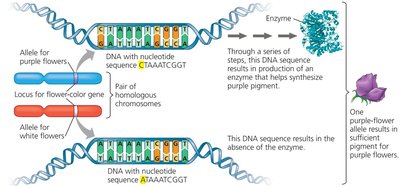
Character vs. Trait: A character is a heritable feature (e.g., flower color), while a trait is a variant of that character (e.g., purple or white flowers).
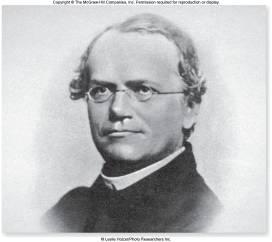
Mendel's Experimental Approach
Mendel chose pea plants (Pisum sativum) for their ease of cultivation, availability of varieties, and ability to self- or cross-fertilize. He focused on 'either/or' traits, which allowed for clear statistical analysis.
True-breeding plants: Plants that, when self-fertilized, always produce offspring with the same trait.
Monohybrid Cross: A cross between two organisms differing at one genetic locus.
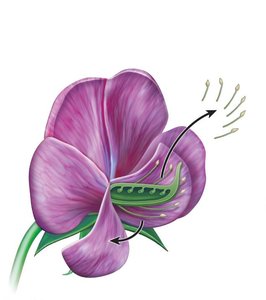
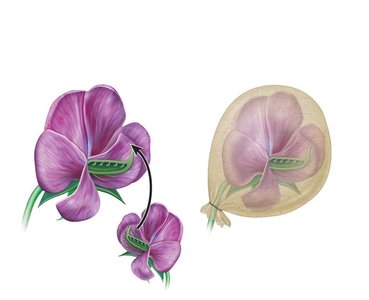
Results of Mendel's Crosses
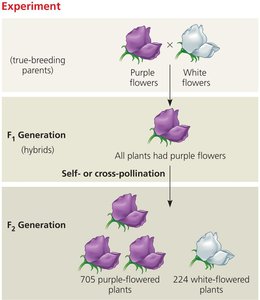
Mendel observed that crossing true-breeding purple and white flowered plants produced all purple F1 offspring, but the white trait reappeared in the F2 generation.
F1 Generation: All hybrids showed the dominant trait (purple).
F2 Generation: Traits segregated in a 3:1 ratio (dominant:recessive).
Mendel's Model and Laws
Mendel's explanation for his results led to two key principles:
Law of Segregation: The two alleles for a heritable character separate during gamete formation and end up in different gametes.
Law of Independent Assortment: Each pair of alleles segregates independently of other pairs during gamete formation (demonstrated in dihybrid crosses).
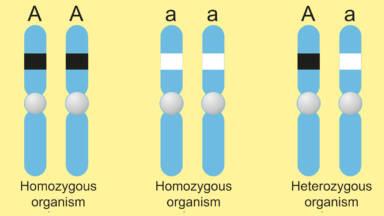
Genetic Vocabulary
Genotype: The genetic makeup of an organism (e.g., PP, Pp, pp).
Phenotype: The observable traits of an organism (e.g., purple or white flowers).
Homozygous: Having two identical alleles for a gene (PP or pp).
Heterozygous: Having two different alleles for a gene (Pp).
Punnett Squares
Punnett squares are used to predict the possible combinations of alleles in offspring from parents of known genotype.
They visually represent Mendel's segregation model and help calculate expected genotype and phenotype ratios.
Extensions of Mendelian Genetics
Incomplete Dominance: Heterozygotes show an intermediate phenotype (e.g., snapdragons with pink flowers from red and white parents).
Codominance: Both alleles are expressed in the phenotype (e.g., ABO blood groups).
Genetic Polymorphism: Multiple alleles exist in the population (e.g., blood types A, B, AB, O).
Genetic Variation and Evolution
Sources of Genetic Variation
Genetic variation is essential for evolution and adaptation. It arises from:
Mutations: Random changes in DNA sequence.
Sexual Reproduction: Increases genetic diversity through independent assortment, crossing over, and random fertilization.
Random Fertilization
Any sperm can fuse with any ovum, resulting in a zygote with a unique combination of alleles.
In humans, the fusion of gametes can produce about 70 trillion possible diploid combinations.
Evolutionary Significance
Natural Selection: Acts on genetic variation, favoring alleles that confer a survival or reproductive advantage.
Sexual Reproduction: Maintains and increases genetic variation, which is crucial for populations to adapt to changing environments.
Meiotic Drive and "Selfish" Genes
Sometimes, certain genes can bias their own transmission to the next generation, a phenomenon known as meiotic drive. These "selfish" genes can increase in frequency even if they have negative effects on the organism.
The Evolution of Sex: The Red Queen Hypothesis
Why Sexual Reproduction?
The evolution of sexual reproduction is a major question in biology. Sexual reproduction is thought to provide a fitness advantage mainly when the environment changes rapidly, such as in the presence of parasites and pathogens. 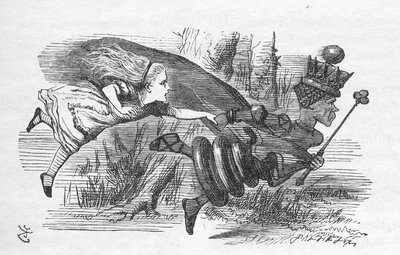
Parasitism and Sex
Sexual reproduction increases offspring variability, which can help populations "keep up" with rapidly evolving parasites (the Red Queen hypothesis).
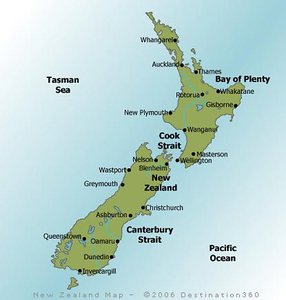
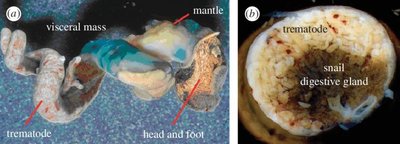
Evidence from studies on freshwater snails in New Zealand shows that populations with higher parasitism have more sexually reproducing individuals.
Alternative Modes of Reproduction
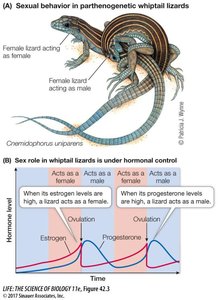
Parthenogenesis
Parthenogenesis is a form of asexual reproduction where offspring are produced without fertilization. It is observed in some fish, reptiles, and invertebrates.
Parthenogenetic species can rapidly increase in number but may have less genetic diversity.
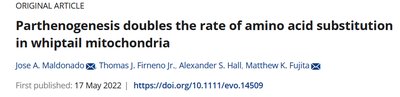
Some species, like whiptail lizards, show unique adaptations such as doubling the rate of amino acid substitution in mitochondria.
Summary Table: Mendel's Seven Pea Plant Characters
Character | Dominant Trait | Recessive Trait | F2 Generation Ratio |
|---|---|---|---|
Flower Color | Purple | White | 3.15:1 |
Seed Color | Yellow | Green | 3.01:1 |
Seed Texture | Round | Wrinkled | 2.96:1 |
Pod Color | Green | Yellow | 2.82:1 |
Pod Shape | Inflated | Constricted | 2.95:1 |
Flower Position | Axial | Terminal | 3.14:1 |
Plant Height | Tall | Short | 2.84:1 |
Key Equations
Probability of genotype in F2 (monohybrid cross):
Probability of phenotype in F2 (monohybrid cross):
Conclusion
Mendel's principles of inheritance, the mechanisms of sexual and asexual reproduction, and the evolutionary significance of genetic variation are central to understanding modern genetics and evolution. These concepts explain how traits are passed on, how variation arises, and why sexual reproduction persists in nature.
