 Back
Metabolism and Energy Transformations in Biological Systems
Study Guide - Smart Notes
 Tailored notes based on your materials, expanded with key definitions, examples, and context.
Metabolism: Transforming Matter and Energy
Metabolic Pathways
Metabolism encompasses all chemical reactions within an organism, forming a complex network of metabolic pathways. Each pathway consists of a series of steps, each catalyzed by a specific enzyme, transforming a starting molecule into a final product.
Metabolic Pathway: A sequence of chemical reactions, each step facilitated by a unique enzyme.
Enzymes: Biological catalysts that accelerate chemical reactions without being consumed.
Catabolic Pathways: Break down complex molecules into simpler ones, releasing energy (e.g., cellular respiration).
Anabolic Pathways: Build complex molecules from simpler ones, consuming energy (e.g., protein synthesis).
Example: Cellular respiration is a catabolic pathway that breaks down glucose to release energy. 
Forms of Energy in Biological Systems
Types of Energy
Energy is the capacity to cause change and exists in various forms relevant to biological processes.
Kinetic Energy: Energy of motion; moving objects can do work (e.g., muscle contraction).
Thermal Energy: Kinetic energy associated with random movement of atoms or molecules; transfer of thermal energy is called heat.
Light Energy: Electromagnetic energy harnessed by organisms (e.g., photosynthesis).
Potential Energy: Stored energy due to position or structure (e.g., water behind a dam, chemical bonds).
Chemical Energy: Potential energy stored in chemical bonds, released during catabolic reactions.
Example: The energy stored in glucose is released during cellular respiration to power cellular activities. 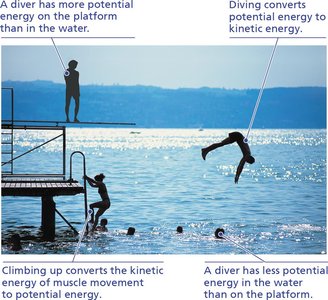
Energy Transformations and Bioenergetics
Energy Conversion in Living Organisms
Living organisms constantly convert energy from one form to another to sustain life.
Bioenergetics: The study of how energy flows through living organisms.
Energy from food is converted to kinetic energy for movement, potential energy for storage, and heat as a byproduct.
Photosynthesis converts light energy to chemical energy in plants.
Example: A person climbing a ladder uses chemical energy from food to perform work, converting it to kinetic and then potential energy. 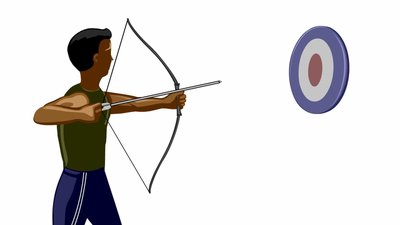
The Laws of Thermodynamics in Biology
First Law of Thermodynamics
The first law states that energy cannot be created or destroyed, only transformed or transferred.
Principle of Conservation of Energy: Total energy in the universe remains constant.
Organisms transform energy (e.g., plants convert sunlight to chemical energy).
Second Law of Thermodynamics
The second law states that every energy transfer increases the entropy (disorder) of the universe.
Entropy: A measure of disorder or randomness in a system.
Energy transformations are never 100% efficient; some energy is lost as heat.
Spontaneous Process: A process that increases entropy and occurs without energy input.
Nonspontaneous Process: A process that decreases entropy and requires energy input.
Example: As a bear runs, it converts chemical energy to kinetic energy and heat, increasing entropy. 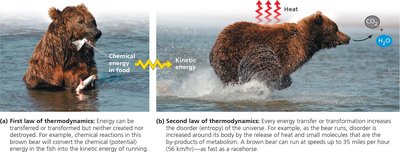
Biological Order and Disorder
Maintaining Order in Living Systems
Despite the tendency toward disorder, living organisms maintain and create order by increasing the entropy of their surroundings.
Cells build complex molecules from simpler ones, creating local order.
Organisms take in organized matter and energy, releasing less ordered forms (e.g., CO2, H2O, heat).
The total entropy of the universe increases, even as local order is maintained.
Example: The intricate structure of a glass sponge and the architectural design inspired by it demonstrate biological and human-created order. 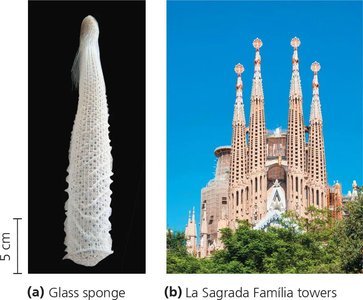
Summary Table: Catabolic vs. Anabolic Pathways
Pathway Type | Function | Energy Flow | Example |
|---|---|---|---|
Catabolic | Breaks down molecules | Releases energy | Cellular respiration |
Anabolic | Builds molecules | Consumes energy | Protein synthesis |
Key Equations
Entropy and Spontaneity
Change in entropy ():
First Law of Thermodynamics: (where is change in internal energy, is heat, is work)
Concept Check
How does the second law of thermodynamics help explain the diffusion of a substance across a membrane?
Describe the forms of energy found in an apple as it grows on a tree, then falls, then is digested by someone who eats it.
If you place a teaspoon of sugar in the bottom of a glass of water, it will dissolve completely over time. Left longer, eventually the water will disappear and the sugar crystals will reappear. Explain these observations in terms of entropy.
Additional info: The notes above expand on the original content by providing definitions, examples, and equations to ensure completeness and academic quality for General Biology students.
