Back
BackMicrobial and Plant Diversity: Prokaryotes, Viruses, and Seed Plant Evolution
Study Guide - Smart Notes
 Tailored notes based on your materials, expanded with key definitions, examples, and context.
Microbial Diversity
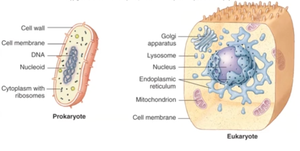
Prokaryotes vs. Eukaryotes
Prokaryotes and eukaryotes represent two fundamental cell types in biology, distinguished by their structural and genetic organization.
Prokaryotes: Lack a nucleus and membrane-bound organelles; DNA is found in a nucleoid region.
Eukaryotes: Possess a nucleus and various membrane-bound organelles such as mitochondria, endoplasmic reticulum, and Golgi apparatus.
Cell wall: Present in most prokaryotes and some eukaryotes (plants, fungi).
Cell membrane: Found in both cell types, regulating transport and communication.
Viruses
Virus Structure and Function
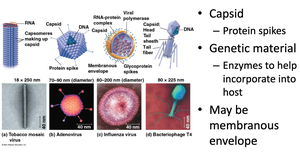
Viruses are non-cellular infectious agents that require host cells for reproduction. Their structure is highly specialized for infection and replication.
Capsid: Protein shell that encases the viral genetic material.
Protein spikes: Facilitate attachment to host cells.
Genetic material: Can be DNA or RNA; contains instructions for viral replication.
Enzymes: Some viruses carry enzymes to aid in host cell incorporation.
Membranous envelope: Present in some viruses, derived from host cell membranes.
Seed Plant Reproduction and Life Cycle
Pollen and Fertilization
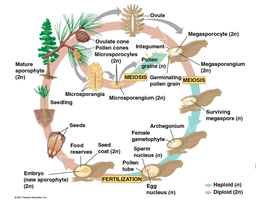
Seed plants reproduce via pollen, which transports sperm to the ovule for fertilization. This process is central to the formation of seeds and the continuation of the plant life cycle.
Male gametophyte: Develops within the microspore coat and consists of four haploid nuclei, one of which acts as sperm.
Pollen grains: Released by the microsporangium and transport sperm to the ovule.
Fertilization: Sperm fertilizes the egg, forming a sporophyte embryo; the ovule becomes the seed.
Dominance of Sporophyte Generation
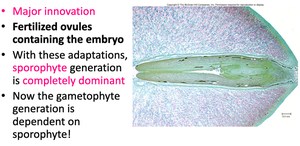
In seed plants, the sporophyte generation is dominant, and the gametophyte is dependent on the sporophyte. Fertilized ovules contain the embryo, marking a major evolutionary innovation.
Sporophyte dominance: The multicellular diploid stage is the main visible part of the plant.
Gametophyte dependence: Gametophyte generation is reduced and relies on the sporophyte for nutrition and protection.
Seed Plant Life Cycle
The life cycle of seed plants involves alternation of generations, with distinct haploid and diploid stages. Meiosis and fertilization are key events that drive the cycle.
Microsporangia and megasporangia: Produce microspores and megaspores via meiosis.
Gametophytes: Develop from spores; male gametophytes produce sperm, female gametophytes produce eggs.
Fertilization: Results in a diploid embryo, which grows into a new sporophyte.
Seeds: Contain the embryo and food reserves, enabling dispersal and survival.
Seed Plant Diversity: Gymnosperms vs. Angiosperms
Key Differences
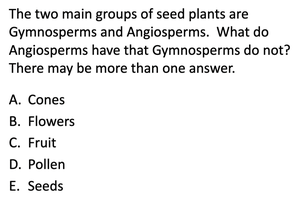
Seed plants are divided into gymnosperms and angiosperms, each with unique reproductive structures and strategies.
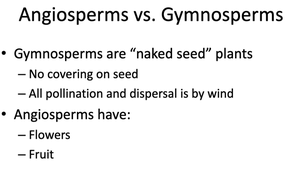
Gymnosperms: "Naked seed" plants; seeds are not enclosed by fruit, and pollination/dispersal is mainly by wind.
Angiosperms: Have flowers and fruit, which facilitate pollination and seed dispersal.
Flowering Plants (Angiosperms)
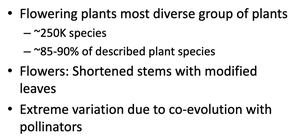
Angiosperms are the most diverse group of plants, with adaptations that promote pollination and reproductive success.
Diversity: Over 250,000 species; 85-90% of described plant species.
Flowers: Modified stems and leaves; extreme variation due to co-evolution with pollinators.
Anatomy of a Flower
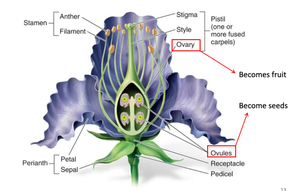
Flowers contain specialized structures for reproduction. The ovary becomes fruit, and ovules become seeds after fertilization.
Stamen: Male part, produces pollen.
Pistil: Female part, contains ovary and ovules.
Ovary: Develops into fruit.
Ovules: Develop into seeds.
Pollination Syndromes
Flowers have evolved suites of traits to attract specific pollinators, increasing the likelihood of successful pollination.
Scent, color, shape, and timing: Traits that attract particular pollinators.
Specialization: Flowers may be adapted to attract certain pollinators, promoting reproductive isolation and diversity.