Back
BackMicrobial Genetics: Viruses and Their Reproductive Cycles
Study Guide - Smart Notes
 Tailored notes based on your materials, expanded with key definitions, examples, and context.
Viruses: Structure and Basic Properties
Definition and Characteristics
Viruses are infectious agents that are not considered alive because they are not cellular and cannot reproduce independently. They rely on host cells to replicate their genetic material and synthesize proteins.
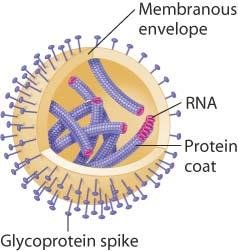
Structure: A virus consists of nucleic acid (either DNA or RNA) enclosed in a protein coat called a capsid. Some viruses also possess a membranous envelope derived from the host cell membrane.
Host Specificity: Viruses recognize and bind to specific receptor molecules on the surface of target cells, facilitating entry into the host.
Bacteriophages (Phages): Viruses that infect bacteria are called phages.
Phage Reproductive Cycles
Lytic and Lysogenic Cycles
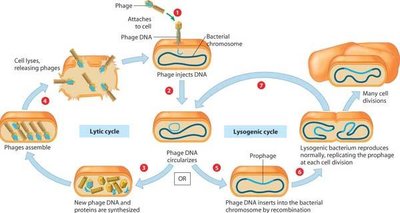
Phages can reproduce via two main cycles: the lytic cycle and the lysogenic cycle. The lambda phage, which infects Escherichia coli (E. coli), is a classic example used to illustrate these cycles.
Lytic Cycle: The phage injects its DNA into the host bacterium, immediately hijacking the host's machinery to produce new phage components. These assemble into new phages, which burst from the cell (lysis), killing the host and releasing progeny phages.
Lysogenic Cycle: The phage DNA integrates into the bacterial chromosome by genetic recombination, becoming a prophage. The prophage is replicated along with the host DNA during cell division, allowing the viral genome to persist without killing the host. Environmental triggers can induce the prophage to enter the lytic cycle.

Harmful Prophage Genes
Some prophage genes remain active in lysogenic bacteria and can cause disease by directing the production of toxins. For example, the bacteria responsible for diphtheria, botulism, and scarlet fever are only pathogenic due to prophage-encoded toxins.
Viruses in Animals
Structure and Types
Animal viruses may contain DNA or RNA as their genetic material. Many have a membranous envelope with glycoprotein spikes that facilitate entry and exit from host cells.
RNA Viruses: Cause diseases such as influenza, common cold, measles, mumps, AIDS, and polio. The influenza virus, for example, has its RNA genome segmented into eight pieces, each wrapped in protein.
DNA Viruses: Cause diseases such as hepatitis, chickenpox, and herpes infections.
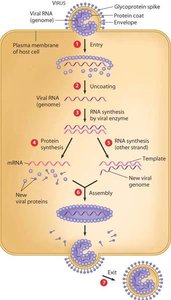
Reproductive Cycle of an Enveloped RNA Virus (e.g., Mumps Virus)
The reproductive cycle of enveloped RNA viruses involves several steps:
Attachment of glycoprotein spikes to host cell receptors and fusion of the viral envelope with the plasma membrane.
Entry of the protein-coated RNA into the cytoplasm.
Removal of the protein coat by host enzymes.
Viral RNA serves as a template for synthesis of complementary RNA strands, which function as mRNA for viral protein synthesis and as templates for new viral genomes.
Assembly of new viral particles.
Exit of new viruses by budding, acquiring an envelope from the host cell membrane without necessarily lysing the cell.
Reproductive Cycle of an Enveloped DNA Virus (e.g., Herpesvirus)
DNA viruses typically replicate in the host cell's nucleus. Herpesviruses acquire their envelopes from the nuclear membrane and can remain latent in nerve cells, reactivating under stress to produce new viruses and cause disease symptoms.
Latency: Viral DNA integrates into host chromosomes and can remain dormant for long periods.
Reactivation: Environmental signals can trigger viral replication, leading to cell destruction and disease symptoms.
Coping with Viruses
Host Response and Medical Interventions
The severity of viral infections depends on the immune response and the regenerative capacity of infected tissues. For example, respiratory tract cells can regenerate after a cold, but nerve cells damaged by poliovirus cannot. Vaccines are crucial for prevention, as antibiotics are ineffective against viruses. Antiviral drug development is challenging due to the need to target viruses without harming host cells.
Plant Viruses
Impact and Transmission
Most plant viruses have RNA genomes and can significantly reduce crop yields by stunting plant growth. They often enter plants through wounds or are transmitted by insects, contaminated tools, or infected parent plants. Plant viruses can spread throughout the plant via plasmodesmata, and there are currently no cures for most viral diseases in plants.


Emerging Viruses
Definition and Examples
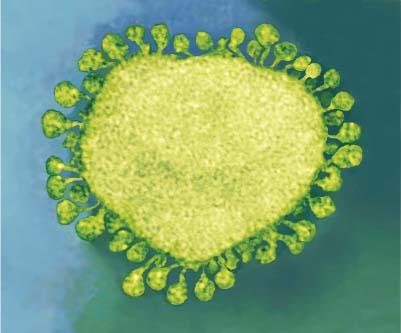
Emerging viruses are those that have recently appeared or come to the attention of medical science. Examples include HIV, Ebola virus, West Nile virus, and SARS coronavirus. Factors contributing to their emergence include mutations, cross-species transmission, and spread from isolated populations.

Retroviruses and HIV
Reverse Transcription and AIDS
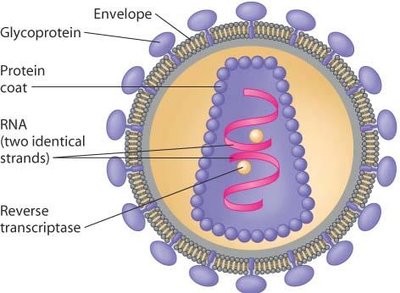
HIV (human immunodeficiency virus), the causative agent of AIDS, is a retrovirus. Retroviruses carry the enzyme reverse transcriptase, which synthesizes DNA from an RNA template. HIV infects and destroys white blood cells, crippling the immune system.
Genome: HIV contains two identical RNA strands and reverse transcriptase.
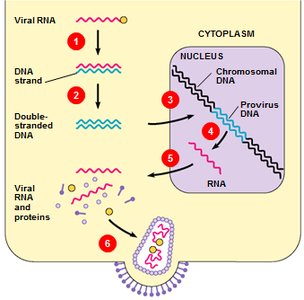
Replication: After entry and uncoating, reverse transcriptase synthesizes a DNA strand from the RNA template, then a complementary DNA strand. The resulting double-stranded DNA integrates into the host genome as a provirus.
Expression: The provirus can be transcribed and translated to produce new viral particles, which bud from the host cell to infect others.