 Back
BackMicrobial Life: Prokaryotes, Protists, Archaea, and Viruses
Study Guide - Smart Notes
 Tailored notes based on your materials, expanded with key definitions, examples, and context.
Microbial Life: Prokaryotes, Protists, Archaea, and Viruses
Prokaryote Diversity
Prokaryotes, including Bacteria and Archaea, are among the most diverse and abundant organisms on Earth. They inhabit a wide range of environments and play essential roles in ecological and human systems.
Microbiome: The collection of microbial species in a specific environment, such as the human body.
Symbiotic Relationships: Many prokaryotes live in symbiosis with other organisms, providing benefits such as nutrient production or protection against pathogens.
Pathogenic Prokaryotes: Some prokaryotes cause diseases in humans and other organisms.
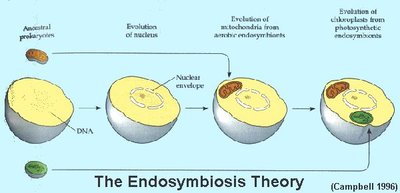
Endosymbiosis Theory
The Endosymbiosis Theory explains the origin of eukaryotic cells from ancestral prokaryotes. It proposes that mitochondria and chloroplasts originated as free-living bacteria that were engulfed by a host cell.
Mitochondria: Derived from aerobic bacteria.
Chloroplasts: Derived from photosynthetic bacteria.
Evidence: Both organelles contain their own DNA and replicate independently.
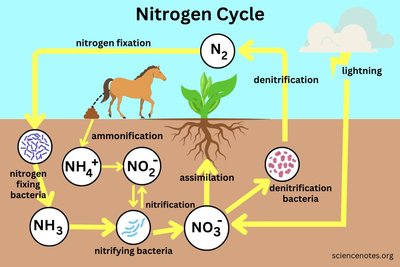
Nitrogen Cycle
Prokaryotes are crucial in the Nitrogen Cycle, facilitating processes such as nitrogen fixation, nitrification, and denitrification, which are essential for ecosystem productivity.
Nitrogen Fixation: Conversion of atmospheric nitrogen (N2) to ammonia (NH3) by bacteria.
Nitrification: Conversion of ammonia to nitrites (NO2-) and then to nitrates (NO3-).
Denitrification: Conversion of nitrates back to nitrogen gas.
Features of Bacteria & Archaea
Bacteria and Archaea are unicellular, microscopic organisms with distinct structural features. Their morphology and arrangement are used for classification.
Common Morphologies: Coccus (round), Bacillus (rod), Spirillum (spiral).
Arrangements: Strept (chains), Staphlo (clusters).
Reproduction: Binary fission produces two identical daughter cells.
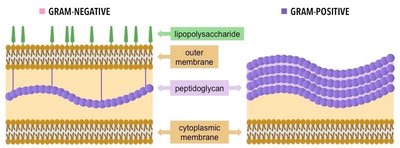
Cell Wall: Gram Staining Technique
The Gram Staining Technique distinguishes bacteria based on cell wall composition, which is important for diagnosis and treatment of infections.
Gram Positive: Thick peptidoglycan layer, stains blue/purple, generally less threatening.
Gram Negative: Thin peptidoglycan layer with an extra lipid membrane, stains red/pink, often more pathogenic due to protective outer layer.
Archaea: No peptidoglycan in cell wall.
Structures of Prokaryotes
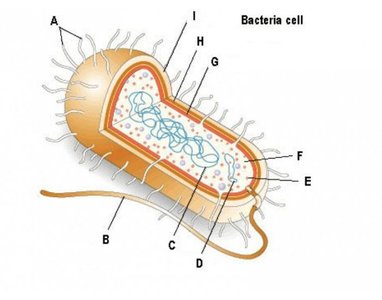
Prokaryotic cells contain specialized structures that contribute to their survival and function.
Fimbriae: Hairlike projections for attachment.
Flagellum: Locomotion.
DNA (Nucleoid): Essential genetic material, not enclosed by a membrane.
Plasmid: Circular DNA, often carries resistance genes.
Ribosome: Protein synthesis.
Cytoplasm: Fluid matrix.
Cell Membrane: Lipid bilayer, regulates transport.
Cell Wall: Peptidoglycan structure.
Capsule: Outermost layer, polysaccharides.
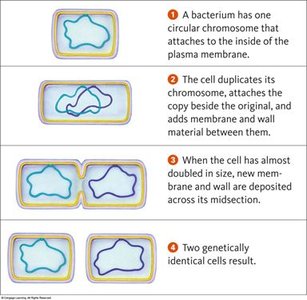
Binary Fission
Binary fission is the primary method of reproduction in prokaryotes, resulting in two genetically identical cells.
Generation Time: The time required for a cell to divide; influenced by environmental factors.
Binary Fission vs. Mitosis: Binary fission is simpler and does not involve mitotic spindle formation.
Prokaryote Adaptation and Gene Transfer
Prokaryotes adapt rapidly through mutations and gene transfer mechanisms, contributing to phenomena such as antibiotic resistance.
Vertical Gene Transfer: Genes passed from parent to offspring.
Horizontal Gene Transfer: Genes exchanged between individuals or with the environment.
Transformation: Uptake of DNA from the environment.
Transduction: DNA transfer via viruses.
Conjugation: Direct transfer of plasmid DNA between bacteria via pili.
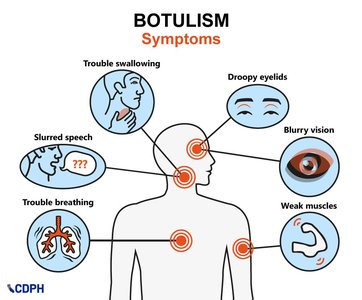
Endospore Formation
Some bacteria form endospores under unfavorable conditions, allowing them to survive extreme environments.
Endospore: Resistant cell that stores a copy of chromosomes, becomes dehydrated, and halts metabolism.
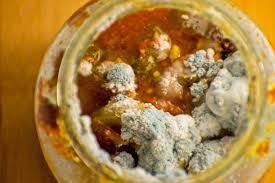
Example: Clostridium botulinum forms endospores; food must be heated to 230-300°F to kill them.
Bacterial Pathogenicity: Exotoxins and Endotoxins
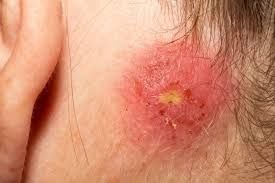
Bacteria cause disease through the production of toxins.
Exotoxins: Proteins secreted by bacteria, causing illness (e.g., Staphylococcus aureus).
Endotoxins: Lipid components of the outer membrane of Gram-negative bacteria, released when the cell dies (e.g., Salmonella).
Human Health & Microbes
Normal flora are beneficial bacteria that inhabit the human body, providing protection and essential nutrients.
Normal Flora: Block pathogens and produce vitamins B and K.
Biofilms: Colonies of prokaryotes that form on surfaces, both biotic and abiotic.
Prokaryote Nutritional Diversity
Prokaryotes exhibit diverse metabolic strategies, including photosynthesis, chemosynthesis, and heterotrophy.
Photosynthetic: Use light energy to produce food.
Chemosynthetic: Use inorganic compounds for energy.
Heterotrophic: Obtain energy by consuming organic matter.
Bacterial Diversity
Bacteria are classified into several groups based on their metabolic and structural characteristics.
Proteobacteria: Symbiotic with eukaryotes, highly diverse.
Cyanobacteria: Photosynthetic, plant-like.
Gram-Positive: Includes pathogens like Bacillus anthracis.
Chlamydias: Intracellular pathogens, cause sexually transmitted diseases.
Spirochetes: Helical, motile, often pathogenic.
Bioremediation
Bioremediation uses prokaryotes to clean up environmental pollutants, such as oil spills and toxic waste.
Oil-eating bacteria: Break down hydrocarbons in contaminated environments.
Protists
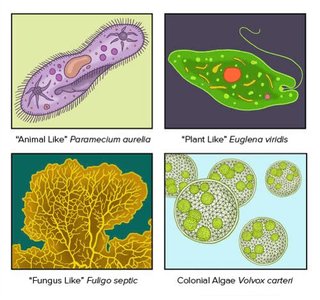
Protists are a diverse group of mostly unicellular eukaryotes, classified by their mode of nutrition and movement.
Photosynthetic (Plant-like): Produce food via photosynthesis.
Ingestive Heterotrophs (Animal-like): Consume other organisms.
Absorptive Heterotrophs (Fungi-like): Absorb nutrients from dead matter.
Examples: Paramecium, Amoeba, Flagellates, Apicomplexans.
Plant-like Protists (Archaeplastida)
Plant-like protists are autotrophic and classified by their pigments. They exhibit alternation of generations in their life cycle.
Examples: Brown algae, Red algae, Green algae.
Alternation of Generations: Life cycle alternates between haploid gametophyte and diploid sporophyte.
Fungus-like Protists
Fungus-like protists, such as slime molds and water molds, absorb nutrients from dead organic matter and exhibit shape-shifting behavior.
Slime Molds: Unique for their ability to form multicellular structures.
Disease-Causing Protists
Some protists cause diseases in humans and other organisms.
Dinoflagellates: Cause red tides, mostly marine plankton.
Plasmodium: Causes malaria, obligate parasite.
Archaea
Archaea are prokaryotes with unique characteristics, often inhabiting extreme environments.
Membrane Lipids: Unusual structure.
Introns: Present in DNA.
No Peptidoglycan: Cell wall differs from bacteria.
Extreme Environments: Methanogens (anaerobic), Halophiles (salt-loving), Thermophiles (heat-loving).
Viruses
Viruses are non-cellular infectious particles that replicate only inside living cells. They are obligate intracellular parasites.
Capsid: Protein shell, may be surrounded by a lipid envelope.
Shapes: Classified by capsid shape, envelope presence, and nucleic acid type (RNA or DNA).
Replication Pathways: Lytic (immediate replication and cell death) and Lysogenic (integration into host DNA).
Lytic vs. Lysogenic Pathways
Viruses replicate via two main pathways:
Lytic Pathway: Virus replicates immediately, killing the host cell (e.g., bacteriophages, common cold).
Lysogenic Pathway: Viral DNA integrates into host genome, passed to descendants (e.g., HIV).
Emerging Viral Diseases
Emerging viral diseases are newly detected or have expanded their range. Many require vectors for transmission and can lead to epidemics or pandemics.
Examples: COVID-19, HIV, Ebola, Zika virus.
Reservoirs: Nonliving environments or animals that harbor pathogens.
Retroviruses
Retroviruses, such as HIV, use reverse transcriptase to convert RNA into DNA before integrating with the host genome.
Other Examples: T cell leukemia virus, Rous sarcoma virus.
Viruses & Plants
Viroids are plant pathogens composed of single-stranded RNA without a capsid. They interfere with gene expression and do not infect animals.
Viral Recombination: Exchange of genes between viruses, leading to new strains (e.g., H1N1, H5N1).
