 Back
BackMicroevolution: How Populations Evolve
Study Guide - Smart Notes
 Tailored notes based on your materials, expanded with key definitions, examples, and context.
Microevolution: How Populations Evolve
Introduction to Microevolution
Microevolution refers to evolutionary changes within populations, specifically changes in allele frequencies over generations. This process is fundamental to understanding how populations adapt and evolve in response to environmental pressures.
Population: A group of individuals of the same species living in the same area, capable of interbreeding.
Gene Pool: The total collection of all alleles at every locus in all individuals of a population.
Microevolution: A change in the gene pool of a population from one generation to the next.
Hardy-Weinberg Equilibrium
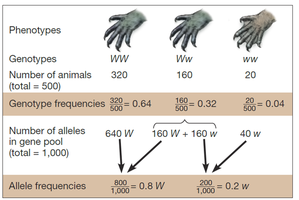
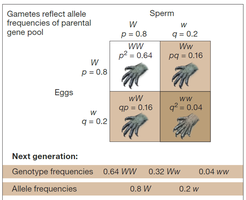
The Hardy-Weinberg equilibrium provides a mathematical model to study genetic variation in populations. It predicts genotype frequencies under specific conditions, serving as a null hypothesis for detecting evolution.
Hardy-Weinberg Principle: Allele and genotype frequencies in a population remain constant from generation to generation in the absence of evolutionary influences.
Conditions for Equilibrium:
Very large population size (no genetic drift)
No gene flow (no migration)
No mutations
Random mating
No natural selection
It is rare for all five conditions to be met in nature, so most populations are evolving.
The Hardy-Weinberg equation is:
where and are the frequencies of two alleles in the population.
Detecting Evolution in Populations
To determine if a population is evolving, scientists compare observed genotype frequencies to those expected under Hardy-Weinberg equilibrium. Deviations indicate that one or more evolutionary forces are acting on the population.
Genotype Frequency: Proportion of each genotype in the population.
Allele Frequency: Proportion of each allele in the gene pool.
Testing for Evolution: If observed frequencies differ from expected, evolution is occurring.
Mechanisms of Microevolution
Microevolution is driven by several mechanisms that alter allele frequencies in populations:
Natural Selection: Differential survival and reproduction of individuals due to differences in phenotype.
Genetic Drift: Random changes in allele frequencies, especially in small populations.
Gene Flow: Movement of alleles between populations due to migration.
Mutation: Random changes in DNA that introduce new alleles.
Genetic Drift
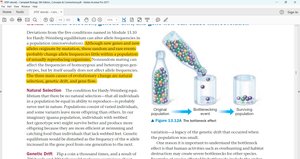
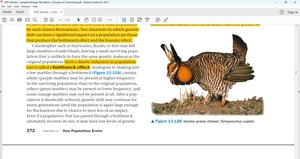
Genetic drift is a mechanism of evolution that involves random fluctuations in allele frequencies, which can have significant effects in small populations.
Bottleneck Effect: A drastic reduction in population size due to environmental events, leading to loss of genetic diversity.
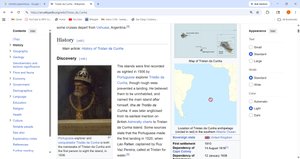
Founder Effect: When a small group of individuals establishes a new population, the gene pool may not reflect that of the original population.
Founder Effect and Human Disease
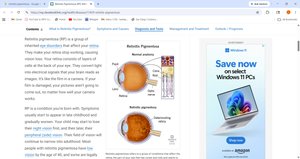
The founder effect can lead to high frequencies of certain genetic diseases in isolated populations. For example, retinitis pigmentosa is more common on Tristan da Cunha due to the founder effect.
Retinitis Pigmentosa: A genetic disorder causing progressive vision loss due to degeneration of photoreceptors in the retina.
Natural Selection and Adaptive Evolution
Natural selection is the only mechanism that consistently leads to adaptive evolution, where populations become better suited to their environments.
Adaptive Evolution: Evolution that results in a better fit between organisms and their environment.
Random vs. Nonrandom: Mutation and sexual reproduction are random, but natural selection is not.
How Natural Selection Alters Variation
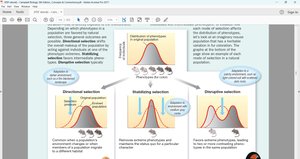
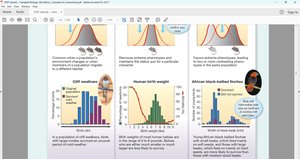
Natural selection can affect the distribution of phenotypes in a population in three main ways:
Directional Selection: Favors individuals at one extreme of the phenotypic range.
Stabilizing Selection: Favors intermediate variants and acts against extremes.
Disruptive Selection: Favors individuals at both extremes over intermediates.
Sexual Selection
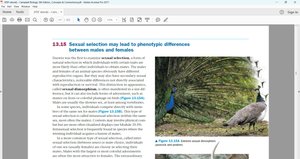
Sexual selection is a form of natural selection where individuals with certain traits are more likely to obtain mates. This can lead to pronounced differences between males and females (sexual dimorphism).
Sexual Dimorphism: Distinct difference in size or appearance between the sexes of an animal.
Mate Choice: Often, females select mates based on traits that indicate genetic quality.
Case Study: Darwinian Snails and Natural Selection
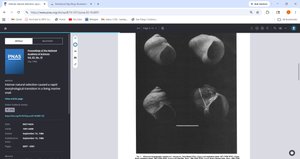
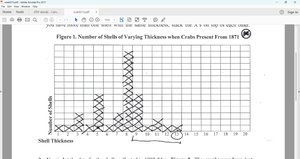
Studies on periwinkle snails and their predators, the European green crab, illustrate natural selection in action. Over time, the introduction of the crab led to an increase in the average shell thickness of the snail population, as thicker shells provided a survival advantage.
Periwinkle Snail: Marine snail subject to predation by crabs.
European Green Crab: Invasive predator exerting selective pressure on snail populations.
Observation: Snails with thicker shells were more likely to survive and reproduce, shifting the population's average shell thickness over generations.


Simulations and Data Analysis
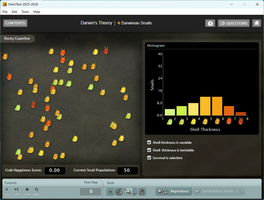
Simulations, such as the "Darwinian Snails" Simutext, allow students to visualize how selection alters population traits over time. By manipulating variables like shell thickness and predation, students can observe evolutionary outcomes.
Histogram Analysis: Graphs show changes in the distribution of shell thickness before and after predation pressure.
Selective Survival: Thicker-shelled snails survive predation better, leading to an increase in their frequency in the population.

Additional info: The Hardy-Weinberg equilibrium is a foundational concept in population genetics, providing a baseline for detecting evolutionary change. Real-world examples, such as the bottleneck effect in prairie chickens and the founder effect in human populations, illustrate the importance of genetic diversity for population health and adaptability.
