 Back
BackModes of Selection and Evolutionary Mechanisms
Study Guide - Smart Notes
 Tailored notes based on your materials, expanded with key definitions, examples, and context.
Modes of Selection and Evolutionary Mechanisms
Introduction to Evolutionary Selection
Evolutionary selection describes the processes by which certain traits become more or less common in a population due to differential reproductive success. Understanding these mechanisms is fundamental to the study of population genetics and evolutionary biology.
Review: Chi-square Test in Biology
Application of Chi-square Test
The chi-square test is a statistical method used to determine whether observed data differ significantly from expected data. In biology, it is often used to test hypotheses about genetic ratios or other categorical data.
Observed values: The actual counts measured in an experiment.
Expected values: The counts predicted by a specific hypothesis (e.g., Mendelian inheritance).
Degrees of freedom (df): Calculated as the number of categories minus one.
Critical value: The threshold value from the chi-square distribution table; if the calculated chi-square exceeds this, the null hypothesis is rejected.
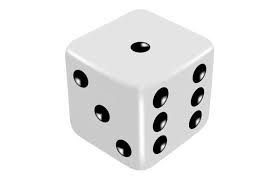
To determine if a die is loaded, compare the observed frequencies of each face to the expected frequencies (which should be equal for a fair die). Calculate the chi-square statistic and compare it to the critical value for 5 degrees of freedom (6 categories - 1). If the value is higher than the critical value, the die is likely loaded.
Misleading Terms in Evolution
Clarifying Common Misconceptions
Some phrases commonly used in evolutionary biology can be misleading:
"Struggle for existence": Implies constant competition, but survival can also depend on cooperation and environmental factors.
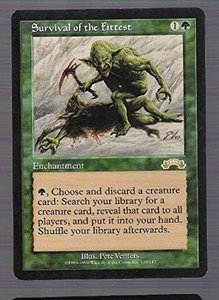
"Survival of the fittest": Often misunderstood as the strongest surviving, but in biology, fitness refers to reproductive success, not just physical strength.

Relative Fitness
Definition and Importance
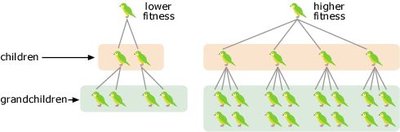
Relative fitness is the contribution an individual makes to the gene pool of the next generation compared to other individuals. It is a measure of reproductive success and is central to natural selection.
Individuals must survive, reproduce, and their offspring must also survive and reproduce for high relative fitness.
Modes of Selection
Overview of Selection Types
Natural selection can act on phenotypic variation in several distinct ways, shaping the distribution of traits in a population.
Directional selection
Stabilizing selection
Disruptive selection
Other forms: Sexual selection and artificial selection
Normal Distribution of Traits
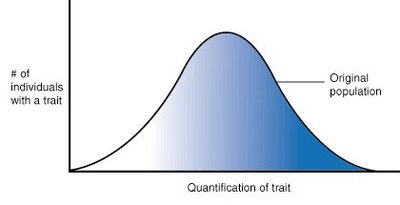
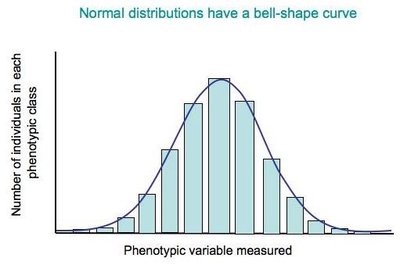
Many traits in a population follow a normal distribution, forming a bell-shaped curve when plotted. The mean phenotype is at the peak of the curve.
Directional Selection
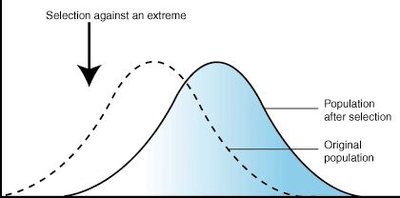
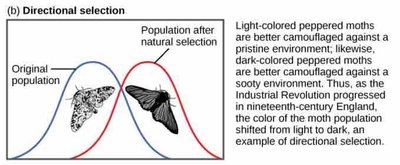
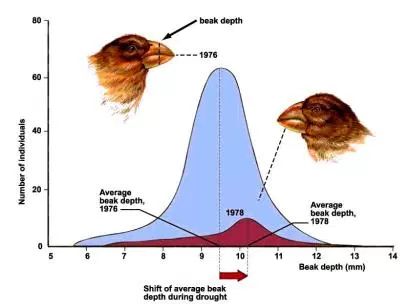
In directional selection, conditions favor individuals at one extreme of a phenotypic range, causing the mean phenotype to shift in one direction.
Often occurs when environmental conditions change or when a population migrates to a new habitat.
Example: The shift in beak depth in Galápagos finches during drought years.
Stabilizing Selection
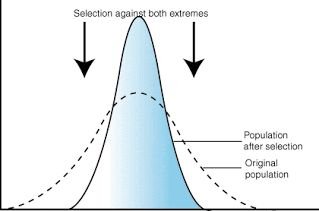
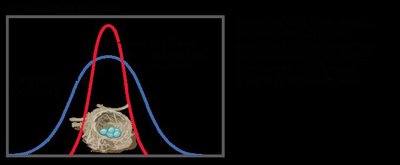
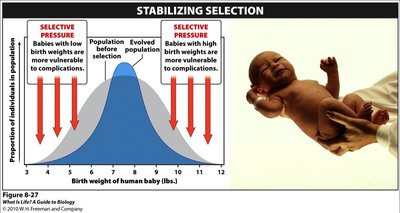
Stabilizing selection favors intermediate phenotypes and selects against both extremes. This reduces variation and maintains the status quo for a particular trait.
The mean phenotype remains unchanged, but the variance decreases.
Example: Human birth weight, where both very low and very high weights have higher mortality rates.
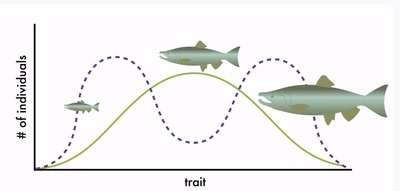
Disruptive Selection
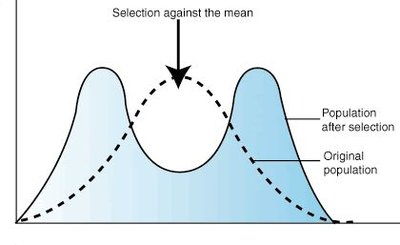
Disruptive selection favors individuals at both extremes of the phenotypic range over those with intermediate phenotypes. This can lead to increased variation and, in some cases, speciation.
The mean may remain the same, but the population shows increased numbers at both extremes.
Example: Fish populations where both very small and very large individuals have survival advantages over medium-sized ones.
Sexual Selection
Definition and Mechanisms
Sexual selection is a form of natural selection where certain traits increase an individual's chances of mating and passing on genes. These traits may not always be advantageous for survival but enhance reproductive success.
Sexual selection can lead to pronounced differences between sexes, known as sexual dimorphism.
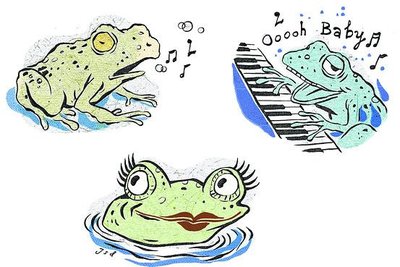
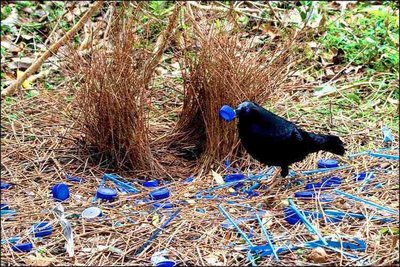
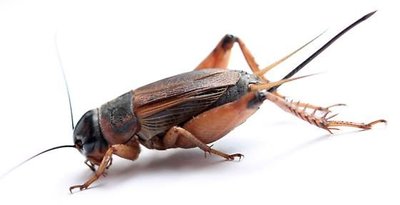
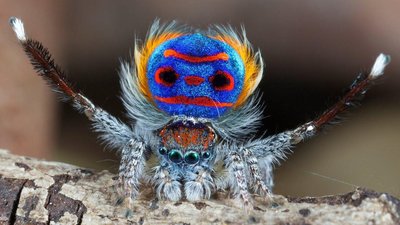
Intersexual Selection (Mate Choice)
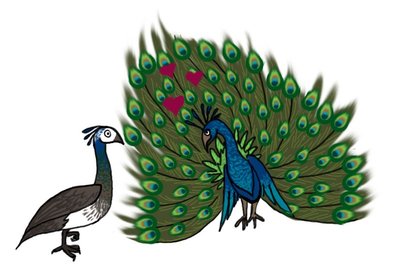
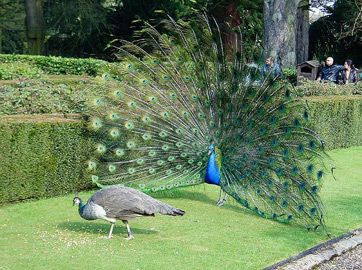
In intersexual selection, one sex (usually females) chooses mates based on specific traits, such as bright plumage or elaborate courtship behaviors. This is often called "female choice" due to higher reproductive investment by females.
Examples: Peahens choosing peacocks with larger, more colorful tails; birds selecting mates based on nest-building skills.
Intrasexual Selection (Competition)
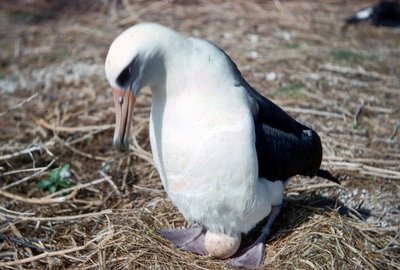
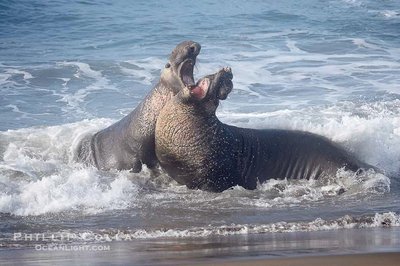
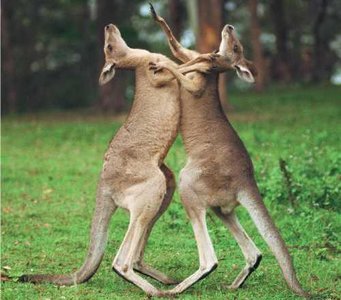
Intrasexual selection involves competition among members of the same sex (usually males) for access to mates. This can result in the evolution of traits such as larger body size, antlers, or aggressive behaviors.
Examples: Male elephant seals fighting for territory; kangaroos boxing for dominance; lizards displaying throat fans.
Sexual Dimorphism
Sexual dimorphism refers to differences in size, coloration, or morphology between males and females of the same species, often resulting from sexual selection.
Examples: Male peacocks have elaborate tails, while females are more camouflaged; male lions have manes, females do not.
Artificial Selection
Definition and Applications
Artificial selection is the process by which humans select for desirable traits in organisms and breed individuals to enhance those traits over generations. This is a key mechanism in agriculture and animal breeding.
Examples: Breeding dogs for specific behaviors or appearances; selecting plants for higher yield or disease resistance.
Artificial Selection Lab: Fast Plants
In laboratory settings, artificial selection can be demonstrated using model organisms such as Fast Plants. By selecting and breeding plants with specific traits over multiple generations, students can observe measurable evolutionary changes.
Record all steps and observations carefully for lab reports.
