 Back
Module 01: Introduction – Themes in the Study of Life (General Biology I)
Study Guide - Smart Notes
 Tailored notes based on your materials, expanded with key definitions, examples, and context.
Introduction to Biology
The Study of Life
Biology is the scientific study of life, encompassing a vast range of scales from sub-microscopic particles to the global biosphere. It investigates living organisms, their interactions, and the processes that sustain life.
Definition: "Bio" means life; "logy" means study.
Scope: Includes ancient fossils and contemporary organisms, utilizing modern techniques such as DNA analysis and biotechnology.

Comprehensive Themes in the Study of Life
Characteristics Associated with Life (“Signs of Life”)
Living organisms share eight fundamental characteristics that distinguish them from non-living matter.
Organization: Highly ordered at both cellular and organismal levels.
Reproduction: Can be sexual (DNA from two parents) or asexual (one parent). Examples include plant cuttings and budding in Hydra.
Growth: Increase in mass and accumulation of new substances.
Development: Change in body form or proportions over time (e.g., human development, butterfly metamorphosis).
Energy Utilization: Use of ATP for cellular and organismal activities.
Irritability: Response to internal and external stimuli.
Homeostasis: Maintenance of stable internal conditions despite environmental fluctuations.
Evolutionary Adaptation: Ability to adapt and evolve over generations.
Exception: Viruses exhibit some characteristics of life only when parasitizing living cells, leading to debate about their status as living entities.
Structural & Organizational Hierarchy of Life
Levels of Biological Organization
Biological systems are organized hierarchically, with each level building upon the previous one.
Sub-atomic particles → Atoms → Molecules → Organelles → Cells → Tissues → Organs → Organ Systems → Organism
Organisms → Population → Community → Ecosystem → Biome → Biosphere
Biome: Broad geographical area characterized by specific vegetation types.

Cellular Basis of Life
Historical Background and Cell Theory
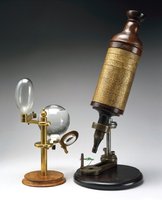
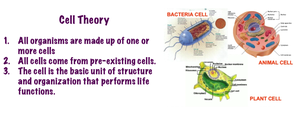
The cell is the fundamental unit of life. Early microscopy led to the discovery and understanding of cells.
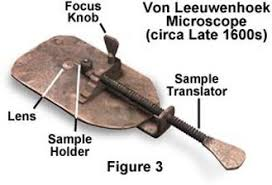
Antonin Von Leeuwenhoek: Developed the first viable microscope, observed microorganisms.
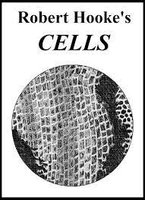
Robert Hooke: Coined the term "cell" after observing cork.
Schleiden & Schwann: Proposed the Cell Theory (1839):
All living things are composed of cells.
The cell is the basic unit of life.
All cells come from pre-existing cells.
Major Categories of Cells
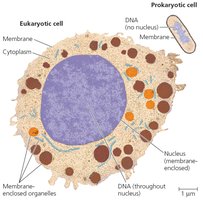
Cells are classified as prokaryotic or eukaryotic based on structural organization.
Prokaryotic: Small, lack organelles, DNA suspended in cytoplasm, found in Bacteria and Archaea.
Eukaryotic: Larger, contain organelles (nucleus, mitochondria, chloroplasts), DNA housed in nucleus, found in Protista, Fungi, Plantae, Animalia.
Heritable Information
DNA Structure and Function
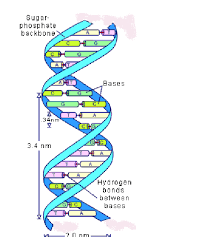
DNA contains the instructions for the complex structure and function of organisms. Its structure is universal among living things.
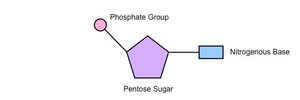
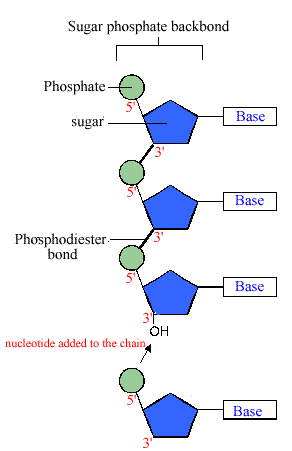
Nucleotide: The repeating subunit of DNA, composed of a pentose sugar, phosphate group, and nitrogenous base.
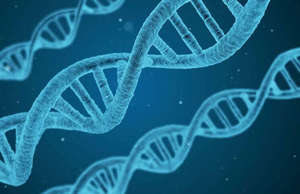
Double Helix: DNA's structure consists of two spirals forming a ladder, with hydrogen bonds linking nitrogenous bases.
Genetic Code: The sequence of four nitrogenous bases determines inter- and intra-specific differences.
Correlation of Structure & Function
Form Fits Function
Biological structures are adapted to their functions, providing clues to their roles in organisms.
Examples: Bird wings and feathers for flight; human appendix as a vestigial organ.
Interaction with Environment
TRANSFER OF ENERGY THRU AN ECOSYSTEM: TERRESTRIAL OR AQUATIC
Third Degree: (TERTIARY) CONSUMERS (Ex: Heron)
- Chemical Energy: Glucose
- Natural Death -> Decomposers: Bacteria & Fungi
Carnivores
Omnivores
Second Degree: (Secondary) CONSUMERS (Ex: Heron)
- Chemical Energy: Glucose
- Natural Death -> Decomposers: Bacteria & Fungi
Carnivores
Omnivores
First Degree: (TERTIARY) CONSUMERS (Ex: Gazelle Deer)
- Chemical Energy: Glucose
- Natural Death -> Decomposers: Bacteria & Fungi
Herbivores
Omnivores
Producers: Green Plants & Algae
- Photosynthesis: Transfers Radiant Energy (From Sun) into Chemical Energy (Glucose)
- Natural Death -> Decomposers: Bacteria & Fungi
Energy Flow Through Ecosystems
Energy flows through ecosystems via trophic levels, beginning with producers and moving through various consumer levels.
Producers: Green plants and algae convert radiant energy to chemical energy (glucose).
Consumers: Herbivores, carnivores, and omnivores obtain energy by consuming other organisms.
Decomposers: Bacteria and fungi break down organic matter.
Diversity and Unity of Life
Taxonomy and Classification
Taxonomy is the science of naming and classifying organisms based on evolutionary relationships (phylogeny).
Taxonomic Hierarchy: Domain, Kingdom, Phylum, Class, Order, Family, Genus, Species.
Binomial Nomenclature: Each organism is named using its genus and species (e.g., Homo sapiens).
Three Domains: Bacteria, Archaea, Eukarya.
Kingdoms: Animalia (heterotrophic), Fungi (heterotrophic by absorption), Plantae (autotrophic).
Unity of Life
All life shares fundamental characteristics, genetic code, metabolic pathways, and cellular structures (e.g., "9 + 2" arrangement of microtubules in flagella and cilia).
Evolution
Principles and Mechanisms
Evolution is the core concept of biology, explaining how species change over time in response to environmental pressures.
Natural Selection: Proposed by Charles Darwin, it is the mechanism by which advantageous traits are passed to offspring, leading to adaptation and speciation.
Variation: Arises from genetic recombination and mutation.
Survival and Reproduction: Only individuals with advantageous traits reach reproductive maturity and pass traits to the next generation.
Artificial Selection: Humans select traits for domestication, not necessarily for survival.
The Scientific Process
Scientific Method
Science is an objective investigation of the natural world, using systematic methods to answer questions.
Steps: Observation, Question, Hypothesis, Experiment, Data Collection (quantitative preferred), Statistical Analysis, Conclusion, Generalization.
Control Group: Essential for comparison; variables are held constant.
Experimental Group: Receives the treatment or variable being tested.
Theory: Broad explanation based on significant evidence and wide acceptance.
Technology: Application of scientific knowledge for societal advancement.
Additional info: These notes provide foundational concepts for General Biology, including definitions, examples, and historical context. Images included are directly relevant to the explanation of each topic, reinforcing visual understanding.
