 Back
Module 1: Chemistry of Life – Foundations for General Biology
Study Guide - Smart Notes
 Tailored notes based on your materials, expanded with key definitions, examples, and context.
Chapter 1: Evolution, the Themes of Biology, and Scientific Inquiry
Basic Concept of Evolution
Evolution is the process by which populations of organisms change over generations through variations in traits, often leading to adaptation and speciation. It is the central unifying theme of biology, explaining both the diversity and unity of life.
Natural selection is a primary mechanism of evolution, where individuals with advantageous traits are more likely to survive and reproduce.
Descent with modification describes how species change and give rise to new species over time.
Characteristics of Biology and Properties of Life
Biology is the scientific study of life and living organisms. All living things share certain properties and processes:
Order: Organized structure (e.g., cells, tissues)
Regulation: Homeostasis (e.g., body temperature control)
Growth and development: Inherited information controls patterns of growth
Energy processing: Use of energy for metabolic processes
Response to environment: Reacting to stimuli
Reproduction: Producing offspring
Evolutionary adaptation: Traits that enhance survival are passed on
The Scientific Method
The scientific method is a systematic approach to inquiry, involving observation, hypothesis formation, experimentation, and analysis.
Dependent variable: The measured outcome in an experiment
Independent variable: The factor manipulated by the researcher
Control variables: Factors kept constant to ensure a fair test
Example: Testing the effect of sunlight on plant growth (sunlight = independent variable, plant growth = dependent variable, water/soil = control variables).
Chapter 2: The Chemical Context of Life
Atoms, Ions, Elements, Molecules, and Compounds
All matter is composed of atoms, which are the smallest units of elements. Elements are pure substances consisting of one type of atom. Atoms can gain or lose electrons to become ions, and they combine to form molecules and compounds.
Atom: Basic unit of matter, composed of protons, neutrons, and electrons
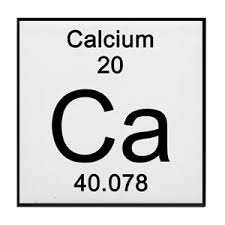
Element: Substance made of only one kind of atom (e.g., Ca for calcium)
Compound: Substance formed from two or more elements in fixed ratios (e.g., H2O)
Chemical Bonds
Atoms form chemical bonds to achieve stability:
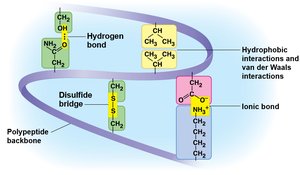
Ionic bonds: Transfer of electrons from one atom to another (metal + nonmetal)
Covalent bonds: Sharing of electrons between atoms (nonmetal + nonmetal)
Hydrogen bonds: Weak attractions between polar molecules, especially involving hydrogen
Electronegativity is an atom's ability to attract electrons in a bond. Differences in electronegativity determine bond polarity.
Reading the Periodic Table
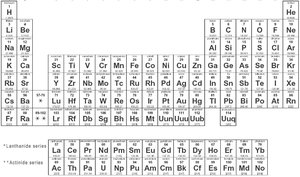
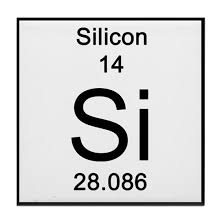
The periodic table organizes elements by atomic number, symbol, and atomic mass. It helps determine:
Atomic number = number of protons
Atomic mass = protons + neutrons
Valence electrons = electrons in the outer shell (important for bonding)
Metals are on the left, nonmetals on the right
Chapter 3: Water and Life
Unique Properties of Water
Water's structure and hydrogen bonding give rise to its unique properties, essential for life:
Cohesion: Water molecules stick together (surface tension)
Adhesion: Water molecules stick to other substances
High specific heat: Resists temperature changes
High heat of vaporization: Requires much energy to evaporate
Expansion upon freezing: Ice is less dense than liquid water
Versatility as a solvent: Dissolves many substances due to polarity
These properties are due to hydrogen bonding between water molecules.
Acids, Bases, and Buffers
Water can dissociate into H+ and OH- ions, affecting pH. Acids increase H+ concentration, bases decrease it, and buffers help maintain stable pH in biological systems.
pH scale: 0 (acidic) to 14 (basic), 7 is neutral
Buffers: Substances that minimize changes in pH
Chapter 4: Carbon and the Molecular Diversity of Life
Organic Compounds and Carbon's Role
Organic compounds are molecules containing carbon and hydrogen, often with other elements. Carbon's four valence electrons allow it to form diverse structures, including chains, rings, and branches.
Structural isomers: Compounds with the same formula but different structures
Functional groups: Specific groups of atoms that confer properties (e.g., hydroxyl, carboxyl, amino, phosphate)

Major Functional Groups
Hydroxyl (-OH): Alcohols, polar
Carbonyl (C=O): Aldehydes (end), ketones (middle)
Carboxyl (-COOH): Acts as an acid
Amino (-NH2): Acts as a base
Sulfhydryl (-SH): Forms disulfide bonds
Phosphate (-PO4): Energy transfer (e.g., ATP)
Methyl (-CH3): Nonpolar, affects gene expression
Chapter 5: The Structure and Function of Large Biological Molecules
Macromolecules: Carbohydrates, Lipids, Proteins, Nucleic Acids
Macromolecules are large molecules essential for life, built from smaller units (monomers) via dehydration synthesis and broken down by hydrolysis.
Type | Monomer | Polymer | Bonds | Functions |
|---|---|---|---|---|
Carbohydrates | Monosaccharides | Polysaccharides | Glycosidic linkage | Energy, structure |
Lipids | Fatty acids, glycerol | Triglycerides, phospholipids | Ester bond | Energy storage, membranes |
Proteins | Amino acids | Polypeptides | Peptide bond | Catalysis, structure, transport |
Nucleic Acids | Nucleotides | DNA, RNA | Phosphodiester bond | Genetic information |
Carbohydrates
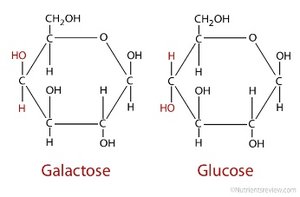
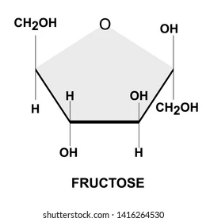
Carbohydrates include sugars and their polymers. Monosaccharides (e.g., glucose, galactose, fructose) are simple sugars; polysaccharides (e.g., starch, glycogen, cellulose) are complex carbohydrates.
Glucose, galactose, fructose: Isomers with the same formula but different structures
Starch: Storage in plants (amylose, amylopectin)
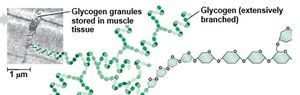
Glycogen: Storage in animals, highly branched
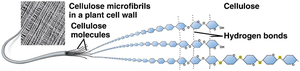
Cellulose: Structural in plants, forms cell walls
Lipids
Lipids are hydrophobic molecules, including fats, phospholipids, and steroids.
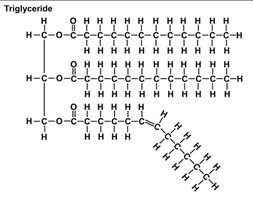
Triglycerides: Glycerol + 3 fatty acids; saturated (no double bonds, solid) vs. unsaturated (double bonds, liquid)
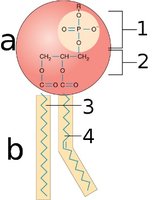
Phospholipids: Glycerol + 2 fatty acids + phosphate group; form cell membranes
Proteins
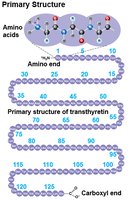
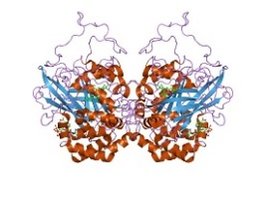
Proteins are polymers of amino acids, with diverse functions (enzymes, structure, transport). Structure is described at four levels:
Primary: Sequence of amino acids (peptide bonds)
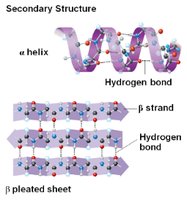
Secondary: Alpha helices and beta sheets (hydrogen bonds)
Tertiary: 3D folding (hydrogen bonds, ionic bonds, disulfide bridges, hydrophobic interactions)
Quaternary: Multiple polypeptide chains (e.g., hemoglobin, collagen)
Nucleic Acids
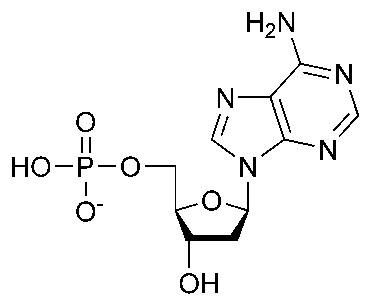
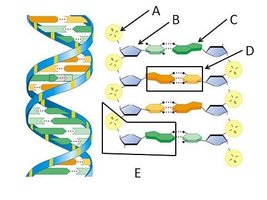
Nucleic acids (DNA and RNA) store and transmit genetic information. Their monomers are nucleotides, each consisting of a phosphate group, a sugar, and a nitrogenous base.
DNA: Double helix, bases A-T and G-C, stores genetic code
RNA: Single-stranded, bases A-U and G-C, involved in protein synthesis
Complementary base pairing: A pairs with T (or U in RNA), G pairs with C
Additional info: This guide covers the foundational chemistry and macromolecules essential for understanding biological structure and function, as outlined in the first five chapters of a typical General Biology course.
