 Back
BackMolecular Basis of Inheritance and Regulation of Gene Expression
Study Guide - Smart Notes
 Tailored notes based on your materials, expanded with key definitions, examples, and context.
DNA: The Genetic Material
Discovery and Evidence for DNA as Genetic Material
The identification of DNA as the hereditary material was a pivotal moment in biology. Early experiments with bacteria and viruses provided the first clues that DNA, not protein, was responsible for inheritance.
Griffith's Transformation Experiment: Demonstrated that a substance from dead pathogenic bacteria could genetically transform living non-pathogenic bacteria, a process termed transformation.
Avery, MacLeod, and McCarty: Identified DNA as the transforming principle by showing that only DNA, not protein or RNA, could induce transformation.
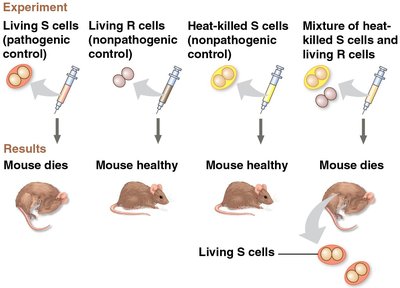
Key Point: These experiments established DNA as the molecule of heredity.
Structure of DNA
DNA is a polymer composed of nucleotide monomers, each consisting of a nitrogenous base, a deoxyribose sugar, and a phosphate group. The four nitrogenous bases are adenine (A), thymine (T), guanine (G), and cytosine (C).
Chargaff’s Rules: In any species, the amount of A equals T, and the amount of G equals C.
Double Helix: Watson and Crick, using Franklin’s X-ray diffraction data, proposed the double helix model, where two antiparallel strands are held together by specific base pairing (A with T, G with C).
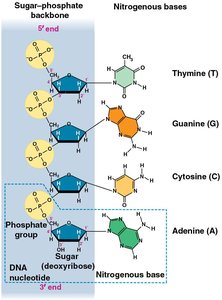
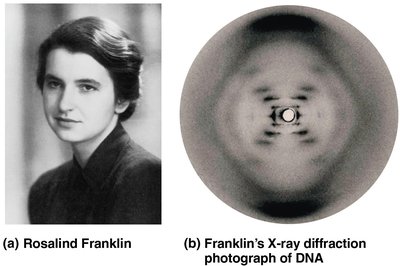
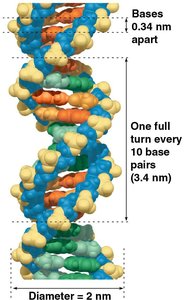
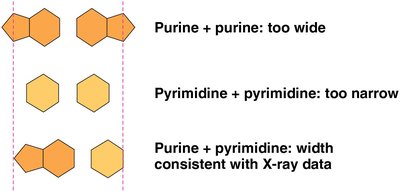
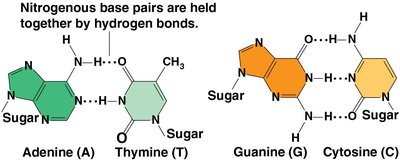
Example: The double helix structure explains how genetic information is copied and inherited.
DNA Replication
Overview and Mechanism
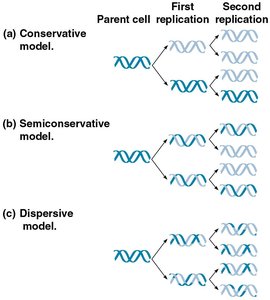
DNA replication is the process by which a cell copies its DNA before cell division, ensuring genetic continuity. Replication is semiconservative: each new DNA molecule consists of one parental and one newly synthesized strand.
Origins of Replication: Replication begins at specific sites, forming replication bubbles that expand in both directions.
Key Enzymes: Helicase unwinds the DNA, single-strand binding proteins stabilize unwound strands, primase synthesizes RNA primers, and DNA polymerase adds nucleotides to the growing strand.
Leading vs. Lagging Strand: The leading strand is synthesized continuously, while the lagging strand is synthesized in Okazaki fragments.
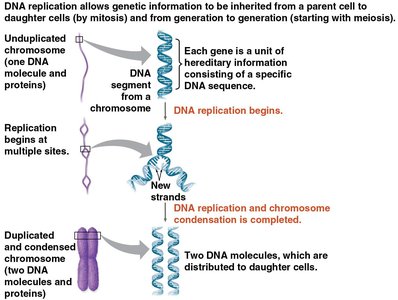
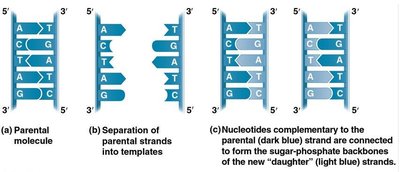
Example: In E. coli, DNA replication is highly efficient and accurate, with only one error per 10 billion nucleotides.
Experimental Evidence: Meselson-Stahl Experiment
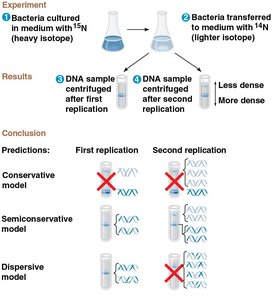
The Meselson-Stahl experiment provided strong evidence for the semiconservative model of DNA replication by using isotopic labeling and density gradient centrifugation.
Semiconservative Model: Each daughter DNA molecule contains one old and one new strand.
Alternative Models: Conservative (parental strands stay together) and dispersive (each strand is a mix of old and new) were ruled out by experimental results.
Regulation of Gene Expression
Gene Expression in Eukaryotes
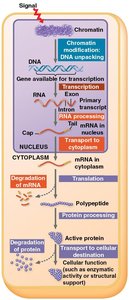
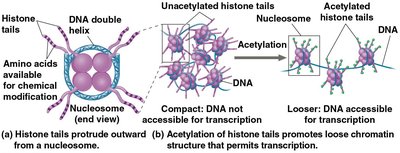
Gene expression is regulated at multiple levels, from chromatin structure to mRNA degradation and protein modification. Chromatin modifications, such as histone acetylation and DNA methylation, play a key role in controlling gene accessibility and transcription.
Histone Acetylation: Addition of acetyl groups to histone tails loosens chromatin, promoting transcription.
DNA Methylation: Addition of methyl groups to DNA (usually cytosine) leads to gene silencing.
Example: Epigenetic inheritance involves the transmission of gene expression patterns without changes in DNA sequence.
Transcriptional Regulation
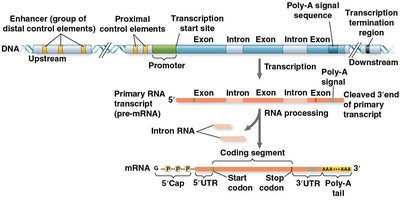
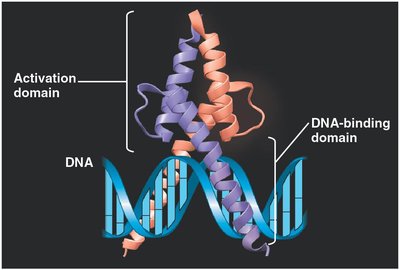
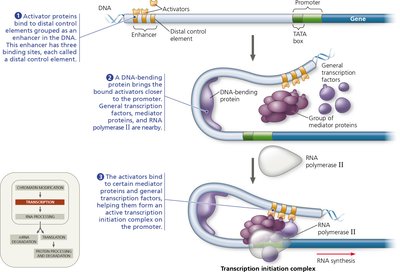
Transcription initiation is controlled by the interaction of transcription factors with specific DNA sequences (promoters, enhancers, and control elements). Activators and repressors modulate the assembly of the transcription initiation complex.
Enhancers: Distal control elements that increase transcription efficiency when bound by activator proteins.
Combinatorial Control: The specific combination of control elements and transcription factors determines gene expression in different cell types.
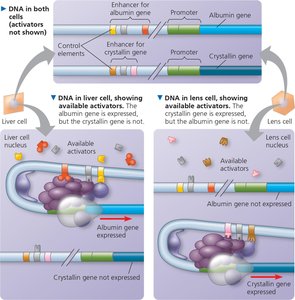
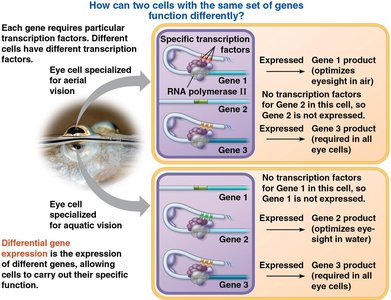
Example: Liver and lens cells express different genes due to the presence of different activators, despite having the same DNA.
Regulation of Gene Expression in Prokaryotes: The Operon Model
Feedback Inhibition and Gene Regulation
Bacteria regulate gene expression in response to environmental changes. Feedback inhibition and the operon model are two major mechanisms.
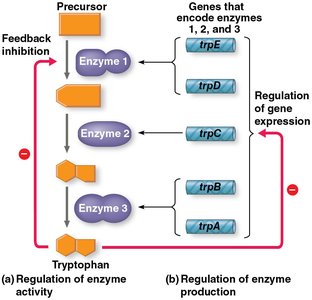
Feedback Inhibition: The end product of a metabolic pathway inhibits an early enzyme in the pathway.
Operon Model: A cluster of genes under the control of a single promoter and operator, regulated by repressor proteins.
The trp Operon
The trp operon is a repressible operon that controls the synthesis of tryptophan in E. coli. When tryptophan is abundant, it acts as a corepressor, activating the repressor protein to block transcription.
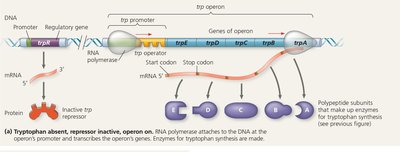
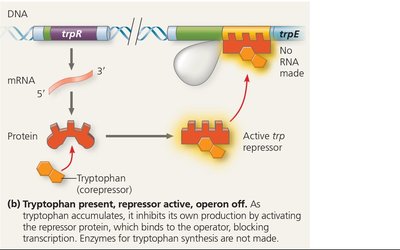
Example: The trp operon is active when tryptophan is scarce and repressed when tryptophan is abundant.
Additional info: This guide covers foundational concepts in molecular genetics, including DNA structure, replication, and gene regulation, essential for understanding inheritance and cellular function in biology.
