 Back
BackMolecular Biology: DNA Structure, Replication, Gene Expression, and Mutation
Study Guide - Smart Notes
 Tailored notes based on your materials, expanded with key definitions, examples, and context.
DNA as the Genetic Material
Historical Experiments Demonstrating DNA's Role
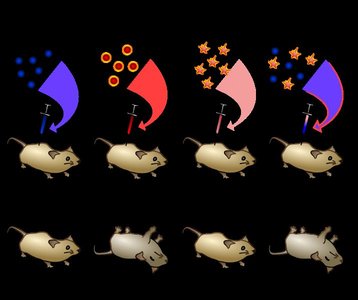
The identification of DNA as the genetic material was established through key experiments, notably by Frederick Griffith and Oswald T. Avery. Griffith's experiment with S and R strains of bacteria demonstrated that genetic information could be transferred, leading to the concept of transformation. Avery later confirmed that DNA was the transforming principle.
R strain: Non-virulent bacteria.
S strain: Virulent bacteria.
Heat-killed S strain: Non-virulent after heat treatment.
Mixing heat-killed S with live R: Resulted in transformation and virulence, indicating DNA as the genetic material.
Properties of DNA
DNA possesses several essential properties that make it the molecule of heredity:
Encodes organismal properties: DNA encodes proteins via transcription and translation.
Information transfer: DNA is replicated and passed to successive generations.
Stability and mutability: DNA is stable yet capable of mutation, allowing for evolution.
The Central Dogma of Molecular Biology
Flow of Genetic Information
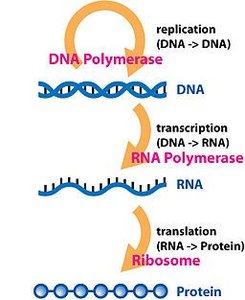
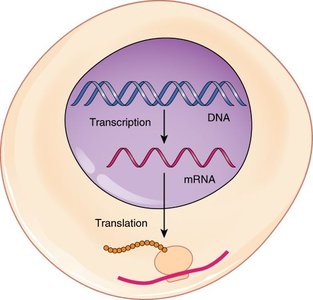
The central dogma describes the directional flow of genetic information: DNA is transcribed into RNA, which is then translated into protein.
Replication: DNA is copied by DNA polymerase.
Transcription: RNA is synthesized from DNA by RNA polymerase.
Translation: Proteins are synthesized from RNA by ribosomes.
Nucleotides: Subunits of Nucleic Acids
Nucleotide Structure
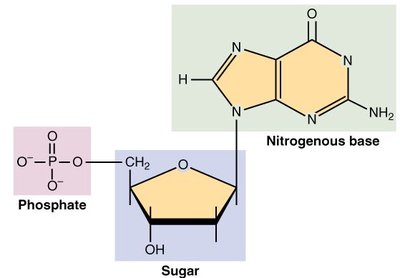
Nucleotides are the building blocks of DNA and RNA, consisting of three components:
Phosphate group
Pentose sugar: Ribose (RNA) or 2-deoxyribose (DNA)
Nitrogenous base: Purines (Adenine, Guanine) and Pyrimidines (Cytosine, Thymine [DNA only], Uracil [RNA only])
DNA Structure: The Double Helix
Discovery and Features
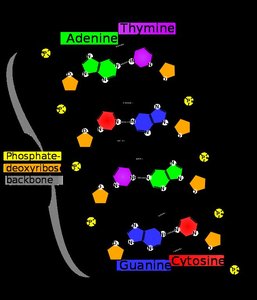
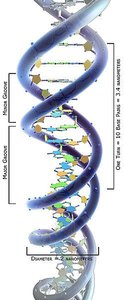
The double helix structure of DNA was elucidated by Rosalind Franklin, James Watson, and Francis Crick. DNA consists of two antiparallel strands held together by complementary base pairing.
Phosphate-deoxyribose backbone: Forms the structural framework.
Base pairs: Adenine pairs with Thymine, Guanine pairs with Cytosine.
Helical structure: Major and minor grooves facilitate protein binding.
DNA Replication
Mechanism of Replication
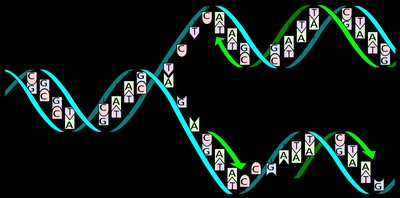
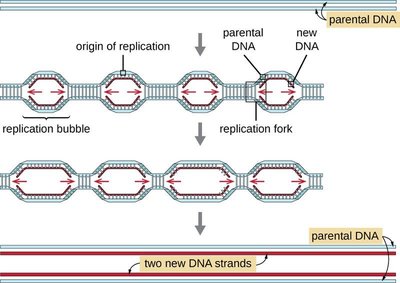
DNA replication is a semi-conservative process, where each new DNA molecule contains one parental and one newly synthesized strand.
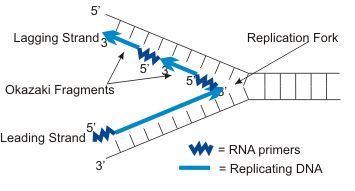
Replication fork: The site where DNA unwinds and replication occurs.
DNA polymerase: Enzyme responsible for synthesizing new DNA strands.
Ligase: Joins Okazaki fragments on the lagging strand.
Genotype, Phenotype, and Gene Expression
Connection Between Genotype and Phenotype
Genotype: Heritable information in the nucleotide sequence.
Phenotype: Physical traits of the organism.
Gene expression: The process by which a gene's information is used to synthesize a functional product (protein).
Transcription and Translation
Transcription: Synthesis of RNA from DNA template. Types of RNA include messenger RNA (mRNA), transfer RNA (tRNA), and ribosomal RNA (rRNA).
Translation: Synthesis of polypeptide from mRNA. Ribosomes are the site of translation.
The Genetic Code
Features of the Genetic Code
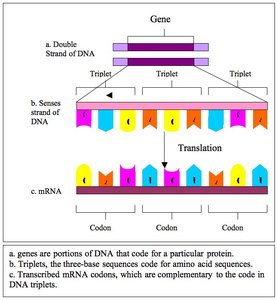
The genetic code is a set of rules by which information encoded in mRNA is translated into proteins.
Triplet code: Each codon consists of three nucleotides.
Redundant but not ambiguous: Multiple codons can code for the same amino acid, but each codon specifies only one amino acid.
Start and stop codons: One start codon (AUG) and three stop codons (UAA, UAG, UGA).
Universal: Nearly all organisms use the same genetic code.
Transcription in Prokaryotes and Eukaryotes
Transcription Process
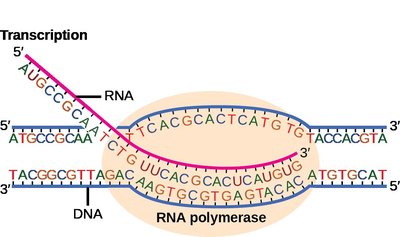
Transcription involves the synthesis of RNA from a DNA template, catalyzed by RNA polymerase.
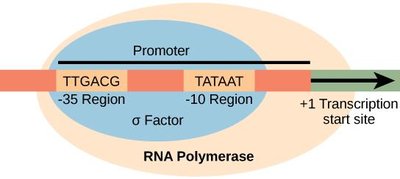
Promoter: DNA sequence where RNA polymerase binds to initiate transcription.
RNA polymerase: Enzyme that synthesizes RNA.
Transcription start site: The location where transcription begins.
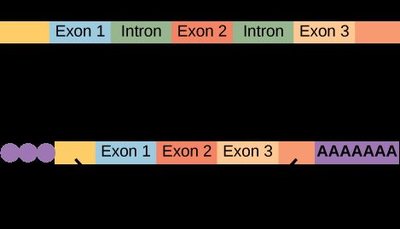
Eukaryotic mRNA Processing
Before leaving the nucleus, eukaryotic mRNA undergoes processing:
Splicing: Removal of introns and joining of exons.
5' cap and 3' poly-A tail: Added for stability and translation efficiency.
Translation: Role of tRNA and Ribosomes
Transfer RNA (tRNA)
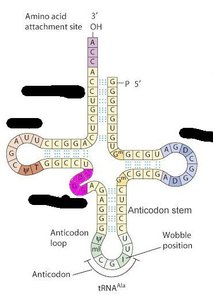
tRNA molecules transport specific amino acids to the ribosome and decode the mRNA sequence via their anticodon.
Amino acid attachment site: Where the amino acid is covalently attached.
Anticodon: Three-nucleotide sequence that pairs with the complementary mRNA codon.
Protein Translation: The Ribosome
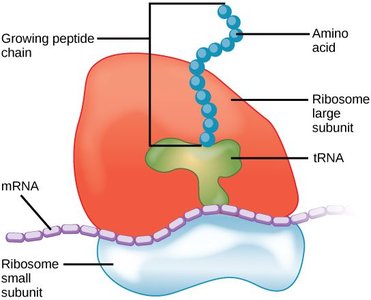
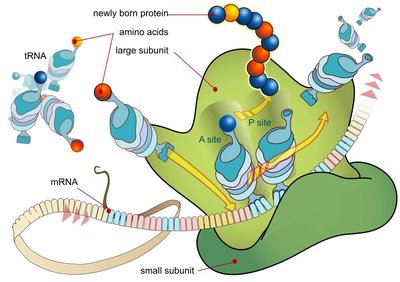
Ribosomes facilitate the assembly of amino acids into polypeptides, using mRNA as a template and tRNA as adaptors.
Large and small subunits: Ribosome consists of two subunits.
Sites: A site (aminoacyl), P site (peptidyl), and E site (exit).
Mutation and Its Effects
Types of Mutations
Mutations are changes in the DNA sequence that can affect gene function and phenotype.
Nucleotide substitution: Replacement of one nucleotide with another.
Silent: No change in amino acid.
Missense: Amino acid substitution.
Nonsense: Change to a stop codon, resulting in truncated protein.
Insertions or deletions (indels): Addition or removal of nucleotides, often causing frameshift mutations.
Sickle-Cell Anemia: A Case Study
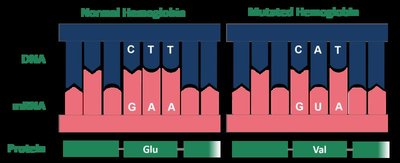
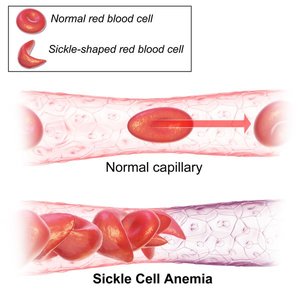
Sickle-cell anemia is caused by a missense mutation in the hemoglobin gene, resulting in abnormal hemoglobin and sickle-shaped red blood cells.
Normal hemoglobin: Glutamic acid (Glu) at position 6.
Mutated hemoglobin: Valine (Val) at position 6.
Phenotypic effect: Sickle-shaped cells block capillaries, causing anemia.
Summary Table: DNA, RNA, and Protein
Process | Enzyme | Substrate | Product |
|---|---|---|---|
Replication | DNA Polymerase | DNA | DNA |
Transcription | RNA Polymerase | DNA | RNA |
Translation | Ribosome | RNA | Protein |
Key Equations
Chargaff's Rule:
Central Dogma:
Additional info:
Expanded explanations and context were added to clarify the molecular mechanisms and historical significance.
Images were included only when directly relevant to the adjacent paragraph.
