 Back
Molecules of Cells: Lipids & Proteins – Study Notes for General Biology
Study Guide - Smart Notes
 Tailored notes based on your materials, expanded with key definitions, examples, and context.
Molecules of Cells: Lipids & Proteins
Lipids: Structure and Types
Lipids are a diverse group of hydrophobic molecules essential for cell structure and energy storage. Their hydrophobic nature arises from long hydrocarbon chains, making them insoluble in water.
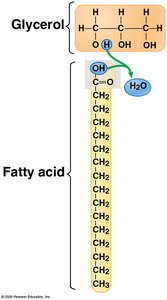
Fatty Acid: A molecule with a long carbon skeleton and a carboxyl group at one end. Fatty acids vary in length and the presence/location of double bonds.
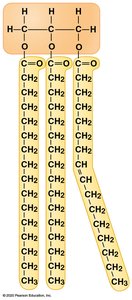
Fat (Triglyceride): Consists of a glycerol molecule joined to three fatty acids via ester linkages. Formation involves a dehydration reaction, releasing water.
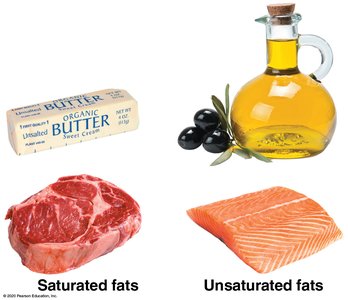
Saturated vs. Unsaturated Fats: Saturated fats have no double bonds in their fatty acid chains, while unsaturated fats have one or more double bonds, causing kinks in the chain.
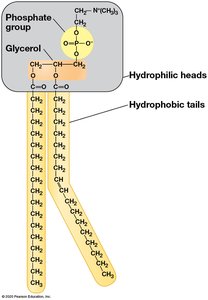
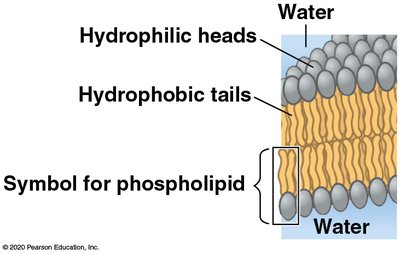
Phospholipids: Composed of glycerol, two fatty acids, and a phosphate group. They are amphipathic, with hydrophilic heads and hydrophobic tails, forming the basis of cell membranes.
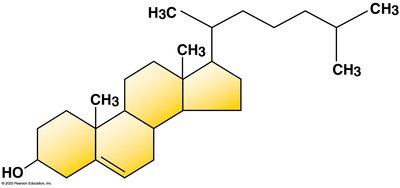
Steroids: Lipids with a carbon skeleton of four fused rings. Cholesterol is a key steroid found in membranes and is a precursor to other steroids.
Phospholipids and Membrane Structure
Phospholipids are crucial for cell membrane structure due to their amphipathic nature. Their hydrophilic heads face outward toward water, while hydrophobic tails face inward, forming a bilayer.
Hydrophilic Head: Attracts water due to the phosphate group.
Hydrophobic Tails: Repel water, composed of fatty acid chains.
Membrane Formation: Phospholipids spontaneously arrange into bilayers in aqueous environments, creating a selective barrier for cells.
Steroids: Structure and Function
Steroids are a class of lipids characterized by a four-ring carbon structure. Cholesterol is a major steroid in animal cell membranes and serves as a precursor for hormones.
Cholesterol: Maintains membrane fluidity and is a precursor for steroid hormones such as estrogen and testosterone.
Hydrophobicity: Steroids are generally hydrophobic, allowing them to interact with cell membranes.
Macromolecules: Overview
Cells contain four major types of macromolecules: carbohydrates, nucleic acids, proteins, and lipids. Each has distinct monomers, polymers, and types of bonds.
Macromolecule | Monomer | Polymer | Bond Type |
|---|---|---|---|
Carbohydrates | Monosaccharides | Polysaccharides | Glycosidic bond |
Nucleic Acids | Nucleotides | Polynucleotides | Phosphodiester bond |
Proteins | Amino acids | Polypeptides | Peptide bond |
Lipids | Fatty acids & glycerol | Triglycerides, phospholipids, steroids | Ester bond |
Proteins: Structure and Function
Amino Acids: Building Blocks of Proteins
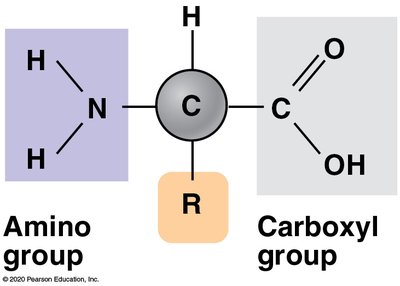
Amino acids are the monomers of proteins. Each amino acid contains a central carbon bonded to an amino group, a carboxyl group, a hydrogen atom, and a unique side chain (R group).
Side Chains (R groups): Determine the chemical properties and identity of each amino acid.
Variety: There are 20 different amino acids, classified by their side chain properties.
Classification of Amino Acids
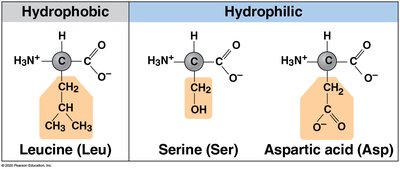
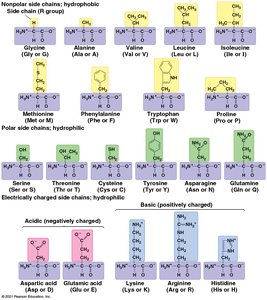
Amino acids are classified based on their side chains as hydrophobic (nonpolar), hydrophilic (polar), acidic (negatively charged), or basic (positively charged).
Hydrophobic: Nonpolar side chains, less likely to dissolve in water.
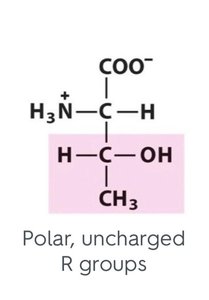
Hydrophilic: Polar or charged side chains, more likely to interact with water.
Acidic: Side chains with a carboxyl group, negatively charged.
Basic: Side chains with an amino group, positively charged.
Peptide Bonds and Protein Structure
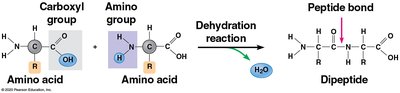
Proteins are formed by linking amino acids through peptide bonds, which are covalent bonds formed by dehydration reactions between the carboxyl group of one amino acid and the amino group of another.
Peptide Bond: The bond joining two amino acids, releasing water.
Polypeptide: A chain of amino acids joined by peptide bonds, ranging from a few to thousands of residues.
Protein Structure: The sequence of amino acids determines how the protein folds and its function.
Protein Structure and Denaturation
The structure of a protein is determined by its amino acid sequence. Proteins can lose their structure and function through denaturation, which is the unraveling of the protein due to environmental changes.
Primary Structure: Sequence of amino acids.
Denaturation: Loss of structure and function due to heat, pH, or other factors.
Functions of Proteins
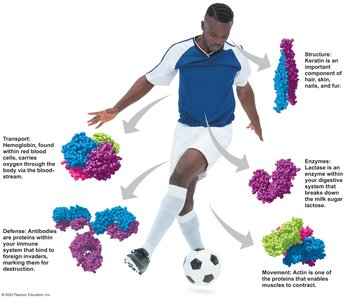
Proteins perform a wide variety of functions in cells, including catalysis, transport, defense, structure, and movement.
Enzymes: Catalyze biochemical reactions.
Transport: Move substances across membranes or through the bloodstream.
Defense: Antibodies protect against pathogens.
Structure: Provide support and shape to cells and tissues.
Movement: Enable muscle contraction and cellular motility.
Key Equations and Reactions
Ester Linkage Formation (Fat):
Peptide Bond Formation:
