 Back
BackLEC 23: Mutations and Gene Regulation in Prokaryotes
Study Guide - Smart Notes
 Tailored notes based on your materials, expanded with key definitions, examples, and context.
Mutations: Definitions and Types
What is a Mutation?
Mutations are heritable changes in the DNA sequence compared to a reference, usually called the wild type (WT). These changes can affect protein-coding regions, non-coding RNAs (such as rRNAs and tRNAs), or regulatory DNA regions (e.g., promoters, origins, centromeres).
Allele: Each variant form of a gene. Diploid organisms have two alleles per gene, which may be identical (homozygous) or different (heterozygous).
Variant: A general term for any sequence change, not necessarily affecting phenotype.
Wild type: The most common allele in a population.
Mutations may or may not affect the phenotype, depending on their location and nature.
Types of Mutations
Mutations can be classified based on their molecular nature and effect on gene products:
Substitutions: Replacement of one nucleotide pair with another.
Insertions/Deletions (Indels): Addition or loss of nucleotide pairs, which may cause frameshifts.
Base-Pair Substitutions
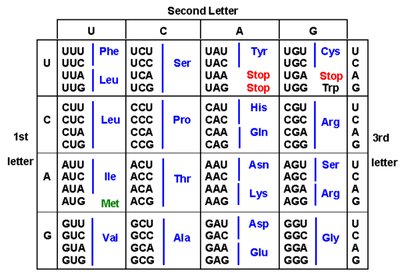
Silent mutations: Do not change the amino acid sequence due to redundancy in the genetic code. Usually neutral in effect.
Missense mutations: Change one amino acid in the protein. The effect depends on the location and nature of the change.
Nonsense mutations: Convert a codon for an amino acid into a stop codon, causing premature termination of translation and usually resulting in a non-functional protein.
Insertions and Deletions
Frameshift mutations: Indels not in multiples of three nucleotides shift the reading frame, altering downstream amino acids and often resulting in non-functional proteins.
In-frame indels: Indels in multiples of three nucleotides add or remove amino acids without shifting the reading frame. The effect depends on the specific amino acids involved and their position.
Mutation Effects: Example of Sickle Cell Anemia
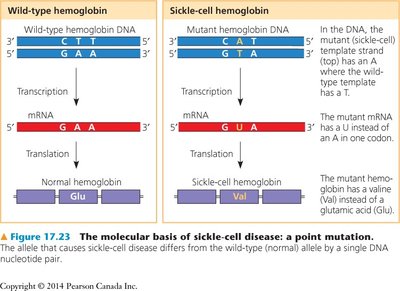
Sickle cell anemia is caused by a single base-pair substitution in the gene encoding the β-hemoglobin polypeptide. This missense mutation changes a glutamic acid (Glu) to a valine (Val), altering the protein's structure and function.
Causes of Mutations
Spontaneous vs. Induced Mutations
Spontaneous mutations: Result from errors in DNA replication that are not corrected. The estimated rate is about 1 per 1010 nucleotides copied.
Induced mutations: Caused by external agents called mutagens (e.g., X-rays, gamma rays, nucleotide analogs, oxidizing agents, benzene, and chemicals in cigarette smoke). Carcinogens are mutagens known to cause cancer.
Gene Regulation in Prokaryotes
Overview of Gene Expression Control
Cells regulate gene expression to control which proteins are produced under different conditions. In prokaryotes, gene expression is often directly influenced by environmental factors such as nutrient availability.
Organization of Prokaryotic Genes
Monocistronic transcription: One gene transcribed from one promoter.
Polycistronic transcription (Operons): Multiple genes transcribed from a single promoter as a single mRNA. These gene clusters are called operons.
The trp Operon: A Model of Repressible Gene Regulation
The trp operon in E. coli encodes enzymes for tryptophan biosynthesis. It is regulated by feedback inhibition and by a repressor protein encoded by the trpR gene.
Feedback inhibition: Tryptophan acts as an allosteric inhibitor of the first enzyme in its biosynthetic pathway, providing rapid response to changes in tryptophan levels.
Transcriptional regulation: When tryptophan is abundant, it binds to the trp repressor, activating it. The active repressor binds the operator, blocking RNA polymerase and turning the operon OFF. When tryptophan is absent, the repressor is inactive, and the operon is ON.





Summary Table: Types of Point Mutations
Mutation Type | DNA Change | Protein Effect | Example |
|---|---|---|---|
Silent | Base substitution | No amino acid change | GAA → GAG (both code for Glu) |
Missense | Base substitution | One amino acid changed | GAA → GTA (Glu → Val, as in sickle cell) |
Nonsense | Base substitution | Premature stop codon | GAA → TAA (STOP) |
Frameshift | Insertion/deletion (not multiple of 3) | All downstream amino acids altered | Insertion of A in ATG → AATG |
Key Equations and Concepts
Central Dogma:
Mutation Rate: nucleotides per replication (spontaneous)
Additional info: The genetic code table (see above) is essential for determining the effects of point mutations on protein sequence. The trp operon is a classic example of negative feedback and gene regulation in prokaryotes, illustrating both metabolic and transcriptional control mechanisms.
