Back
BackNon-Mendelian Genetics, Chromosomal Inheritance, and Molecular Biology: Study Guide
Study Guide - Smart Notes
 Tailored notes based on your materials, expanded with key definitions, examples, and context.
Variations on Mendel’s Laws
Incomplete Dominance
Incomplete dominance occurs when the phenotype of heterozygotes is intermediate between those of the two homozygotes. Unlike complete dominance, where the dominant allele masks the effect of the recessive allele, incomplete dominance results in a blending of traits.
Definition: Incomplete dominance is a genetic situation in which neither allele is completely dominant over the other, resulting in a third, intermediate phenotype.
Example: Crossing red and white snapdragons yields pink snapdragons in the F1 generation.
Genotypic Ratio: The F2 generation shows a 1:2:1 ratio for red:pink:white phenotypes.
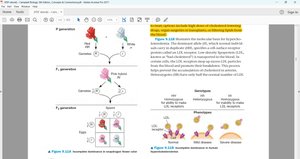
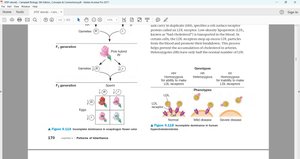
Human Example: Hypercholesterolemia is caused by a recessive allele (h). Heterozygotes (Hh) have cholesterol levels twice that of normal individuals (HH), while homozygous recessive (hh) individuals have five times the normal amount.
Codominance and Multiple Alleles
ABO Blood Groups
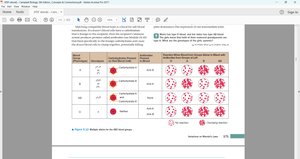
Codominance occurs when both alleles in a heterozygote are fully expressed. The ABO blood group system in humans is a classic example, involving three alleles (IA, IB, i) that produce four phenotypes.
Definition: Codominance is a genetic scenario where both alleles contribute equally and visibly to the phenotype.
Genotypes and Phenotypes:
Genotype
Phenotype
IAIA, IAi
Type A
IBIB, IBi
Type B
IAIB
Type AB (codominant)
ii
Type O
Application: Blood transfusions depend on matching these phenotypes to avoid immune reactions.
Pleiotropy: One Gene, Multiple Effects
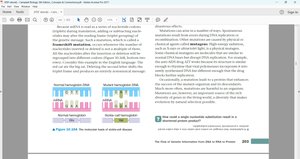
Sickle-Cell Disease
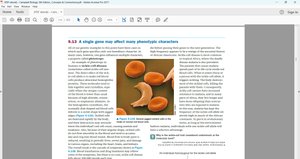
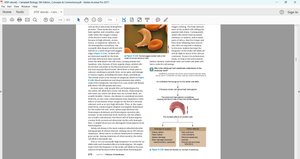
Pleiotropy occurs when a single gene influences multiple phenotypic traits. Sickle-cell disease is a classic example, where a mutation in the hemoglobin gene affects red blood cell shape, anemia, and resistance to malaria.
Definition: Pleiotropy is the phenomenon where one gene affects several distinct traits.
Example: Sickle-cell anemia causes abnormal hemoglobin, leading to sickled red blood cells, anemia, and increased malaria resistance in heterozygotes.
Inheritance: Heterozygotes (carriers) are generally healthy but may show symptoms under low oxygen; homozygotes have severe disease.
Polygenic Inheritance
Multiple Genes Affecting a Single Trait
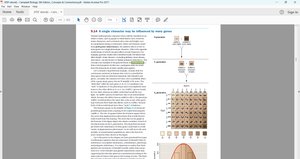
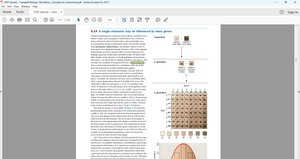
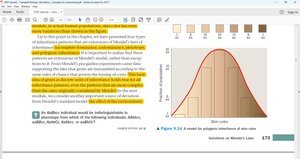
Polygenic inheritance occurs when a single trait is controlled by two or more genes, resulting in continuous variation within a population. Examples include human skin color and height.
Definition: Polygenic inheritance is the additive effect of multiple genes on a single phenotypic trait.
Example: Skin color is determined by several genes, each contributing to the overall phenotype.
Distribution: Traits governed by polygenic inheritance often show a bell-shaped curve in the population.
Environmental Effects on Phenotype
Gene-Environment Interactions
The environment can significantly influence the expression of genetic traits. Factors such as nutrition, exercise, sunlight, and cultural influences can modify phenotypes.
Definition: Environmental effects refer to the modification of phenotypic traits by external factors.
Example: Sun exposure darkens skin; nutrition affects height; experience influences intelligence.
Application: Many diseases, such as heart disease and cancer, are influenced by both genetic and environmental factors.
The Chromosomal Basis of Inheritance
Chromosome Theory of Inheritance
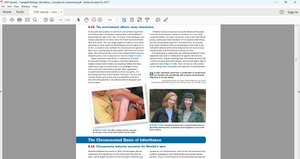
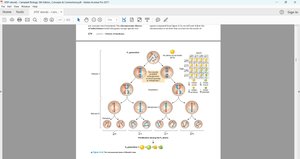
The chromosome theory of inheritance states that genes are located on chromosomes, which undergo segregation and independent assortment during meiosis. This explains Mendel’s laws at the molecular level.
Definition: Chromosome theory links Mendel’s “heritable factors” to specific loci on chromosomes.
Application: Understanding chromosome behavior is essential for explaining genetic inheritance.
Linked Genes
Genes on the Same Chromosome
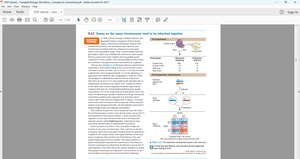
Genes located close together on the same chromosome tend to be inherited together, a phenomenon known as genetic linkage. Linked genes do not always follow Mendel’s law of independent assortment.
Definition: Linked genes are genes that are physically close on a chromosome and tend to be inherited as a group.
Example: Bateson and Punnett’s experiments with flower color and pollen shape in plants.
Sex-Linked Genes
Inheritance Patterns of Sex-Linked Traits
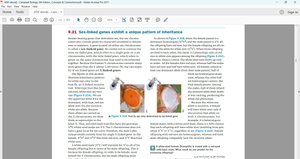
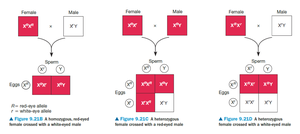
Sex-linked genes are located on the sex chromosomes (X or Y). These genes exhibit unique inheritance patterns, often affecting males more than females due to the presence of only one X chromosome in males.
Definition: Sex-linked genes are found on the X or Y chromosomes.
Example: In fruit flies, the gene for eye color is X-linked; red eyes are dominant, white eyes are recessive.
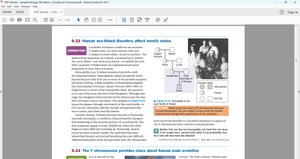
Human Example: Disorders such as hemophilia and color blindness are X-linked and affect males more frequently.
The Y Chromosome and Human Evolution
Tracing Male Lineages
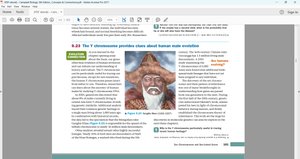
The Y chromosome is passed almost unchanged from father to son, making it a valuable tool for tracing paternal ancestry and human evolution.
Definition: The Y chromosome is a sex chromosome that determines male characteristics and is inherited paternally.
Example: Genetic studies have traced the Y chromosome of millions of men in Central Asia to a common ancestor, possibly Genghis Khan.
The Flow of Genetic Information
Central Dogma: DNA → RNA → Protein
Genetic information flows from DNA to RNA to protein. This process involves transcription (DNA to RNA) and translation (RNA to protein), forming the basis of gene expression.
Definition: The central dogma describes the directional flow of genetic information in cells.
Equation:
Application: Proteins are responsible for most cellular functions and phenotypic traits.
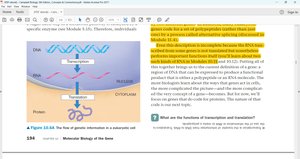
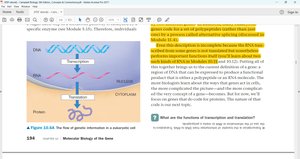
Transcription and Translation
Triplet Code and Genetic Code
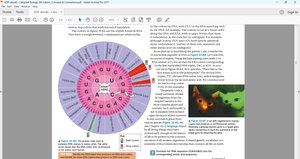
The genetic code is based on codons, sequences of three nucleotides that specify amino acids. The code is redundant, with multiple codons encoding the same amino acid.
Definition: A codon is a sequence of three nucleotides in mRNA that specifies an amino acid.
Equation: possible codons for 20 amino acids.
Start Codon: AUG (methionine) initiates translation.
Stop Codons: UAG, UAA, UGA signal termination of translation.
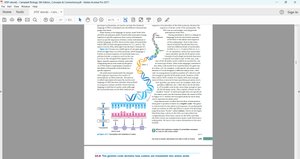
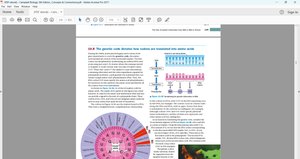
Transcription: DNA to RNA
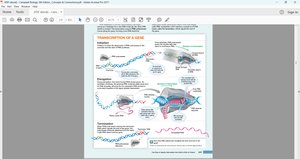
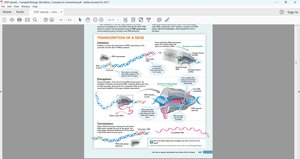
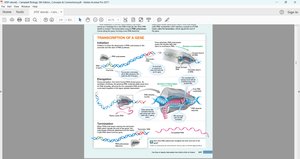
Transcription is the process by which genetic information in DNA is copied into RNA. It consists of three steps: initiation, elongation, and termination.
Initiation: RNA polymerase binds to the promoter region.
Elongation: RNA polymerase synthesizes the RNA strand.
Termination: RNA polymerase releases the completed RNA molecule.
RNA Processing and Exon Splicing
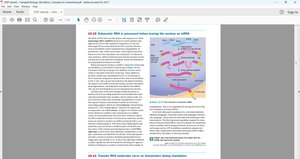
In eukaryotes, the initial RNA transcript (pre-mRNA) undergoes processing, including removal of introns and splicing of exons. This allows for alternative splicing, where different combinations of exons produce multiple proteins from a single gene.
Definition: Exon splicing is the joining of coding regions (exons) after removal of non-coding regions (introns).
Application: Alternative splicing increases protein diversity.
Translation: mRNA to Protein
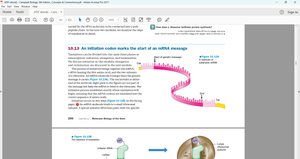
Translation is the process by which the sequence of codons in mRNA is used to assemble a polypeptide chain. It involves initiation, elongation, and termination.
Initiation: mRNA binds to the small ribosomal subunit; initiator tRNA pairs with the start codon.
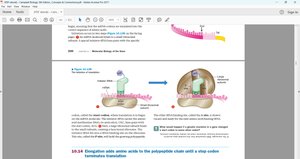
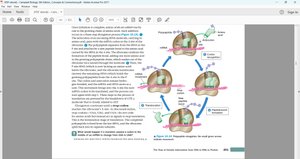
Elongation: Amino acids are added to the growing polypeptide chain.
Termination: A stop codon signals the end of translation.
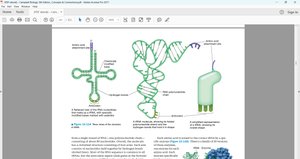
Transfer RNA (tRNA) Function
tRNA molecules serve as interpreters during translation, matching amino acids to their corresponding codons in mRNA.
Definition: tRNA is a type of RNA that carries amino acids to the ribosome during translation.
Application: Each tRNA has an anticodon that pairs with a specific mRNA codon.
Mutations and Their Effects
Types of Mutations
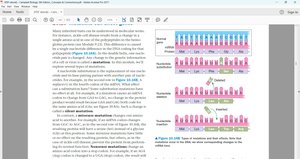
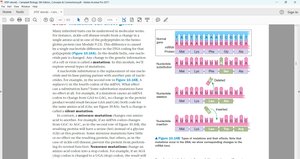
Mutations are changes in the DNA sequence that can affect gene function and protein structure. They may be caused by nucleotide substitutions, deletions, or insertions.
Silent Mutation: Changes a codon but does not alter the amino acid.
Missense Mutation: Changes a codon, resulting in a different amino acid.
Nonsense Mutation: Changes a codon to a stop codon, terminating translation prematurely.
Frameshift Mutation: Insertions or deletions that alter the reading frame.
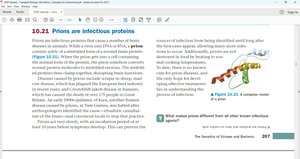
Prions: Infectious Proteins
Protein Misfolding and Disease
Prions are infectious proteins that cause neurodegenerative diseases by inducing misfolding of normal proteins. Unlike viruses, prions lack nucleic acids.
Definition: Prions are misfolded proteins that can transmit disease by converting normal proteins into the misfolded form.
Examples: Scrapie in sheep, mad cow disease, and kuru in humans.
Application: Prion diseases are unique because they are caused by protein, not DNA or RNA.
Components of the Immune System
Major Immune Organs and Tissues
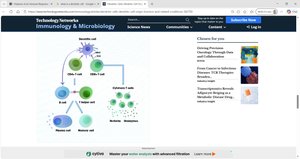
The immune system consists of various organs and tissues that work together to defend the body against pathogens.
Skin: Acts as a physical barrier and contains immune cells.
Bone Marrow: Produces stem cells that differentiate into immune cells.
Blood Stream: Circulates immune cells throughout the body.
Thymus: Site of T cell maturation.
Lymphatic System: Network of vessels and nodes for immune cell communication.
Spleen: Reservoir for immune cells.
Mucosal Tissue: Entry points for pathogens, rich in immune cells.
Features of an Immune Response
Innate and Adaptive Immunity
The immune response is divided into innate and adaptive immunity. Innate immunity is immediate and non-specific, while adaptive immunity is delayed and highly specific.
Innate Immunity: Involves cells such as neutrophils, eosinophils, basophils, mast cells, monocytes, dendritic cells, and macrophages.
Adaptive Immunity: Involves B cells and T cells, which recognize specific antigens.
Innate Immune Cells
Neutrophils: Phagocytose pathogens.
Eosinophils: Release chemicals to destroy pathogens.
Basophils: Release histamine and heparin.
Mast Cells: Trigger inflammation and allergic reactions.
Monocytes: Differentiate into dendritic cells and macrophages.
Dendritic Cells: Present antigens to T cells.
Macrophages: Phagocytose pathogens and present antigens.
Adaptive Immune Cells
B Cells: Produce antibodies to neutralize pathogens.
T Cells: Kill infected cells and activate other immune cells.
Antigen: Any molecule that binds to a BCR or TCR.
Types of Antibodies
Immunoglobulin Classes
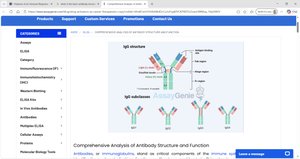
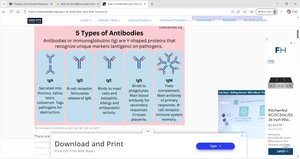
Antibodies (immunoglobulins) are Y-shaped proteins that recognize and bind to specific antigens. There are five main types, each with distinct functions.
Type | Function |
|---|---|
IgA | Secreted in mucosal areas; protects against pathogens. |
IgD | Found on B cells; initiates immune response. |
IgE | Involved in allergic reactions and defense against parasites. |
IgG | Main antibody in blood; provides long-term immunity. |
IgM | First antibody produced in response to infection. |
Basic Antibody Structure
Y-Shaped Molecule
Antibodies consist of two heavy chains and two light chains, forming a Y-shaped structure. The tips of the Y are variable regions that bind to antigens.
Variable Region: Binds to specific antigens.
Constant Region: Determines antibody class and function.