 Back
BackNon-Vascular, Seedless, and Seed Plants: Structure, Life Cycles, and Evolutionary Trends
Study Guide - Smart Notes
 Tailored notes based on your materials, expanded with key definitions, examples, and context.
Overview of Plant Evolution
Phylogenetic Tree of Plants
The evolution of land plants is marked by the development of key adaptations such as vascular tissues, seeds, and flowers. The phylogenetic tree illustrates the major groups of plants and their evolutionary relationships, highlighting the divergence of non-vascular plants, seedless vascular plants, gymnosperms, and angiosperms.
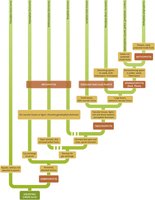
Bryophytes (mosses, liverworts, hornworts) are among the earliest land plants.
Seedless vascular plants (lycophytes, ferns, horsetails) evolved vascular tissues for transport.
Gymnosperms and angiosperms represent seed plants, with angiosperms being the most evolutionarily advanced due to the development of flowers and fruits.
Non-Vascular Plants (Bryophytes)
Characteristics of Bryophytes
Bryophytes are considered "lower" plants due to their lack of a developed vascular system. They do not possess true roots, stems, or leaves, and their water regulation is less advanced compared to higher plants. Bryophytes are a divergent group, not directly ancestral to vascular plants.
Possess a waxy cuticle to reduce water loss.
Some have stomata or stomata-like pores, but regulation of water loss and gas exchange is not well developed.
Examples include Hepatophyta (liverworts), Anthocerophyta (hornworts), and Bryophyta (mosses).
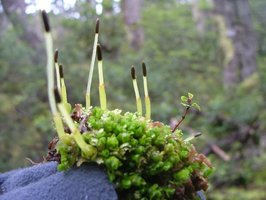
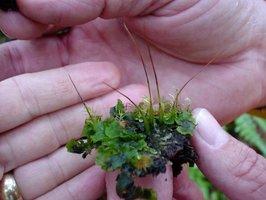
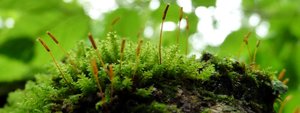
Multicellular Structures of Bryophytes
Bryophytes exhibit a dominant gametophyte generation, which is the main photosynthetic and free-living stage. The sporophyte generation is reduced and dependent on the gametophyte for nutrition.
Gametophyte: Produces gametes (sperm and eggs) in specialized organs (antheridia and archegonia).
Sporophyte: Grows from the fertilized egg and remains attached to the gametophyte.
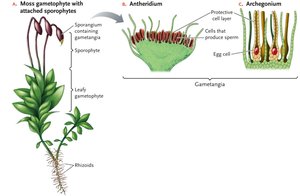
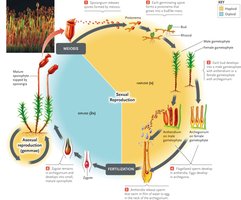
Life Cycle of Mosses
The moss life cycle demonstrates alternation of generations, with a dominant haploid gametophyte and a dependent diploid sporophyte. Fertilization requires water for sperm motility.
Sexual reproduction involves the production of gametes, fertilization, and the development of a sporophyte.
Asexual reproduction can occur via fragmentation or specialized structures.
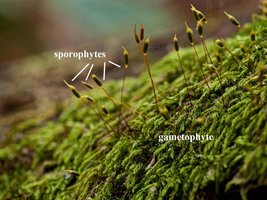
Mosses: Gametophyte and Sporophyte
In mosses, the green, leafy structure is the gametophyte, while the sporophyte appears as a stalk with a capsule, growing out of the gametophyte.
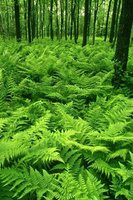
Seedless Vascular Plants
Major Groups and Characteristics
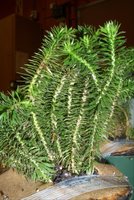
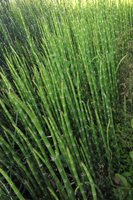
Seedless vascular plants are characterized by the presence of vascular tissues (xylem and phloem), which allow for greater size and complexity. They include Lycophyta (club mosses) and Pterophyta (ferns and horsetails).
Lycophyta: Minimal vascular development, small leaves (microphylls).
Pterophyta: More advanced vascular development, true roots, stems, and large leaves (megaphylls).
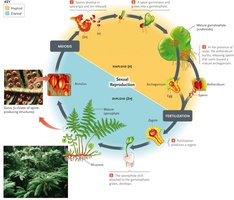
Sporophyte generation is dominant, independent, and larger than the gametophyte.
Life Cycle of a Fern Plant
Ferns exhibit alternation of generations, with a dominant sporophyte and a small, independent gametophyte. Fertilization requires water for sperm movement.
Seed Plants: Gymnosperms and Angiosperms
Gymnosperms
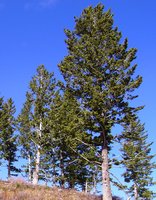
Gymnosperms are seed plants whose seeds are not enclosed in fruit. They do not produce flowers and evolved from fern-like ancestors. Key adaptations include heterospory, airborne pollen, and a more developed vascular system.
Major groups: Conifers, Ginkgo, Cycads, Gnetophytes.
Conifers are the most diverse and ecologically significant gymnosperms.
Conifer Seed Structure
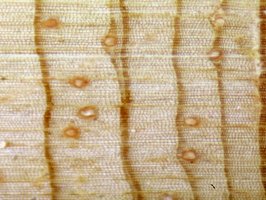
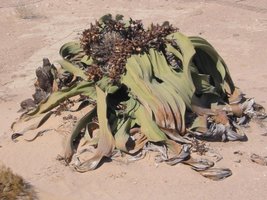
Examples of Gymnosperms
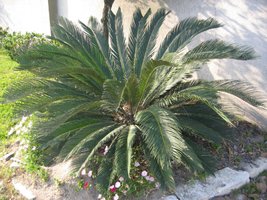
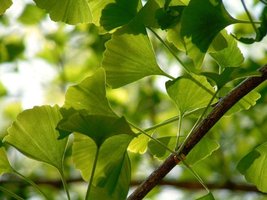
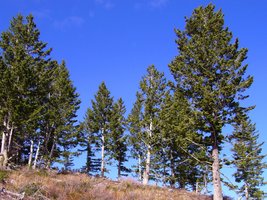
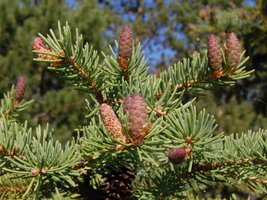
Conifer Cones
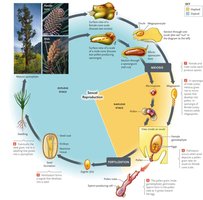
Life Cycle of a Conifer Plant
Angiosperms
Angiosperms are the most evolutionarily advanced plants, characterized by seeds enclosed in fruit and the production of flowers. Their reproductive success is enhanced by flower-pollinator associations.
Flowers facilitate efficient pollination and genetic diversity.
Fruits protect seeds and aid in their dispersal.
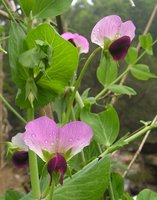
Life Cycle of a Flowering Plant
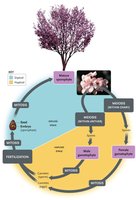
Evolutionary Trends of Plants
Plant evolution is marked by trends such as the reduction of the gametophyte generation, increased dominance of the sporophyte, development of vascular tissues, seeds, and flowers. These adaptations have allowed plants to colonize a wide range of terrestrial environments.
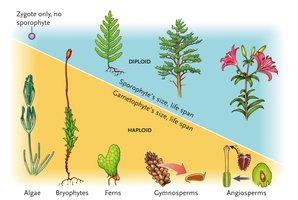
Reduction of gametophyte: From dominant in bryophytes to microscopic in angiosperms.
Increased sporophyte dominance: Sporophyte becomes the main, long-lived phase in vascular plants.
Development of seeds and flowers: Key innovations for survival and reproduction on land.
Additional info: The alternation of generations is a universal feature of plant life cycles, with evolutionary trends favoring the sporophyte generation and the development of complex reproductive structures.
