 Back
BackNoncoding DNA, Transposable Elements, and DNA Profiling
Study Guide - Smart Notes
 Tailored notes based on your materials, expanded with key definitions, examples, and context.
Noncoding DNA and Multigene Families
Overview of the Human Genome
The human genome contains both coding and noncoding DNA, with the majority of the genome consisting of noncoding regions. Coding DNA refers to sequences that are transcribed and translated into proteins or functional RNAs, while noncoding DNA includes introns, regulatory sequences, and repetitive DNA elements.
Coding DNA: Only about 1.5% of the human genome codes for proteins or functional RNAs such as rRNA and tRNA.
Noncoding DNA: Includes introns, regulatory sequences, and various types of repetitive DNA.
Repetitive DNA: Makes up a significant portion of the genome and includes transposable elements and related sequences.
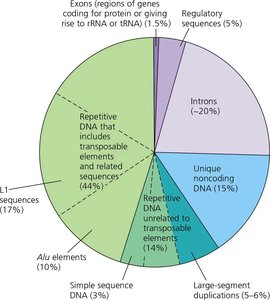
Example: In multicellular eukaryotes, the vast majority of the genome does not code for proteins, but may have regulatory or structural roles.
Repetitive DNA and Transposable Elements
Types and Functions of Repetitive DNA
Repetitive DNA includes sequences that are present in multiple copies in the genome. These can be classified based on their relationship to transposable elements and their genomic distribution.
Transposable Elements: DNA sequences that can move from one location to another within the genome. They are sometimes called "jumping genes."
Types of Repetitive DNA:
Transposable element-related DNA (e.g., Alu elements, L1 sequences)
Simple sequence DNA (short, tandemly repeated sequences)
Large-segment duplications
Example: Alu elements are a type of repetitive DNA found in primates, making up about 10% of the human genome.
Transposable Elements: Mechanisms and Significance
Transposons and Retrotransposons
Transposable elements are divided into two main classes based on their mechanism of movement:
Transposons: Move by a "cut-and-paste" or "copy-and-paste" mechanism, using a DNA intermediate.
Retrotransposons: Move by means of an RNA intermediate, which is reverse-transcribed into DNA before insertion at a new site.
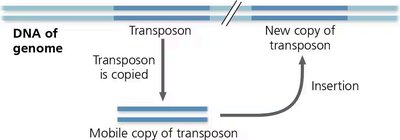
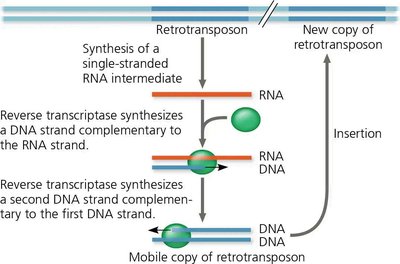
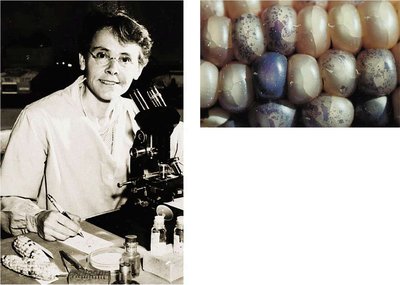
Example: In maize, transposable elements can cause color variation in kernels by disrupting pigment genes.
Biological Roles and Evolutionary Impact of Noncoding DNA
Conservation and Function
Comparative genomics has revealed that some noncoding DNA sequences are highly conserved across species, suggesting important regulatory or structural roles. For example, certain noncoding regions are identical in humans, rats, and mice, indicating evolutionary constraint.
Regulatory Functions: Noncoding DNA can influence gene expression, chromatin structure, and genome stability.
Evolutionary Significance: The persistence of conserved noncoding sequences points to their functional importance.
Simple Sequence DNA and DNA Profiling
Short Tandem Repeats (STRs) and Genetic Profiles
Simple sequence DNA consists of short, repeated sequences scattered throughout the genome. These regions, known as short tandem repeats (STRs), are highly variable among individuals and are used in DNA profiling.
STR Analysis: Used to generate a unique genetic profile for individuals, which is valuable in forensic science and paternity testing.
Probability of Match: The likelihood that two unrelated individuals have the same STR profile is extremely low, making this method highly reliable for identification.
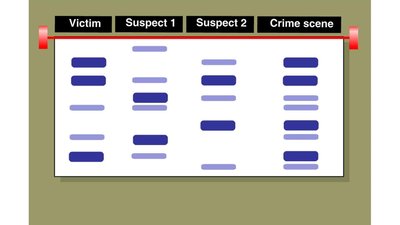
Example: Forensic scientists use STR analysis to match DNA from crime scenes to suspects, helping to exonerate the innocent and convict the guilty.
Summary Table: Major Components of the Human Genome
Component | Approximate Percentage | Description |
|---|---|---|
Exons (coding DNA) | 1.5% | Protein-coding and functional RNA genes |
Introns | ~20% | Noncoding regions within genes |
Regulatory sequences | 5% | Control gene expression |
Unique noncoding DNA | 15% | Non-repetitive, noncoding sequences |
Repetitive DNA (transposable element-related) | 44% | Includes Alu elements, L1 sequences, etc. |
Repetitive DNA (unrelated to transposable elements) | 14% | Simple sequence DNA, large-segment duplications |
Additional info: Transposable elements and repetitive DNA play significant roles in genome evolution, structure, and function, even though they do not code for proteins.
