 Back
Nucleic Acids and the RNA World: Structure, Function, and the Central Dogma
Study Guide - Smart Notes
 Tailored notes based on your materials, expanded with key definitions, examples, and context.
Nucleic Acids and the RNA World
Introduction to Nucleic Acids
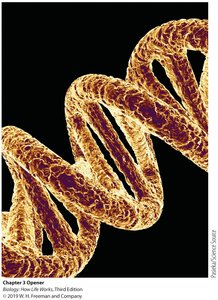
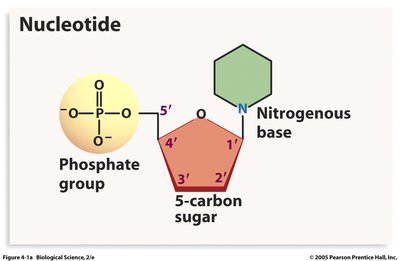
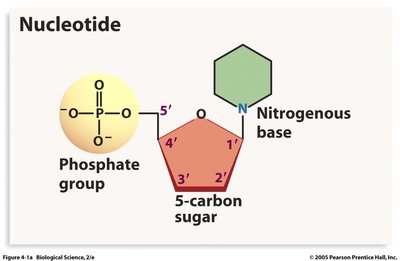
Nucleic acids are essential macromolecules responsible for the storage, transmission, and expression of genetic information in all living organisms. The two main types are deoxyribonucleic acid (DNA) and ribonucleic acid (RNA). These molecules are polymers composed of nucleotide monomers, each containing a phosphate group, a five-carbon sugar, and a nitrogenous base.
The Central Dogma of Molecular Biology
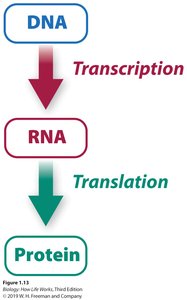
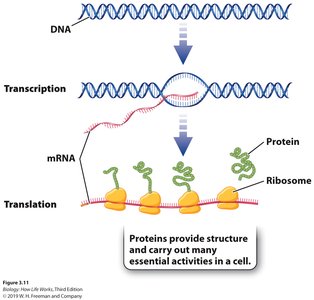
The Central Dogma describes the flow of genetic information within a biological system: DNA is transcribed into RNA, which is then translated into protein. This process explains how genetic information is expressed as cellular function.
Transcription: DNA is used as a template to synthesize messenger RNA (mRNA).
Translation: mRNA is decoded by ribosomes to build proteins, which perform most cellular activities.
Structure of Nucleic Acids
Nucleotide Structure
Each nucleotide consists of three components:
Phosphate group (attached to the 5' carbon of the sugar)
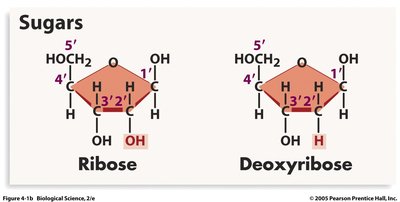
Five-carbon sugar (ribose in RNA, deoxyribose in DNA)
Nitrogenous base (purines: adenine, guanine; pyrimidines: cytosine, thymine, uracil)
Ribose vs. Deoxyribose
The difference between ribose and deoxyribose is the presence of a hydroxyl group (-OH) at the 2' carbon in ribose, which is replaced by a hydrogen (H) in deoxyribose.
Nitrogenous Bases
Nitrogenous bases are classified as:
Purines: Adenine (A), Guanine (G)
Pyrimidines: Cytosine (C), Thymine (T, in DNA), Uracil (U, in RNA)
Nucleosides vs. Nucleotides
A nucleoside consists of a nitrogenous base attached to a sugar, while a nucleotide also includes one or more phosphate groups.
Polymerization of Nucleic Acids
Phosphodiester Bonds and Directionality
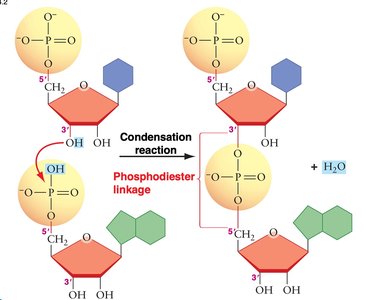
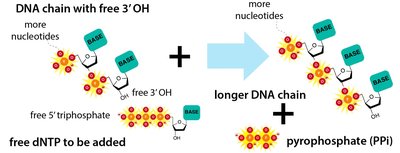
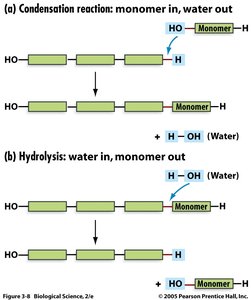
Nucleotides are linked together by phosphodiester bonds between the 3' hydroxyl group of one nucleotide and the 5' phosphate group of the next. This creates a sugar-phosphate backbone with directionality (5' to 3').
The sequence is always written from 5' to 3'.
Polymerization occurs via a condensation reaction, releasing water.
DNA Structure and Function
Primary and Secondary Structure
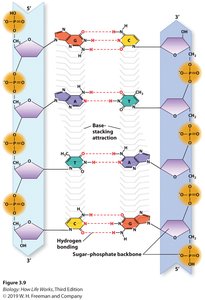
The primary structure of DNA is its sequence of nitrogenous bases. The secondary structure is the famous double helix, with two antiparallel strands held together by complementary base pairing (A-T, G-C) and stabilized by hydrogen bonds and base stacking interactions.
Antiparallel orientation: One strand runs 5' to 3', the other 3' to 5'.
Complementary base pairing: A pairs with T (2 hydrogen bonds), G pairs with C (3 hydrogen bonds).
Major and minor grooves: The double helix has repeating grooves important for protein binding.
Chargaff’s Rules and Experimental Evidence
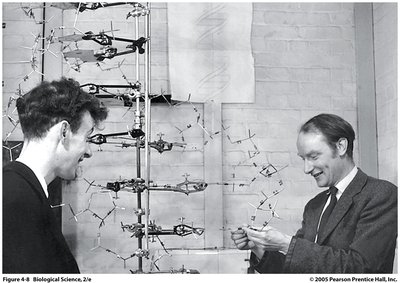
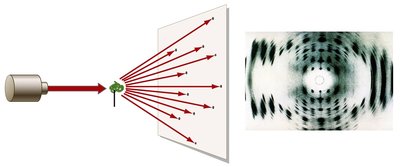
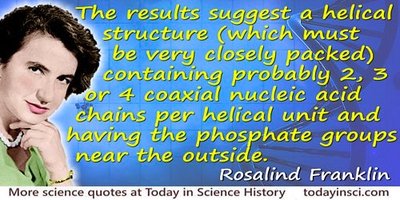
Chargaff’s rules state that in DNA, the amount of purines equals the amount of pyrimidines (A = T, G = C). Rosalind Franklin’s X-ray diffraction data provided evidence for the helical structure of DNA, which was modeled by Watson and Crick.
DNA as an Information Molecule
The sequence of nitrogenous bases in DNA encodes genetic information. During replication, each strand serves as a template for the synthesis of a new complementary strand, ensuring faithful transmission of genetic information.
Semi-conservative replication: Each new DNA molecule contains one old and one new strand.
RNA Structure and Function
Types of RNA
There are several types of RNA, each with distinct functions:
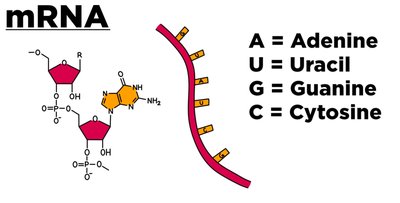
mRNA (messenger RNA): Encodes information for protein synthesis.
rRNA (ribosomal RNA): Structural and catalytic component of ribosomes.
tRNA (transfer RNA): Brings amino acids to the ribosome during translation.
snRNA, miRNA: Involved in RNA processing and gene regulation.
RNA Structure
RNA is typically single-stranded but can form complex secondary structures such as hairpins through intramolecular base pairing (A-U, G-C). RNA’s 2' hydroxyl group makes it more chemically reactive and less stable than DNA.
Secondary structure: Hairpins and loops formed by complementary base pairing within the same strand.
Tertiary structure: Further folding and interactions, especially in functional RNAs like rRNA and tRNA.
Comparison of DNA and RNA
Feature | DNA | RNA |
|---|---|---|
Sugar | Deoxyribose | Ribose |
Strands | Double-stranded | Single-stranded (usually) |
Nitrogenous Bases | A, T, G, C | A, U, G, C |
Stability | More stable | Less stable (due to 2' OH) |
Function | Genetic information storage | Information transfer, catalysis, regulation |
Summary Table: Types of RNA and Their Functions
RNA Type | Function |
|---|---|
mRNA | Encodes protein sequence |
rRNA | Forms ribosomes, catalyzes peptide bond formation |
tRNA | Transfers amino acids during translation |
snRNA | RNA splicing in the nucleus |
miRNA | Gene expression regulation |
Key Equations and Concepts
Phosphodiester bond formation:
$ \text{Nucleotide}_1\text{-}3'\text{OH} + \text{Nucleotide}_2\text{-}5'\text{PO}_4 \rightarrow \text{Nucleotide}_1\text{-}3'\text{O}-\text{P}(\text{O}_2)-\text{Nucleotide}_2 + \text{H}_2\text{O} $
Chargaff’s Rule:
$ \%A = \%T, \quad \%G = \%C $
Central Dogma:
$ \text{DNA} \xrightarrow{\text{transcription}} \text{RNA} \xrightarrow{\text{translation}} \text{Protein} $
Conclusion
Nucleic acids are fundamental to life, encoding, transmitting, and expressing genetic information. Understanding their structure and function is essential for grasping the molecular basis of biology, including the mechanisms of heredity, gene expression, and evolution.
