 Back
Nucleic Acids: Structure, Function, and Comparison of DNA and RNA
Study Guide - Smart Notes
 Tailored notes based on your materials, expanded with key definitions, examples, and context.
Chapter 4: Nucleic Acids
4.1 What is a Nucleic Acid?
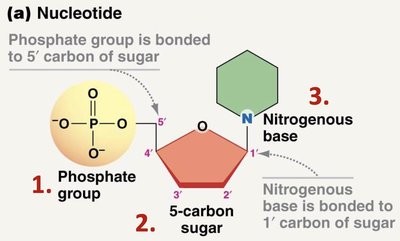
Nucleic acids are essential biomolecules that store and transmit genetic information in all living organisms. They are polymers made of nucleotide monomers, each consisting of three main components: a phosphate group, a five-carbon sugar, and a nitrogenous base.
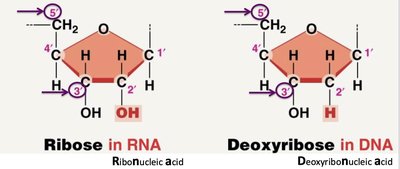
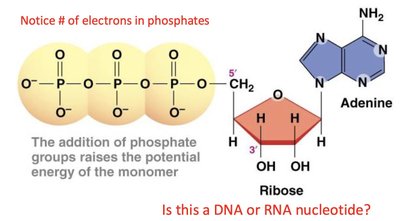
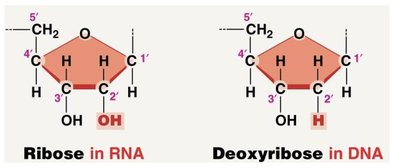
Nucleotide Structure: Each nucleotide contains a phosphate group bonded to the 5' carbon of the sugar, a five-carbon sugar (ribose in RNA, deoxyribose in DNA), and a nitrogenous base bonded to the 1' carbon of the sugar.
Directionality: Nucleic acids have directionality, with sequences written from the 5' to 3' end, reflecting the order of nucleotide addition.
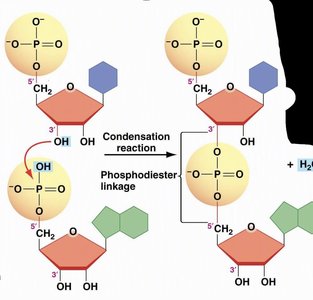
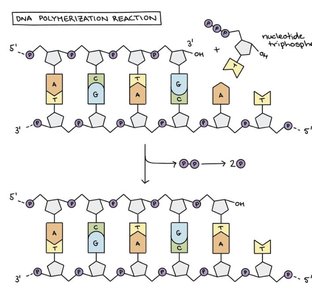
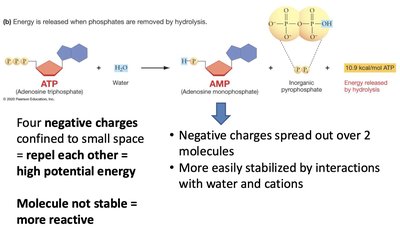
Polymerization: Nucleotides polymerize via condensation reactions, forming phosphodiester bonds and releasing water. This process is endergonic and catalyzed by enzymes, with energy supplied by phosphorylation of nucleotides.
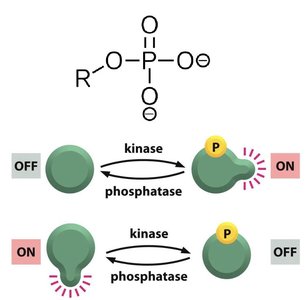
Phosphorylation: The transfer of phosphate groups to substrate molecules alters their configuration and increases their potential energy. Kinases add phosphates, while phosphatases remove them.
Key Terms:
Phosphodiester bond: Covalent bond linking nucleotides in a nucleic acid chain.
Endergonic reaction: A reaction that requires energy input.
Kinase: Enzyme that adds phosphate groups.
Phosphatase: Enzyme that removes phosphate groups.
Example: ATP (adenosine triphosphate) is an "activated" nucleotide that drives cellular reactions by transferring phosphate groups.
4.2 DNA Structure and Function
DNA (deoxyribonucleic acid) is the hereditary material in organisms, encoding information for growth and reproduction. Its structure and stability make it ideal for long-term storage of genetic information.
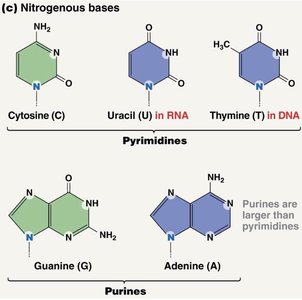
Primary Structure: Sequence of nucleotides (A, T, C, G) in a strand.
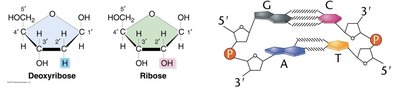
Secondary Structure: Double helix formed by two antiparallel strands connected by complementary base pairing (A-T, C-G). Purines always pair with pyrimidines, following Chargaff's rule (1:1 ratio of A:T and C:G).
Rosalind Franklin's X-ray diffraction: Provided evidence for the helical structure of DNA.
Watson and Crick: Built the double helix model, showing antiparallel strands and base pairing.
Tertiary Structure: DNA is further compacted in cells by wrapping around histone proteins and forming supercoils.
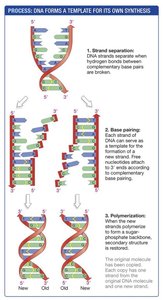
DNA Replication: Semiconservative process producing two identical DNA molecules, each with one old and one new strand.
Stability: DNA is less reactive than RNA due to the absence of the 2'-OH group and its double-stranded nature, which increases stability.
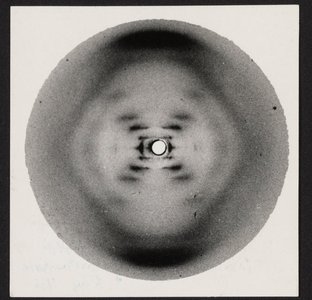
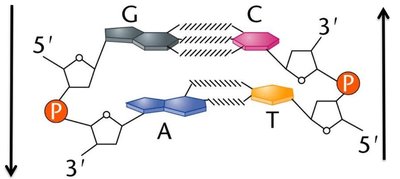
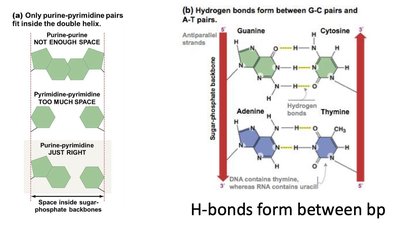
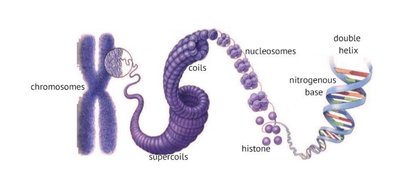
Example: If a DNA strand contains 30% adenine, it must also contain 30% thymine, and the remaining 40% is split equally between cytosine and guanine.
Practice Problem: DNA with 60% A-T pairs will denature faster than DNA with 60% G-C pairs because A-T pairs have two hydrogen bonds, while G-C pairs have three, making G-C pairs more stable.
4.3 RNA Structure and Function
RNA (ribonucleic acid) is a versatile molecule involved in information processing, catalysis, and protein synthesis. It differs from DNA in structure, stability, and function.
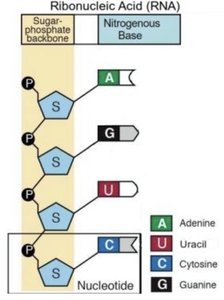
Primary Structure: Sugar-phosphate backbone with four nitrogenous bases (A, U, C, G).
Differences from DNA: RNA contains ribose (with a 2'-OH group), uracil instead of thymine, and is typically single-stranded, making it less stable and more reactive.
Secondary Structure: RNA folds into hairpin structures via complementary base pairing (A-U, G-C) within the same strand.
Tertiary Structure: Secondary structures fold into complex shapes, such as tRNA, which carries amino acids to the ribosome.
Versatility: RNA serves as an intermediate between DNA and proteins (mRNA), catalyzes reactions (ribozymes), and forms part of the ribosome (rRNA).
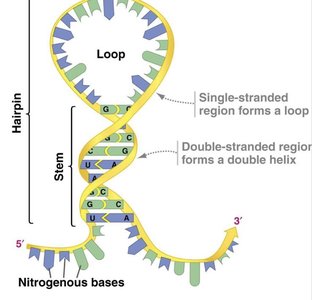
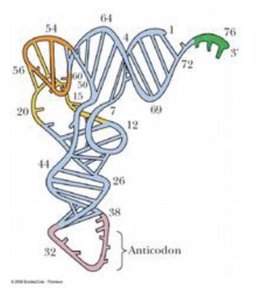
Example: Ribozymes catalyze the formation of peptide bonds during protein synthesis, and spliceosomes remove introns from pre-mRNA in eukaryotic cells.
Practice Problems and Data Interpretation
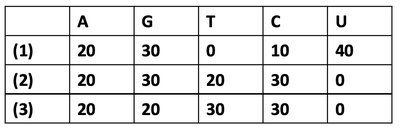
Understanding base composition and structure helps identify nucleic acid type and strand status.
A | G | T | C | U | |
|---|---|---|---|---|---|
(1) | 20 | 30 | 0 | 10 | 40 |
(2) | 20 | 30 | 20 | 30 | 0 |
(3) | 20 | 20 | 30 | 30 | 0 |
Interpretation: Source 1 is RNA (contains uracil, no thymine), Source 2 is double-stranded DNA (equal A:T and G:C), Source 3 is single-stranded DNA (unequal A:T and G:C).
Additional info: The notes provide a comprehensive overview of nucleic acid structure, function, and differences between DNA and RNA, suitable for General Biology students.
