 Back
BackNucleic Acids: Structure, Function, and Gene Expression
Study Guide - Smart Notes
 Tailored notes based on your materials, expanded with key definitions, examples, and context.
Nucleic Acids and Their Role in Heredity
Introduction to Nucleic Acids
Nucleic acids are essential biomolecules responsible for the storage, transmission, and expression of hereditary information in all living organisms. The two main types of nucleic acids are deoxyribonucleic acid (DNA) and ribonucleic acid (RNA). Both play critical roles in gene expression and protein synthesis.
DNA stores genetic information and is the blueprint for all cellular structures and functions.
RNA acts as a messenger and functional molecule in the process of translating genetic information into proteins.
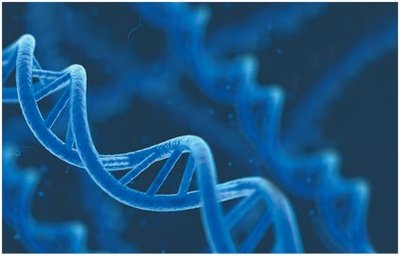
Gene Expression in Eukaryotes
Overview of the Central Dogma
Gene expression is the process by which information encoded in DNA is used to direct the synthesis of proteins. This process involves two main steps: transcription and translation.
Transcription: DNA is transcribed into messenger RNA (mRNA) in the nucleus.
Translation: mRNA is translated into a polypeptide (protein) at the ribosome in the cytoplasm.
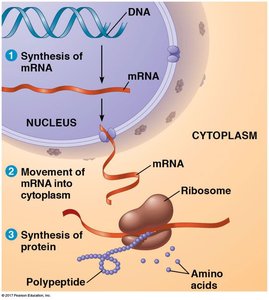
Example: The gene for hemoglobin is transcribed into mRNA, which is then translated into the hemoglobin protein in red blood cells.
Structure of Nucleic Acids
Components of Nucleic Acids
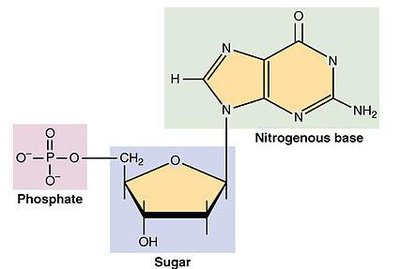
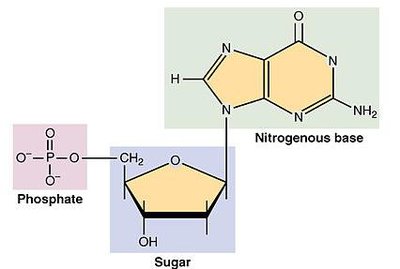
Nucleic acids are polymers called polynucleotides, which are made up of repeating units called nucleotides. Each nucleotide consists of three components:
Pentose sugar (deoxyribose in DNA, ribose in RNA)
Nitrogenous base (Adenine, Guanine, Cytosine, Thymine in DNA; Uracil replaces Thymine in RNA)
Phosphate group
Pentose Sugars in DNA and RNA
The pentose sugar is a five-carbon sugar that differs between DNA and RNA:
Deoxyribose (DNA): Lacks an oxygen atom at the 2' carbon.
Ribose (RNA): Has a hydroxyl group (-OH) at the 2' carbon.
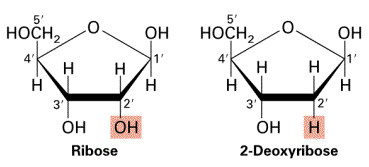
Example: The presence of the 2' hydroxyl group in RNA makes it more reactive and less stable than DNA.
Nitrogenous Bases: Purines and Pyrimidines
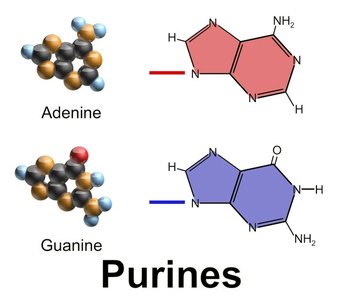
Nitrogenous bases are categorized into two groups based on their structure:
Purines: Double-ring structures (Adenine and Guanine)
Pyrimidines: Single-ring structures (Cytosine, Thymine, and Uracil)
Purines | Pyrimidines |
|---|---|
Adenine (A) | Cytosine (C) |
Guanine (G) | Thymine (T, DNA only) |
Uracil (U, RNA only) |
Nucleosides and Nucleotides
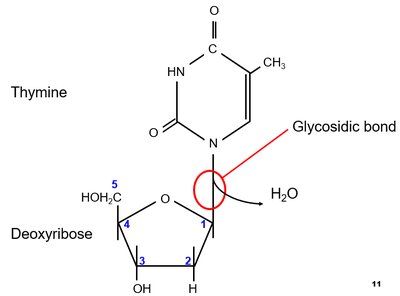
A nucleoside consists of a nitrogenous base attached to a pentose sugar. When one or more phosphate groups are added, it becomes a nucleotide. The bond between the base and sugar is called a glycosidic bond.
Nucleoside: Base + Sugar
Nucleotide: Base + Sugar + Phosphate
Phosphate Group
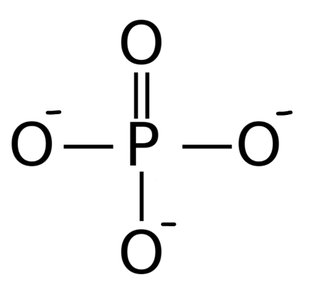
The phosphate group (PO43-) is responsible for the negative charge of DNA and RNA molecules. It links the 3' carbon of one sugar to the 5' carbon of the next via a phosphodiester bond.
Building Nucleotide Polymers
Phosphodiester Linkage and DNA Directionality
Nucleotides are joined together by phosphodiester bonds, forming a sugar-phosphate backbone with nitrogenous bases as side groups. The backbone has directionality, with distinct 5' and 3' ends, which is crucial for DNA replication and transcription.
Phosphodiester bond: Connects the 3' carbon of one nucleotide's sugar to the 5' carbon of the next.
Directionality: DNA and RNA are synthesized in the 5' to 3' direction.
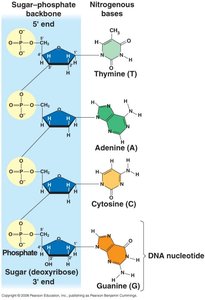
Example: The sequence of bases along a DNA strand encodes genetic information unique to each gene.
Summary Table: DNA vs. RNA
Feature | DNA | RNA |
|---|---|---|
Sugar | Deoxyribose | Ribose |
Nitrogenous Bases | A, T, C, G | A, U, C, G |
Structure | Double-stranded (usually) | Single-stranded (usually) |
Function | Genetic information storage | Gene expression, protein synthesis |
Additional info: The directionality of nucleic acids is essential for the enzymes involved in DNA replication and transcription, which can only add nucleotides to the 3' end of a growing chain.
