 Back
Ocean Acidification: Causes, Chemistry, and Ecological Impacts
Study Guide - Smart Notes
 Tailored notes based on your materials, expanded with key definitions, examples, and context.
Ocean Acidification and Climate Change
Introduction to Ocean Acidification
Ocean acidification refers to the ongoing decrease in ocean pH caused primarily by the uptake of atmospheric carbon dioxide (CO2) resulting from human activities. This process has significant implications for marine chemistry and ecosystems, particularly for organisms that rely on calcium carbonate for their shells and skeletons.
Key Concept: Human activities, especially the combustion of fossil fuels, are increasing atmospheric CO2 concentrations, which in turn leads to greater CO2 dissolution in ocean waters.
Example: The collapse of lower trophic levels in marine ecosystems due to acidification can trigger cascading effects throughout the food web.

The Carbon Cycle and Human Impact
Combustion and CO2 Emissions
Combustion of carbon-based fuels (such as coal, oil, and natural gas) releases CO2 into the atmosphere. This process is a major driver of increased atmospheric CO2 since the Industrial Revolution.
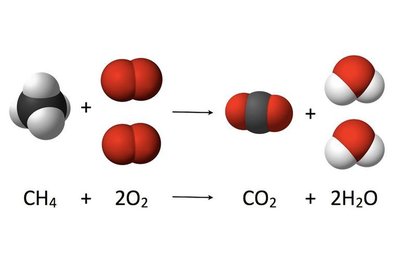
Combustion Reaction: The general equation for the combustion of a hydrocarbon is:
Example: Methane combustion:
Cellular Respiration and the Carbon Cycle
Living organisms also contribute to atmospheric CO2 through cellular respiration, a process that converts glucose and oxygen into energy, carbon dioxide, and water.
Cellular Respiration Equation:
Application: This process is fundamental to the carbon cycle, linking biological and atmospheric carbon pools.
Atmospheric CO2 Trends and Ocean Chemistry
Rising Atmospheric CO2
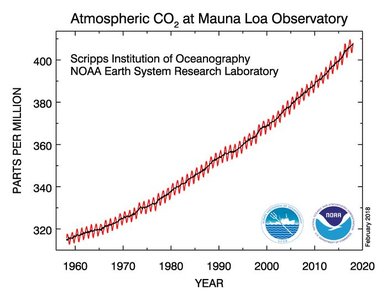
Direct measurements show a steady increase in atmospheric CO2 concentrations over recent decades, as recorded at observatories such as Mauna Loa.
Key Data: Atmospheric CO2 has risen from about 315 ppm in 1958 to over 420 ppm in recent years.
Ocean pH and Acidification
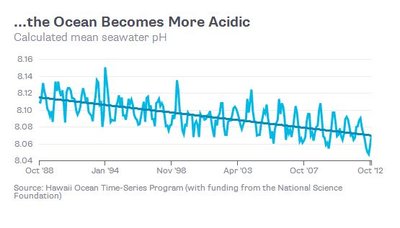
As atmospheric CO2 increases, more CO2 dissolves in ocean water, forming carbonic acid and lowering ocean pH. This process is known as ocean acidification.
Observed Change: Mean ocean pH has decreased from approximately 8.2 to 8.1 since the pre-industrial era.
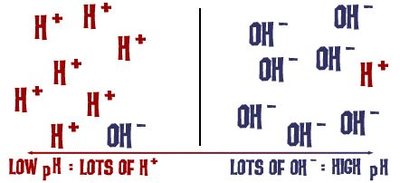
pH Scale: Lower pH values indicate higher acidity (more H+ ions).
Chemistry of Ocean Acidification
CO2 Dissolution and Carbonate Chemistry
When CO2 dissolves in seawater, it undergoes a series of chemical reactions:
CO2 (g) ↔ CO2 (aq)
CO2 (aq) + H2O ↔ H2CO3 ↔ HCO3- + H+
HCO3- ↔ CO32- + H+
These reactions increase the concentration of hydrogen ions (H+), lowering pH and reducing carbonate ion (CO32-) availability.
Key Equation:
Biological Impacts: Calcifiers and Ecosystem Collapse
Calcification and Marine Organisms
Many marine organisms, known as calcifiers, rely on carbonate ions to build shells and skeletons of calcium carbonate (CaCO3). Ocean acidification reduces carbonate ion availability, making calcification more difficult.
Calcification Reaction:
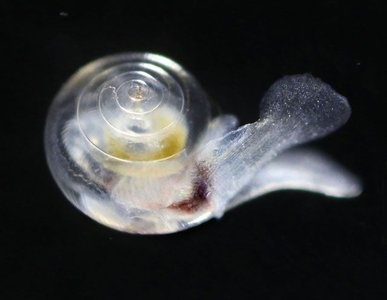
Examples of Calcifiers: Pteropods ("potato chips of the sea"), foraminifera, corals, and shellfish.
Ecological Role: These organisms form the base of many marine food webs and provide habitat structure (e.g., coral reefs).
Consequences for Marine Ecosystems
Reduced calcification leads to weaker shells and skeletons, threatening the survival of calcifiers and the stability of marine ecosystems. The collapse of lower trophic levels can trigger cascading effects throughout the food web, potentially leading to ecosystem collapse.
Example: Declining populations of pteropods and corals can destabilize entire marine food webs.
Ecological Concepts: Trophic Levels and Cascades
Energy Pyramids and Food Webs
Energy pyramids illustrate the flow of energy through trophic levels in an ecosystem, from primary producers to top predators. Ocean acidification can disrupt these pyramids by impacting foundational species.
Primary Producers: Phytoplankton form the base of the marine energy pyramid.
Key Point: The collapse of lower trophic levels undermines the entire food web structure.

Trophic Cascades
A trophic cascade occurs when changes at one trophic level (such as the loss of a keystone species or foundational calcifiers) cause ripple effects throughout the ecosystem, affecting population sizes and ecosystem stability.
Keystone Species: Species whose impact on their ecosystem is disproportionately large relative to their abundance.
Example: The decline of calcifying plankton can reduce food availability for higher trophic levels, ultimately impacting fish, marine mammals, and humans.
Solutions and Mitigation Strategies
Reducing CO2 Emissions
The primary solution to ocean acidification is to reduce atmospheric and oceanic CO2 concentrations. This can be achieved by:
Reducing the combustion of fossil fuels
Fostering marine photosynthesis (e.g., protecting phytoplankton and seagrass beds)
Protecting marine megafauna (e.g., whales) that contribute to nutrient cycling and carbon sequestration
Summary Table: Key Chemical Reactions in Ocean Acidification
Process | Chemical Equation | Effect |
|---|---|---|
Combustion of Fossil Fuels | Increases atmospheric CO2 | |
CO2 Dissolution | CO2 enters ocean water | |
Formation of Carbonic Acid | Lowers pH | |
Carbonic Acid Dissociation | Increases H+ (acidity) | |
Bicarbonate Dissociation | Reduces carbonate ion availability | |
Calcification | Formation of shells/skeletons |
Conclusion
Ocean acidification is a direct consequence of increased atmospheric CO2 from human activities. Its effects on marine chemistry and biology threaten the stability of marine ecosystems and the services they provide. Understanding the chemical and ecological processes involved is essential for developing effective mitigation strategies and for appreciating the interconnectedness of Earth's systems.
