 Back
BackOpisthokonta, Fungi, and Introduction to Metazoa: Study Notes
Study Guide - Smart Notes
 Tailored notes based on your materials, expanded with key definitions, examples, and context.
Opisthokonta: An Overview
Opisthokonta Clade
The Opisthokonta is a major clade within the supergroup Unikonta, encompassing animals, fungi, and several related protist groups. This group is characterized by the presence of a single posterior flagellum in the motile cells of many members, although some lineages have lost this feature during evolution.
Monophyletic group: All members share a common ancestor.
Major groups: Animals, Fungi, Nucleariids, and Choanoflagellates.
Etymology: 'Opistho-' means rear, and '-kont' means flagellum, referring to the rearward flagellum.
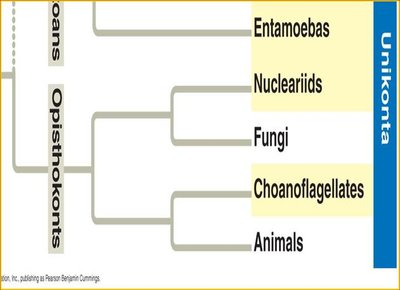
Choanoflagellates
Choanoflagellates are unicellular or colonial protists considered the closest living relatives of animals. They possess distinctive collar cells (choanocytes), which are also found in sponges and are important for filter feeding.
Collar cells: Consist of a central flagellum surrounded by a collar of microvilli.
Function: The flagellum creates water currents, drawing food particles toward the cell for ingestion.
Evolutionary significance: Similarity to sponge choanocytes supports the evolutionary link between choanoflagellates and animals.
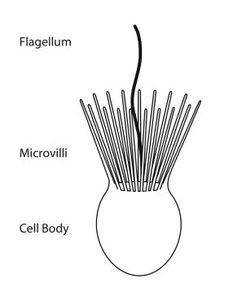
Fungi: Structure, Function, and Diversity
General Characteristics of Fungi
Fungi are absorptive heterotrophs that obtain nutrients by absorbing dissolved organic matter. They play essential roles as decomposers, mutualists, and pathogens in ecosystems.
Fungal body: Composed of thread-like structures called hyphae.
Mycelium: A network of hyphae forming the main feeding structure.
Fruiting body: The reproductive structure, often visible above ground, that produces spores.
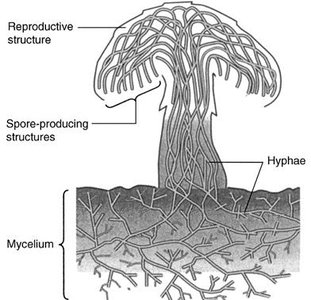
Fungal Growth and Reproduction
Fungi reproduce by producing spores, which can be formed sexually or asexually. Their growth involves the extension of hyphae and the formation of complex reproductive structures.
Asexual reproduction: Involves the production of spores by mitosis.
Sexual reproduction: Involves the fusion of specialized hyphae, leading to genetic recombination and the formation of sexual spores.
Classification of Fungi by Sexual Structures
Fungi are classified based on the sexual reproductive structures they form. The three main phyla discussed are:
Phylum | Reproductive Structure | Example(s) |
|---|---|---|
Mucoromycota (formerly Zygomycota) | Zygosporangia → zygotes | Rhizopus stolonifera (bread mold) |
Ascomycota | Asci → ascospores | Saccharomyces cerevisiae (yeast), Peziza sp., Sordaria fimicola |
Basidiomycota | Basidia → basidiospores | Mushrooms, Coprinus sp., Bracket/shelf fungi |
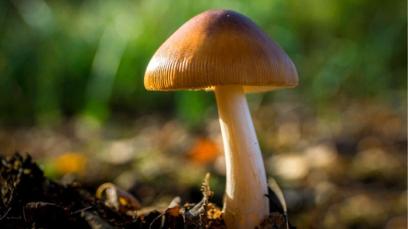
Symbiotic Fungi
Fungi form important symbiotic relationships with other organisms, including plants and algae/cyanobacteria.
Mycorrhizae: Mutualistic association between fungi and plant roots. The plant provides carbohydrates, while the fungus enhances water and mineral absorption.
Lichens: Symbiotic association involving fungi and photosynthetic partners (cyanobacteria or green algae). Lichens are classified by their growth forms: crustose (flat), foliose (leaf-like), and fruticose (shrubby).
Introduction to Metazoa (Animals)
Metazoa and Eumetazoa
Metazoa refers to the animal kingdom. Animals are multicellular, heterotrophic eukaryotes. Eumetazoa are animals with true tissues, while Parazoa (e.g., sponges) lack true tissues.
Parazoa: Represented by phylum Porifera (sponges), which are asymmetrical and lack true tissues but have specialized cells.
Eumetazoa: Animals with true tissues, including cnidarians and ctenophores.
Sponges (Phylum Porifera)
Sponges are simple, sessile animals that filter feed by drawing water through their porous bodies.
Choanocytes: Specialized cells that use flagella to create water currents and capture food particles.
Amoebocytes: Cells that digest food and distribute nutrients.
Water flow: Water enters through ostia and exits through the osculum.
Cnidarians and Ctenophores
Cnidarians and ctenophores are diploblastic animals (two germ layers: ectoderm and endoderm) with a gelatinous layer called mesoglea between them.
Cnidarians: Exhibit radial symmetry, possess stinging cells (nematocysts), and have polyp and/or medusa life stages. Examples include hydra, jellyfish, corals, and sea anemones.
Ctenophores: Have biradial symmetry, lack nematocysts, and do not undergo life stage metamorphosis.
Learning Strategies for Biology Courses
Effective Study Habits
Success in biology courses requires consistent study habits and time management. Students should expect to spend 2-3 hours per credit hour per week outside of class, distributed over multiple sessions for optimal learning.
BSC 2011: 6-9 hours per week outside class
BSC 2011L: 2-3 hours per week outside class
Spacing effect: Studying material over several days leads to better retention than cramming.
