 Back
Optimized CRISPR/Cas Tools for Efficient Genome Engineering in Drosophila
Study Guide - Smart Notes
 Tailored notes based on your materials, expanded with key definitions, examples, and context.
Genome Engineering in Drosophila Using CRISPR/Cas Systems
Introduction to CRISPR/Cas in Drosophila
The CRISPR/Cas system is a revolutionary tool for genome engineering, enabling targeted modifications in the DNA of various organisms, including the model organism Drosophila melanogaster. This technology utilizes the Cas9 endonuclease, guided by a specific RNA sequence (gRNA), to introduce double-strand breaks (DSBs) at defined genomic loci. These breaks can be repaired by error-prone nonhomologous end joining (NHEJ), resulting in insertions or deletions (indels), or by homology-directed repair (HDR) for precise genome editing.
Key Terms: CRISPR (Clustered Regularly Interspaced Short Palindromic Repeats), Cas9 (CRISPR-associated protein 9), gRNA (guide RNA), DSB (double-strand break), NHEJ, HDR.
Applications: Generation of loss-of-function mutations, precise sequence modifications, and high-throughput genetic screens.
Transgenic Cas9 and gRNA Tools
Design and Evaluation of Cas9 Transgenes
Multiple Cas9 transgenic lines were developed, each with different promoters to control the spatial and temporal expression of Cas9. These include ubiquitous (actin5C), germline-specific (nanos, vasa), and inducible (UAS/Gal4) promoters. The efficiency and tissue specificity of mutagenesis depend on the promoter used.
Ubiquitous Cas9 (act-cas9): High activity in both somatic and germline cells.
Germline-restricted Cas9 (nos-cas9, vasa-cas9): Preferential activity in germ cells, minimizing somatic mutations.
Inducible Cas9 (UAS-cas9): Expression controlled by Gal4 drivers, allowing tissue-specific targeting.
gRNA Expression Vectors and Promoter Comparison
gRNAs are typically expressed from U6 small nuclear RNA promoters. Three Drosophila U6 promoters (U6:1, U6:2, U6:3) were compared for their ability to drive efficient mutagenesis. U6:3 was found to be the most potent, followed by U6:1 and U6:2.
Single and Dual gRNA Vectors: Enable targeting of one or two loci simultaneously, useful for generating deletions or increasing specificity via offset nicking.
Assessment of Mutagenesis Efficiency
Somatic and Germline Targeting of Marker Genes
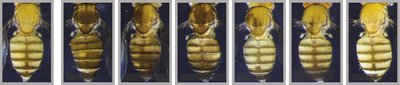
To evaluate the efficiency of different Cas9/gRNA combinations, the ebony (e) and yellow (y) pigmentation genes were targeted. Loss-of-function mutations in these genes result in easily scorable changes in cuticle coloration.
Somatic Mutagenesis: Ubiquitous Cas9 lines produced widespread mutant pigmentation, indicating high efficiency of biallelic targeting in somatic cells.
Germline Transmission: All Cas9 lines enabled germline transmission of mutations, but efficiency varied with promoter choice.
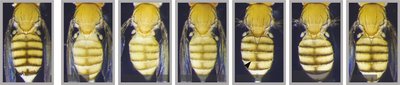
Comparison of U6 Promoters for gRNA Expression
Direct comparison of U6:1, U6:2, and U6:3 promoters for gRNA expression targeting the yellow gene revealed that U6:3 drives the highest rates of mutagenesis, both somatically and in the germline.
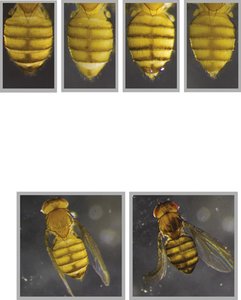
Simultaneous Targeting of Multiple Genes
Dual gRNA vectors allow for the simultaneous targeting of two genes, such as ebony and curled (cu), resulting in flies with both dark cuticle and curled wings.
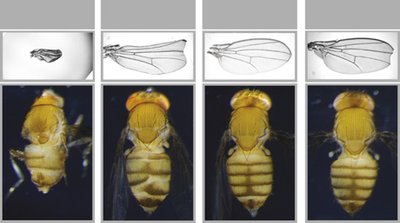
Targeting Essential Genes and Homology-Directed Repair (HDR)
Efficient Targeting of Essential Genes
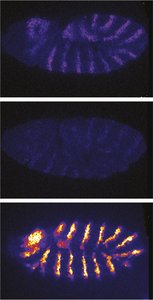
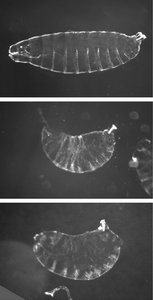
Targeting essential genes such as wingless (wg) and wntless (wls) requires germline-restricted Cas9 activity to avoid lethality from somatic mutations. The nos-cas9 line enabled efficient germline transmission of mutations in these essential genes without compromising viability.
Precise Genome Editing by HDR
CRISPR/Cas-induced DSBs can be repaired by HDR using donor DNA templates, allowing for the introduction of specific mutations or exogenous sequences (e.g., GFP tags) into the genome. This approach enables precise functional studies of gene products.
Somatic Mutagenesis and Mosaic Analysis
Generation of Genetic Mosaics
Transgenic CRISPR/Cas tools can efficiently generate genetic mosaics, where clones of cells within an organism carry biallelic mutations. This is valuable for studying gene function in specific tissues or developmental stages.
Tissue-Specific and Temporal Control of Mutagenesis
By combining UAS-cas9 with tissue-specific Gal4 drivers and temperature-sensitive Gal80, mutagenesis can be restricted to defined cell types and developmental windows, enabling detailed functional analysis of gene activity.
Summary Table: Comparison of Cas9 and gRNA Tools
Cas9 Line | Promoter | Somatic Activity | Germline Activity | Best Use |
|---|---|---|---|---|
act-cas9 | Ubiquitous (actin5C) | High | High | Somatic and germline mutagenesis of nonessential genes |
vasa-cas9 | Germline (vasa) | Moderate | High | Germline mutagenesis |
nos-cas9 | Germline (nanos) | Low | High | Targeting essential genes in the germline |
UAS-cas9 | Inducible (UAS/Gal4) | Variable | Variable | Tissue-specific and temporal control |
Conclusion
Optimized CRISPR/Cas tools in Drosophila melanogaster enable efficient and precise genome engineering for both basic research and modeling of human diseases. The choice of Cas9 and gRNA expression systems allows for flexibility in targeting somatic or germline cells, essential or nonessential genes, and for generating genetic mosaics or precise sequence modifications. These advances facilitate rapid functional analysis of genes and high-throughput genetic screening in this key model organism.
