 Back
Organic Chemistry and Biomolecules: Foundations for General Biology
Study Guide - Smart Notes
 Tailored notes based on your materials, expanded with key definitions, examples, and context.
Organics and Biomolecules
Organic Chemistry
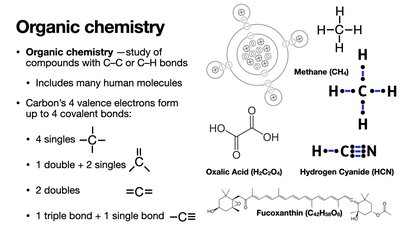
Organic chemistry is the study of compounds containing carbon-carbon (C–C) or carbon-hydrogen (C–H) bonds. Most biomolecules are organic, though some are inorganic. Carbon's unique bonding properties allow for a vast diversity of organic compounds essential to life.
Organic compounds: Molecules with C–C or C–H bonds.
Carbon's valence electrons: Carbon has four valence electrons, enabling it to form up to four covalent bonds in various combinations:
Four single bonds:
One double and two singles: and
Two double bonds:
One triple bond and one single:
Carbon atoms can form linear, branched, or ringed skeletons, contributing to molecular diversity.
Example: Methane (CH4), Oxalic Acid (H2C2O4), Hydrogen Cyanide (HCN), Fucoxanthin (C42H58O6) are all organic compounds with different carbon bonding arrangements.
Carbon Skeletons
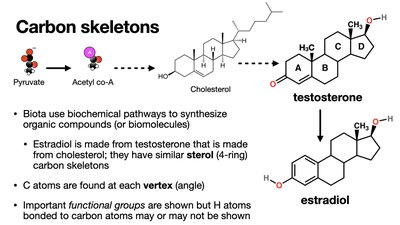
Carbon skeletons are the backbone of organic molecules. Their structure can vary in length, branching, ring formation, and the position/type of double bonds. Biota use biochemical pathways to synthesize organic compounds, often modifying carbon skeletons to produce different biomolecules.
Biochemical pathways: Organisms synthesize biomolecules by modifying carbon skeletons.
Sterols: Testosterone and estradiol are synthesized from cholesterol and share a four-ring sterol skeleton.
Functional groups: Specific groupings of atoms attached to carbon skeletons that determine chemical properties and reactivity.
Example: Estradiol is made from testosterone via enzymatic conversion, both sharing similar carbon skeletons but differing in functional groups.
Enzymes and Functional Groups
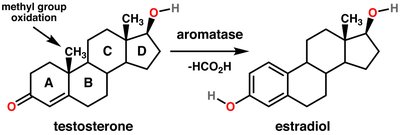
Enzymes such as aromatase catalyze the conversion of one organic compound to another by modifying functional groups. Functional groups participate in chemical reactions, stabilize large molecules, and increase solubility.
Functional group: A specific grouping of atoms with distinct chemical properties (e.g., hydroxyl, carboxyl, amino, methyl, organophosphate, carbonyl, ketone, aldehyde).
Functional groups are critical for molecular function and recognition.
Example: Aromatase converts testosterone to estradiol, affecting traits such as development, fertility, and cancer growth.
Isomers
Types of Isomers
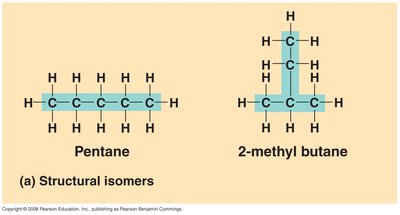
Isomers are compounds with the same number and type of atoms but different arrangements. This structural diversity is crucial for biological function.
Structural isomers: Differ in the arrangement of carbon skeletons (e.g., branched vs. unbranched).
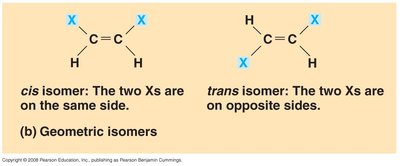
Geometric isomers: Differ in the arrangement of atoms around a double bond (cis: same side, trans: opposite sides).
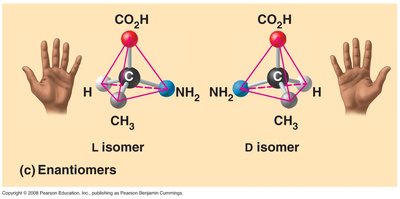
Enantiomers: Mirror-image isomers differing in spatial arrangement around a central carbon (L and D forms).
Example: Most amino acids in biota are L isomers; D isomers are rare.
Chemoheterotrophy
Human Metabolism
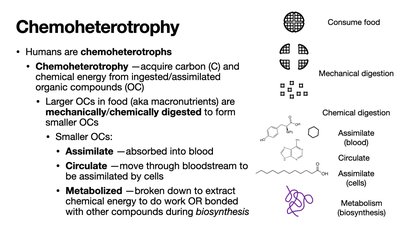
Humans are chemoheterotrophs, acquiring both carbon and energy from ingested organic compounds. Digestion breaks down macronutrients into smaller molecules, which are assimilated, circulated, and metabolized for energy or biosynthesis.
Mechanical digestion: Physical breakdown of food.
Chemical digestion: Enzymatic breakdown into smaller organic compounds.
Assimilation: Absorption into blood and cells.
Metabolism: Extraction of energy or synthesis of new biomolecules.
Polymers and Monomers
Polymerization and Depolymerization
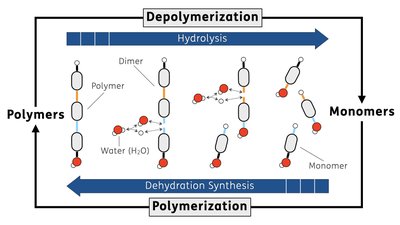
Biota construct large biomolecules (polymers) from smaller units (monomers) via polymerization (dehydration synthesis) and break them down via depolymerization (hydrolysis).
Polymerization: Formation of polymers from monomers by removing water (dehydration synthesis).
Depolymerization: Breakdown of polymers into monomers by adding water (hydrolysis).
Classes of biomolecules:
Carbohydrates: Monosaccharides (monomers) form polysaccharides (polymers).
Lipids: Fatty acids; do not form true polymers but aggregate.
Proteins: Amino acids form polypeptides (proteins).
Nucleic acids: Nucleotides form polynucleotides (DNA, RNA).
Classes of Biomolecules
Overview of Biomolecule Classes
Biomolecules are organic compounds essential for life, classified into four main groups based on their structure and function.
Carbohydrates: Sugars, starches, cellulose, glycogen, chitin.
Lipids: Fatty acids, triglycerides, phospholipids, steroids, sebum.
Proteins: Amino acids, peptides, polypeptides.
Nucleic acids: Nucleotides, ATP, DNA, RNA.
Example: Lactose is a carbohydrate composed of two monosaccharides.
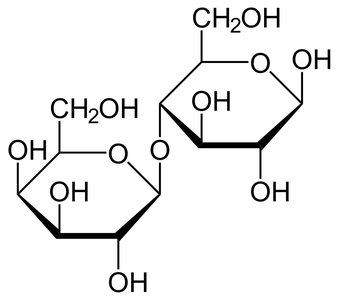
Example: Adenosine triphosphate (ATP) is a nucleotide used for energy transfer.
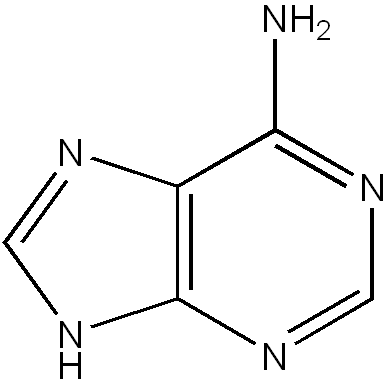
Example: Protein, nucleic acid, lipid, and carbohydrate structures are fundamental to cell function.
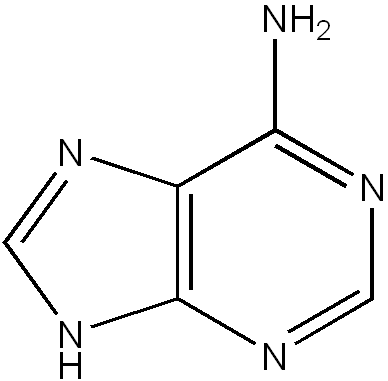
Summary Table: Biomolecule Classes
Class | Monomer | Polymer |
|---|---|---|
Carbohydrates | Monosaccharides | Polysaccharides |
Lipids | Fatty acids | Aggregates (not true polymers) |
Proteins | Amino acids | Polypeptides |
Nucleic acids | Nucleotides | Polynucleotides |
Additional info: Biomolecules are central to cell structure, metabolism, and genetic information. Understanding their chemistry is foundational for all biological sciences.
