 Back
Organic Chemistry and Carbon: Foundations of Life (Ch 4)
Study Guide - Smart Notes
 Tailored notes based on your materials, expanded with key definitions, examples, and context.
Organic Chemistry: The Study of Carbon Compounds
Definition and Importance
Organic chemistry is the branch of chemistry that focuses on compounds containing carbon. These compounds range from simple molecules to complex macromolecules and are fundamental to all life forms. - Organic compounds are defined as molecules containing carbon, regardless of their origin. - The study of organic chemistry is essential for understanding the molecular basis of life.
Origin of Life and Abiotic Synthesis
The origin of life on Earth is closely linked to the abiotic synthesis of organic molecules. Stanley Miller's classic experiment demonstrated that organic compounds could form under conditions simulating early Earth, supporting the hypothesis that life could have originated from non-living matter. - Abiotic synthesis refers to the formation of organic molecules without biological intervention. - Experiments suggest that volcanic environments may have played a role in this process. 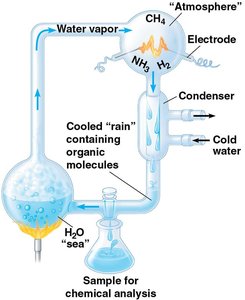
Key Molecules in Early Earth Chemistry
Several simple molecules were present on early Earth and are crucial for organic chemistry: - Nitrogen (N2) - Ammonia (NH3) - Methane (CH4) - Carbon dioxide (CO2) - Water (H2O) - Hydrogen gas (H2) 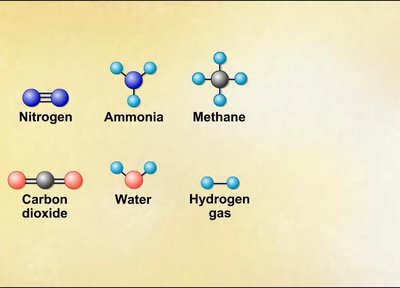
Carbon Bonding and Molecular Diversity
Electron Configuration and Bonding
Carbon's electron configuration allows it to form four covalent bonds, making it highly versatile and capable of creating a vast array of organic molecules. - Valence electrons: Carbon has four valence electrons, enabling four covalent bonds. - Electron configuration determines the chemical characteristics and bonding capacity of atoms.
Molecular Shapes and Models
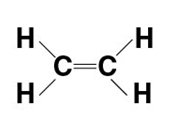
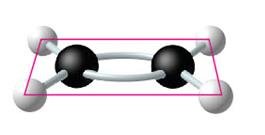
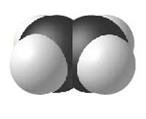
The shape of organic molecules is determined by the bonding patterns of carbon atoms. - When carbon is bonded to four other atoms, it adopts a tetrahedral shape. - Double bonds between carbons result in planar (flat) molecules. Examples: - Methane (CH4): Tetrahedral shape. 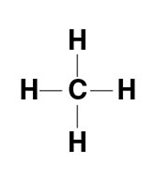
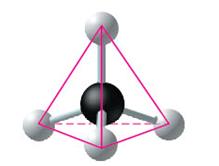
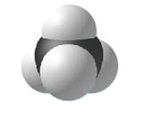 - Ethane (C2H6): Two tetrahedral carbons joined.
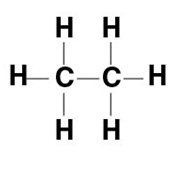
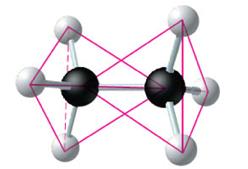
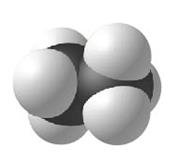 - Ethene (C2H4): Planar due to double bond.
Valence and Covalent Bonding
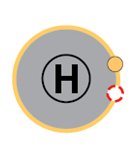
The number of unpaired electrons in the valence shell determines the number of covalent bonds an atom can form.
Element | Valence Electrons | Valence (Bonds) |
|---|---|---|
Hydrogen | 1 | 1 |
Oxygen | 2 | 2 |
Nitrogen | 3 | 3 |
Carbon | 4 | 4 |



Common Elements Bonded to Carbon
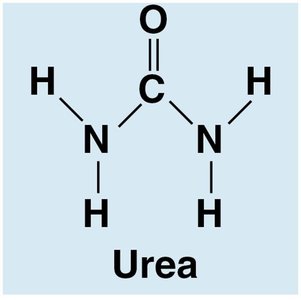
Carbon frequently bonds with hydrogen, oxygen, and nitrogen, forming a wide variety of organic molecules. Examples: - Carbon dioxide (CO2): Carbon bonded to oxygen. 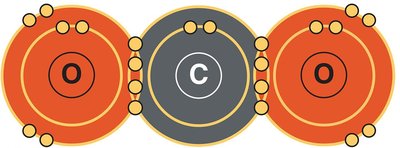 - Urea (CO(NH2)2): Carbon bonded to nitrogen.
Carbon Chains and Hydrocarbons
Carbon Chains: Skeletons of Organic Molecules
Carbon atoms can form chains that serve as the backbone of most organic molecules. These chains vary in length, branching, double bond position, and ring structure. 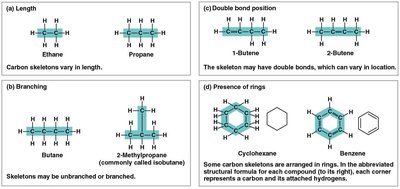
Feature | Description | Example |
|---|---|---|
Length | Chains can be short or long | Ethane, Propane |
Branching | Chains may be branched or unbranched | Butane, Isobutane |
Double Bond Position | Double bonds can vary in location | 1-Butene, 2-Butene |
Presence of Rings | Chains may form rings | Cyclohexane, Benzene |

Hydrocarbons
Hydrocarbons are organic molecules consisting only of carbon and hydrogen. - They are components of many biological molecules, such as fats. - Hydrocarbons can undergo reactions that release significant energy. 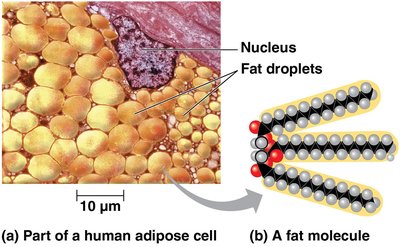
Isomers: Structural Diversity in Organic Molecules
Types of Isomers
Isomers are compounds with the same molecular formula but different structures and properties. - Structural isomers: Different covalent arrangements of atoms. - Cis-trans (geometric) isomers: Same covalent bonds, different spatial arrangements. - Enantiomers: Mirror images of each other, often with different biological activity. 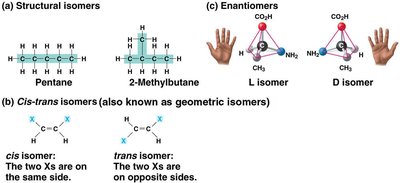

Pharmacological Importance of Enantiomers
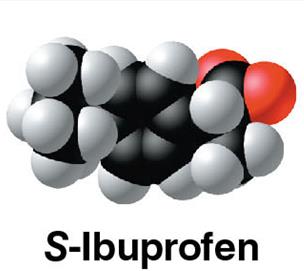
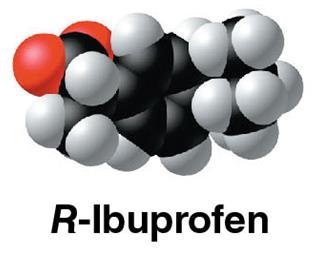
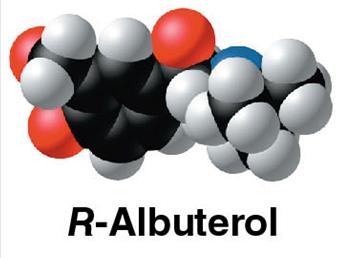
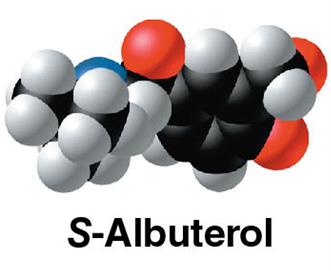
Enantiomers are crucial in pharmaceuticals, as only one enantiomer may be biologically active.
Drug | Effective Enantiomer | Ineffective Enantiomer | Effect |
|---|---|---|---|
Ibuprofen | S-Ibuprofen | R-Ibuprofen | Reduces inflammation and pain |
Albuterol | R-Albuterol | S-Albuterol | Relaxes bronchial muscles |
Chemical Groups and Molecular Function
Functional Groups
Functional groups are specific groups of atoms within molecules that are responsible for the characteristic chemical reactions of those molecules. - The number and arrangement of functional groups determine the properties and reactivity of organic molecules. 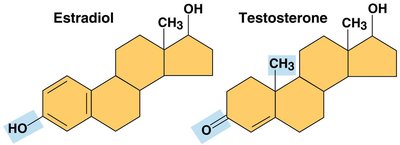
Seven Key Functional Groups
The seven functional groups most important in biological chemistry are: - Hydroxyl group (–OH) - Carbonyl group (–CO) - Carboxyl group (–COOH) - Amino group (–NH2) - Sulfhydryl group (–SH) - Phosphate group (–PO4) - Methyl group (–CH3) 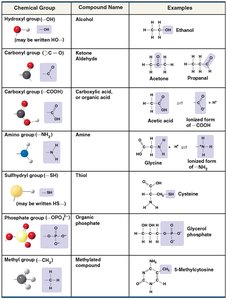
ATP: A Case Study in Functional Groups
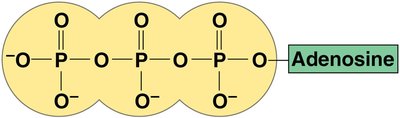
Adenosine triphosphate (ATP) is an organic phosphate critical for energy storage and transfer in cells. - ATP consists of adenosine attached to three phosphate groups. - Hydrolysis of ATP releases energy for cellular processes. 
Summary of Key Concepts
Organic chemistry is central to understanding the origin and diversity of life.
Carbon's bonding versatility enables the formation of diverse molecules.
Hydrocarbons and isomers illustrate structural diversity and energy storage.
Functional groups are critical for molecular function and biological activity.
ATP is a primary energy carrier in cells, demonstrating the importance of functional groups.
