 Back
Organic Compounds: The Molecules of Life
Study Guide - Smart Notes
 Tailored notes based on your materials, expanded with key definitions, examples, and context.
Overview: The Molecules of Life
All living organisms are composed of four major classes of large biological molecules: carbohydrates, lipids, proteins, and nucleic acids. These macromolecules are essential for structure, function, and regulation of the body's cells, tissues, and organs. The structure of these molecules is closely linked to their function.
Macromolecules and Polymers
Polymers and Monomers
Polymers are long molecules made up of repeating units called monomers. Three of the four classes of life's organic molecules—carbohydrates, proteins, and nucleic acids—are polymers. Lipids are not true polymers.
Monomer: The basic building block of a polymer.
Polymer: A long molecule consisting of many similar or identical monomers linked together.
Synthesis and Breakdown of Polymers
Polymers are synthesized and broken down by specific chemical reactions:
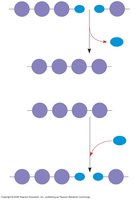
Dehydration Reaction (Condensation): Two monomers are covalently bonded together with the removal of a water molecule. Enzymes catalyze this process.
Hydrolysis: Polymers are disassembled into monomers by the addition of a water molecule, breaking the covalent bond.
Carbohydrates: Fuel and Building Material
Monosaccharides
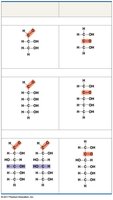
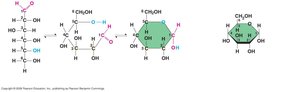
Carbohydrates include sugars and their polymers. The simplest carbohydrates are monosaccharides (single sugars), which generally have molecular formulas that are multiples of CH2O. Glucose (C6H12O6) is the most common monosaccharide. In aqueous solutions, many monosaccharides form ring structures.
Monosaccharides: Classified by the number of carbons (trioses, pentoses, hexoses) and the location of the carbonyl group (aldose or ketose).
Isomers: Compounds with the same chemical formula but different structures.
Disaccharides
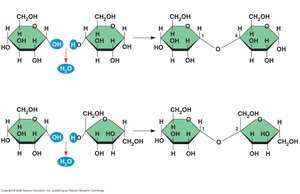
A disaccharide is formed when two monosaccharides are joined by a dehydration reaction, creating a glycosidic linkage (covalent bond).
Examples: Sucrose (glucose + fructose), Maltose (glucose + glucose).
Polysaccharides
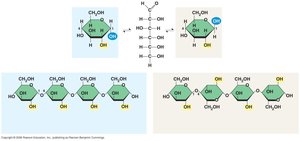
Polysaccharides are large polymers of sugars with storage or structural roles. Their function is determined by the types of sugar monomers and the positions of glycosidic linkages.
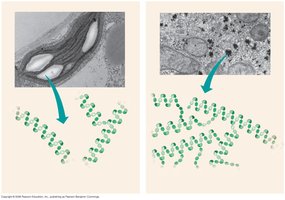
Storage Polysaccharides: Starch (plants) and glycogen (animals) are used for energy storage.
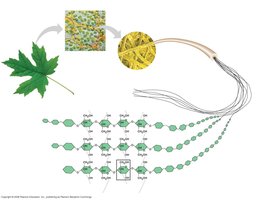
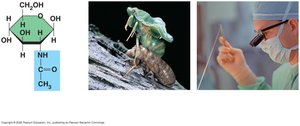
Structural Polysaccharides: Cellulose (plants) and chitin (arthropods and fungi) provide structural support.
Cellulose and Chitin
Cellulose is a polymer of glucose with β (beta) glycosidic linkages, making it a major component of plant cell walls. Starch has α (alpha) glycosidic linkages, resulting in a helical structure, while cellulose forms straight, rigid fibers. Chitin is found in the exoskeleton of arthropods and fungal cell walls.
Lipids: Hydrophobic Molecules
Fats
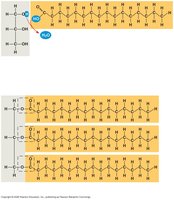
Lipids are hydrophobic molecules, mainly composed of hydrocarbons. Fats are constructed from glycerol and fatty acids. Three fatty acids are joined to glycerol by ester linkages, forming a triacylglycerol (triglyceride).
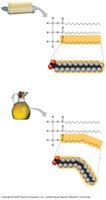
Saturated fatty acids: No double bonds, solid at room temperature (animal fats).
Unsaturated fatty acids: One or more double bonds, liquid at room temperature (plant and fish fats).
Phospholipids
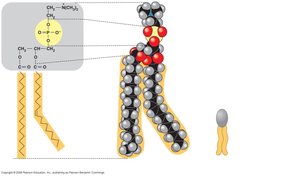
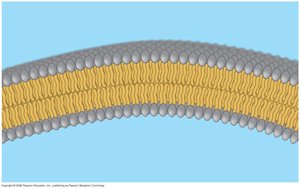
Phospholipids have two fatty acids and a phosphate group attached to glycerol. The hydrophilic head and hydrophobic tails cause them to form bilayers in water, which are the foundation of cell membranes.
Steroids
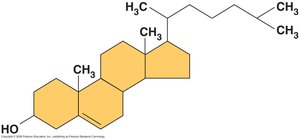
Steroids are lipids with a carbon skeleton of four fused rings. Cholesterol is an important steroid in animal cell membranes but can contribute to cardiovascular disease at high levels.
Proteins: Structure and Function
Functions of Proteins
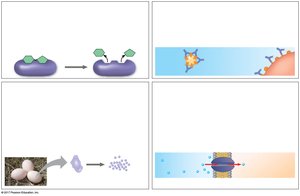
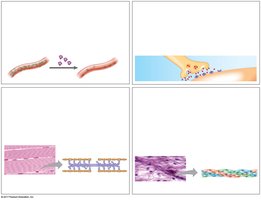
Proteins perform a wide variety of functions, including catalysis (enzymes), defense (antibodies), storage, transport, cellular communication, movement, and structural support.
Enzymes
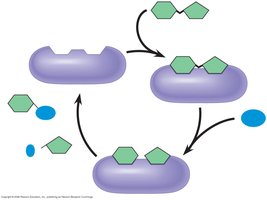
Enzymes are proteins that act as catalysts, speeding up chemical reactions without being consumed. They are essential for metabolism and other cellular processes.
Amino Acids and Polypeptides
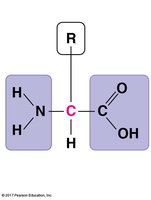
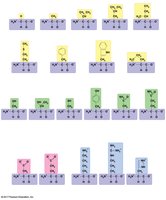
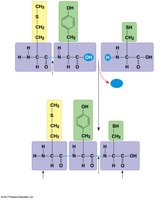
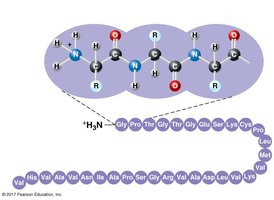
Amino acids are the monomers of proteins, each containing an amino group, a carboxyl group, a hydrogen atom, and a variable R group (side chain) attached to a central carbon atom. Amino acids are linked by peptide bonds to form polypeptides.
Protein Structure
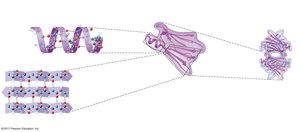
Protein function depends on its structure, which is organized into four levels:
Primary structure: Sequence of amino acids.
Secondary structure: Coils (α-helix) and folds (β-pleated sheet) due to hydrogen bonding.
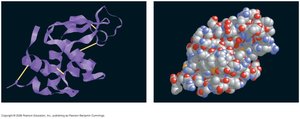
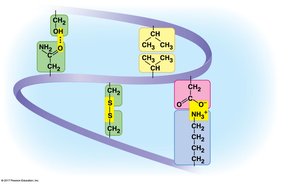
Tertiary structure: Overall 3D shape due to interactions among R groups.
Quaternary structure: Association of multiple polypeptide chains.
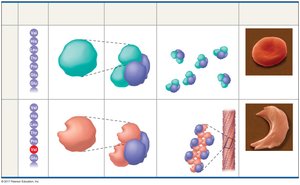
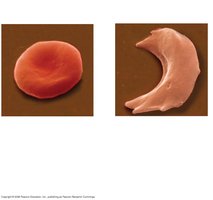
Sickle-Cell Disease: Protein Structure and Function
A single amino acid change in the primary structure of hemoglobin causes sickle-cell disease, altering the protein's shape and function.
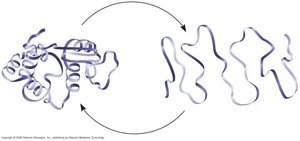
Protein Denaturation
Physical and chemical conditions (pH, temperature, salt concentration) can cause proteins to lose their native structure, a process called denaturation. Denatured proteins are usually biologically inactive.
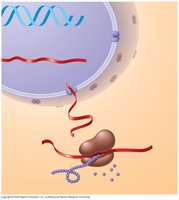
Nucleic Acids: Information Molecules
DNA and RNA
Nucleic acids store and transmit hereditary information. The two types are deoxyribonucleic acid (DNA) and ribonucleic acid (RNA). DNA provides instructions for its own replication and for protein synthesis via messenger RNA (mRNA).
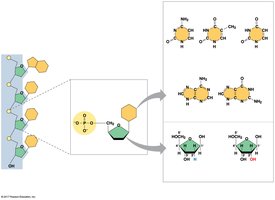
Nucleotide Structure
Nucleic acids are polymers of nucleotides, each consisting of a nitrogenous base, a pentose sugar, and a phosphate group. There are two families of nitrogenous bases: pyrimidines (cytosine, thymine, uracil) and purines (adenine, guanine).
The DNA Double Helix
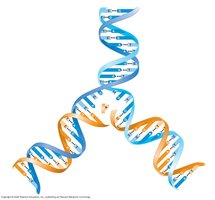
DNA consists of two antiparallel polynucleotide strands forming a double helix. The strands are held together by hydrogen bonds between complementary bases: adenine (A) pairs with thymine (T), and guanine (G) pairs with cytosine (C).
Genomics and Proteomics
Genomics is the study of whole sets of genes and their interactions, while proteomics is the study of large sets of proteins, including their sequences and functions. These fields use computational tools to analyze biological data and understand evolutionary relationships.
Summary Table: Major Classes of Biological Molecules
Class | Monomer | Polymer | Bond Type | Function |
|---|---|---|---|---|
Carbohydrates | Monosaccharide | Polysaccharide | Glycosidic linkage | Energy storage, structure |
Lipids | Fatty acids, glycerol | Triacylglycerol, phospholipid, steroid | Ester linkage | Energy storage, membranes, signaling |
Proteins | Amino acid | Polypeptide | Peptide bond | Catalysis, structure, transport, etc. |
Nucleic Acids | Nucleotide | Polynucleotide | Phosphodiester bond | Information storage, transmission |
